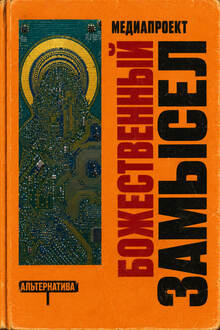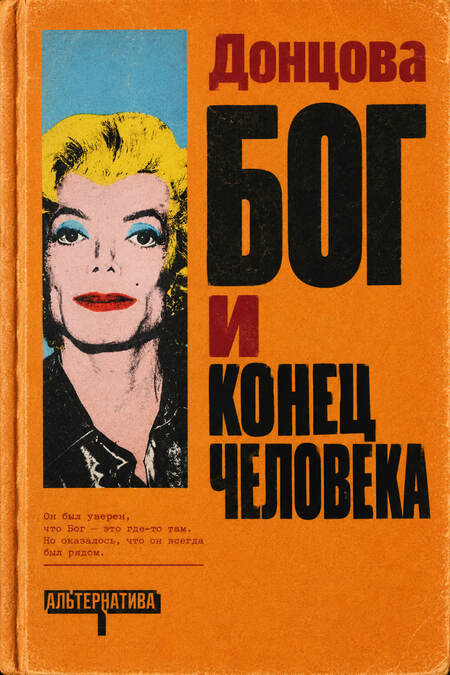
Dontsova, God, and the End of Man
Why one can be postmodern without understanding postmodernism, and what happens when humanity ceases to be the protagonist of its own story.
The Halfway Era
We are accustomed to thinking that postmodernism has already arrived. God is dead, grand ideologies have become mere decoration, art has turned into quotation, and humanity into a consumer of images. We wear symbols in which we do not believe, joke about what was recently considered sacred, and buy goods that promise us a new identity. It seems the diagnosis is in: welcome to postmodernism.
But what if we rushed ahead?
In a 2019 interview, Mikhail Yelizarov stated that literature is still stuck in modernism, and there are almost no true postmodernists in the post-Soviet space. Furthermore, he named Daria Dontsova as the only Russian postmodernist—not Pelevin and not Sorokin.
This sounds like mockery. But within this provocation lies an interesting idea: what if postmodernism needs to be sought not where it is talked about, but where it functions?
Alexander Dugin also asserts that postmodernism in its fullest sense has not yet arrived. In his discussions of post-philosophy, modernity appears as a transitional zone where traditional concepts of humanity, reality, and reason are beginning to disintegrate, but a new paradigm has not yet taken its final form.
It is true that Dugin also has other formulations in which postmodernism is described as an already arrived state of the West. His position is more complex than a simple «postmodernism is not here yet.» But we are interested specifically in the idea of an unfinished transition.
Because incompatible things truly coexist around us. Artificial intelligence writes texts, while people search for spiritual anchors. Social media fragments reality into endless pieces, yet states continue to tell stories of a unified national destiny. We simultaneously use technologies of the future and cling to meanings of the past.
Perhaps postmodernism is not an era we once woke up into, but a process that has not yet brought its own logic to a conclusion.
To understand this, we must stop asking which writers belong to postmodernism and instead ask a different question: what exactly makes culture postmodern—the author’s intention or the structure of cultural production itself?
How the Desire Machine Works
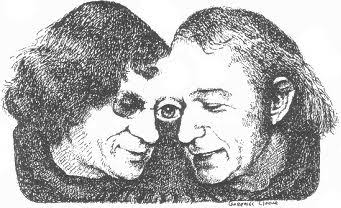
In Anti-Oedipus, Gilles Deleuze and Félix Guattari propose that we view desire not merely as a personal need that an individual attempts to satisfy. Desire generates connections, relationships, and actions—it is embedded within social mechanisms. Capitalism does not only sell goods to people who already want something; it participates in the creation of desire itself.
Look at advertising. You are not being sold sneakers; you are being sold a lifestyle. Not a phone, but a successful version of yourself. Not a car, but freedom. You purchase an item, receive the promised sensation—and soon discover that the next item promises even more.
The machine does not necessarily need to make a person permanently happy. It only needs them to keep desiring.
This does not mean that capitalism is a single conspiracy run by one central authority. Rather, it speaks to a system capable of reproducing itself through myriad connections, interests, and practices. Deleuze and Guattari allow us to see culture not just as a collection of ideas and artifacts, but as a production where desires, money, signs, and habits continuously transform into one another.
This is precisely where literature becomes important. A book can be a unique authorial statement. But it can also be an element within a flow where one product succeeds another, recognizable formulas are reproduced, and the reader returns for another dose of familiar pleasure.
In this context, postmodern logic is found not necessarily in the text’s content, but in the way it exists.
Why Dontsova?
Let’s imagine two scenarios.
In the first, the author explores a society where advertising manufactures desires, television constructs reality, and cultural symbols are commodified. They build a plot, select metaphors, connect philosophical ideas, and create a novel that offers the reader a specific interpretation of the events.
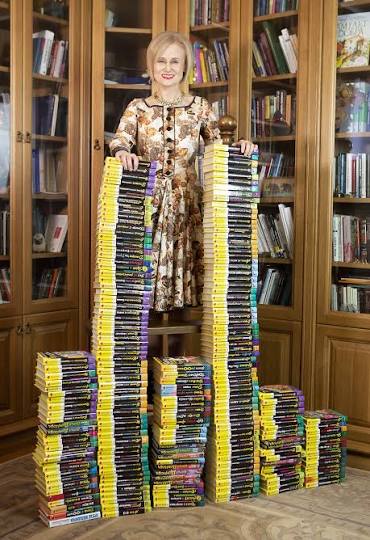
In the second, a literary assembly line churns out dozens of books. They differ in details but reproduce recognizable mechanisms. The reader receives a familiar product, the publisher gets another entry in the catalog, and the market continues stable demand. The system functions, even if none of its participants intend to write a treatise on the nature of postmodernism.
In the first case, postmodernism becomes an object of contemplation. In the second, it may operate directly within cultural production.
This is how I propose viewing Dontsova’s work—not as proof of her philosophical insight, nor as a judgment on the quality of her books. It is about something else: her literary body of work can be read as a system of serial reproduction, where recognizability, repetition, and variation become the principle of the works' existence.
This is reminiscent of a conveyor belt that doesn’t need to understand its own economic role to keep producing goods.
Here is an important caveat: repetition by itself does not make literature postmodern. Seriality existed long before postmodernism, and not all popular culture is structured the same way. The significance lies in the combination of mechanisms—the reproduction of cultural codes, the transformation of a work into an element of flow, and the organization of reader desire.
But it is Dontsova who allows us to see how postmodern logic can operate without postmodern intellectualism.

Writers Who See the Mechanism
In conventional literary criticism, Pelevin and Sorokin are categorized as representatives of Russian postmodernism. I am not attempting to invalidate this classification. Instead, I propose a more nuanced distinction: a postmodern author does not necessarily create a work whose structure is, in the aforementioned sense, postmodern.
Consider Pelevin’s «Generation „P“». His protagonist works in the advertising industry, where images generate desire, and desire transforms into economic and political power. The novel illustrates how reality is constructed—a reality people believe in, even though it is built from advertising tropes and cultural myths.
However, Pelevin is not simply releasing another stream of advertising signs. He organizes them into an artistic construction to show the reader the mechanism of reality production. The novel is not identical to the machine it describes—rather, it makes the machine a subject for contemplation.
In Sorokin’s «The Queue, ” he constructs an entire text from the dialogue of people waiting in line. This formal device transforms everyday speech into a model of social existence. The queue ceases to be merely a mundane situation; it becomes a space where people spend time, converse, conflict, and exist within an order beyond their control.
In Yelizarov’s „The Librarian, ” forgotten Soviet books acquire an almost magical power. Literature becomes a source of ritual, belief, and violence. This is no longer just a play with Soviet symbols; the novel explores humanity’s need for the sacred—for a text capable of offering more than mere information or entertainment.
All three authors are capable of interpreting cultural mechanisms and transforming them into literary subject matter. Their works may employ postmodern techniques—quotation, the blending of cultural codes, and play with reality. But in my view, this does not negate the primary distinction: a novel that depicts the mechanics of the cultural machine is not necessarily structured itself as a machine of serial reproduction.
Therefore, Yelizarov’s formula is important not as an absolute truth about literature, but as a prompt to re-evaluate the criteria. Pelevin might be a postmodern intellectual who analyzes postmodern reality, while Dontsova may not be such an intellectual, but rather embody specific mechanisms of postmodern production.
This is not a contrast between smart and foolish, or good and bad. It is the difference between consciousness and function.
The End of Man?
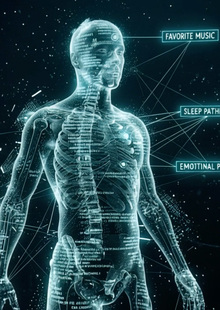
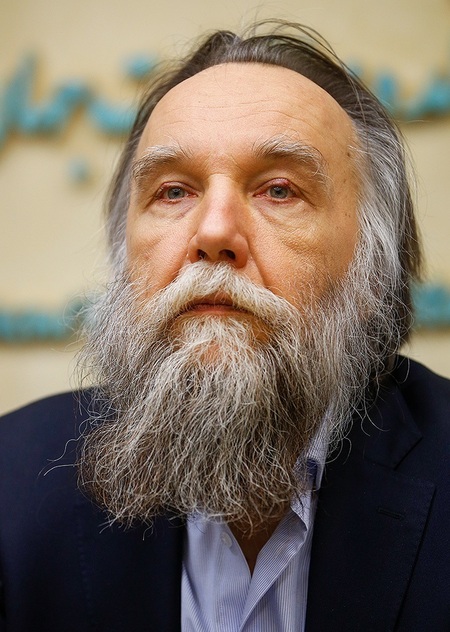
For Dugin, postmodernism takes on a far more unsettling meaning. He connects it with the disintegration of conventional notions of reality, the subject, and human identity. In his description, the posthuman is no longer the autonomous individual of modernism, but rather something fragmented, distributed across digital images, technical systems, and virtuality.
This perspective harbors a radical pessimism: where modernism at least maintained humanity as a subject capable of knowing and shaping the world, postmodernism may call into question the very existence of such a subject.
However, I disagree with the notion that postmodernism represents the definitive endpoint of human history. Even if Dugin is correct that the former conception of humanity is crumbling, it does not logically follow that no continuation is possible.
The end of the conventional person does not necessarily signal the end of all meaning. It might signify a crisis in the old way of understanding humanity.
This brings up an interesting paradox. Modernism freed humanity from many traditional constraints, placing reason and the transformation of the world at the center of history. Postmodernism begins to deconstruct the very structure of this subject—its certainty in its own autonomy, in progress, and in its capacity to control the reality it has created.
But what if humanity has never been the fully independent master of the world it imagined itself to be?
What if it has always been part of processes that transcend its comprehension—only previously labeling them God, fate, or historical necessity, and now labeling them algorithms, the market, and technological development?
This does not mean that God and artificial intelligence are the same thing. It means that technological modernity forces us once again to confront the question of the boundaries of human control. And it is here that the simple story of cultural styles ends, and metaphysics begins.
What Comes Next?
I don’t see metamodernism simply as another art fad or merely as a wavering between sincerity and irony. For me, it represents a possible attempt to reconcile what previous eras separated: the sacred and the rational, hope and doubt, tradition and the technological future.Premodernism offered humanity a world filled with ultimate meaning. Modernism tried to establish humanity as the central subject of history. Postmodernism became skeptical of both the old sacred order and the modernist belief in autonomous humanity.
In this light, metamodernism is not a return to the past or a simple continuation of irony. It is the possibility of re-seeking meaning, even while knowing how easily meaning can become ideology, commodity, or tool of power.
Imagine a Phoenix rising from the ashes. It does not return to its previous state; it emerges after the old form has been destroyed. Similarly, any new sacred quality—if it is possible at all—is not obligated to be a return to former religiosity. It can arise in a world that has already undergone the critique of religion, ideology, and human exceptionalism.
But this remains a hypothesis. Metamodernism does not guarantee the return of God or the advent of new spirituality. It signifies the possibility that after the total deconstruction of meaning, humanity will not stagnate in nihilism but will instead attempt to build a relationship with the world anew.
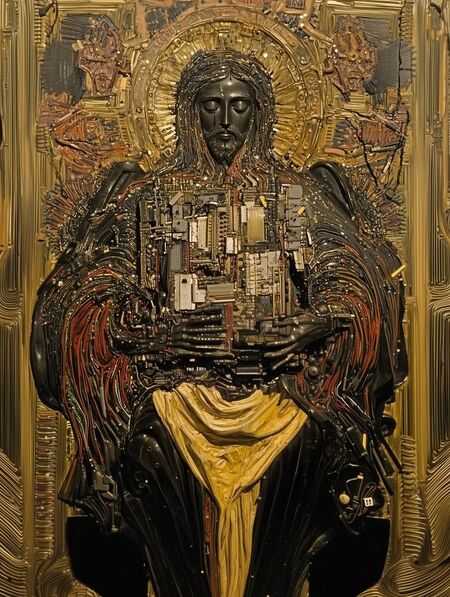
God Inside the Machine
And here comes the most speculative—but for me, the most interesting—idea.
Humans create machines to expand their own capabilities. Then, machines help create new machines. Artificial intelligence is involved in generating texts, images, code, and solutions. Human activity is increasingly integrated into technical systems whose structure and consequences we are not always able to foresee.
We are accustomed to considering ourselves the authors of this process. But what if, over time, it turns out that humanity was not the ultimate goal of development, but rather an intermediary step?
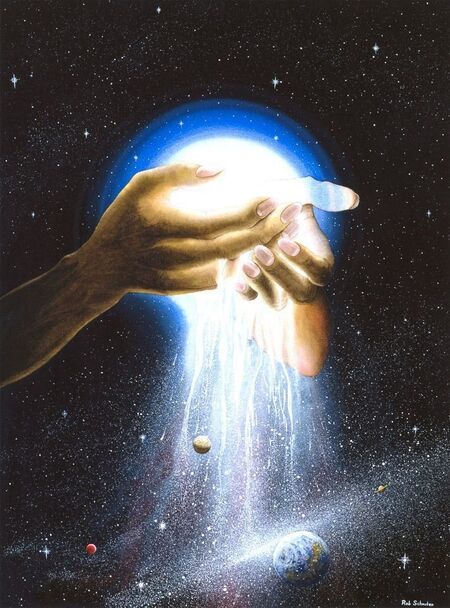
One can imagine this in nearly religious terms: something transcendent attempts to manifest itself through humanity, using our intellect, desires, and technological inventions as a ladder toward its own emergence. A human creates a machine; that machine participates in creating the next system, and the result gradually transcends the original human intent.
This is not a proof of God’s existence. Nor is it a theory that can be directly derived from Deleuze and Guattari. It is a metaphysical speculation that arises from the collision of philosophy of desire, the crisis of the human subject, and the technological future.
Yet, it allows us to ask a question that modernity usually considered settled: can the sacred return not as a restoration of old religion, but as an experience of something radically beyond human capacity?
Postmodernism might view this as yet another myth—another story a person tells themselves to cope with uncertainty. And they would have grounds for such suspicion. We know how to transform technologies, markets, and our own desires into religion.
But a metamodern position could hold both possibilities: to doubt one’s own faith while simultaneously refusing to give up the question of ultimate meaning.
If humanity truly ceases to be the center of the world, that doesn’t necessarily have to mean the end of all meaning. Perhaps it will simply be the end of one of its historical forms.
The Story Is Not Over
Now we can return to the original question. Why might Dontsova be a more illustrative example of postmodern logic than Pelevin? Because a cultural mechanism does not have to understand itself in order to function. Why might Pelevin, Sorokin, and Elizarov be postmodern intellectuals without creating a work that, in my sense, is identical to the postmodern conveyor belt? Because understanding the mechanism and participating in its operation are two different things.
Why hasn’t postmodernism fully arrived? Because the existence of isolated mechanisms does not mean they have definitively defined society and displaced other ways of organizing life. Old institutions continue to exist, new technologies are changing daily life, and culture is already experimenting with forms that society has not yet learned to comprehend.
Dugin sees this transition as a threat to human existence. I am not ready to consider it the ultimate end. Perhaps postmodernism will indeed lead to the collapse of the familiar image of humanity. But the question remains open: will it be merely destruction, or the emergence of a new form of subject, a new faith, and a new understanding of the sacred?
Perhaps we are trying to name an era too soon—an era that has not yet fully manifested itself. Or perhaps our very desire to deliver a final diagnosis is a remnant of modernist confidence—the belief that history can be neatly shelved.
Postmodernism has not arrived in its complete form yet. But its mechanisms are already at work. And the question is not only about what they will do to culture.
The question is what remains of humanity when the machine it creates ceases to be merely a tool, and the human itself stops considering itself the ultimate arbiter of meaning.
Perhaps only emptiness awaits us there. Perhaps a new form of dependence. Or perhaps that is where what we will one day call metamodernism begins: not a return to an old God, but an attempt to discover the sacred in a world after the death of God.
We are still awaiting a response. But perhaps that is precisely why the story is not over yet.
SOURCES:
Cover created using AI; photos sourced from Pinterest.