Concept
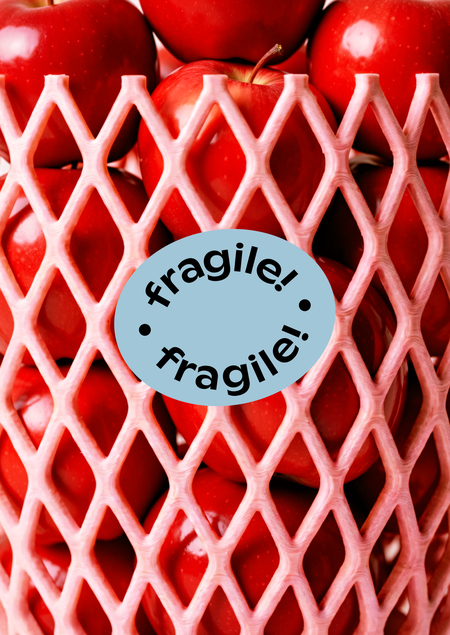
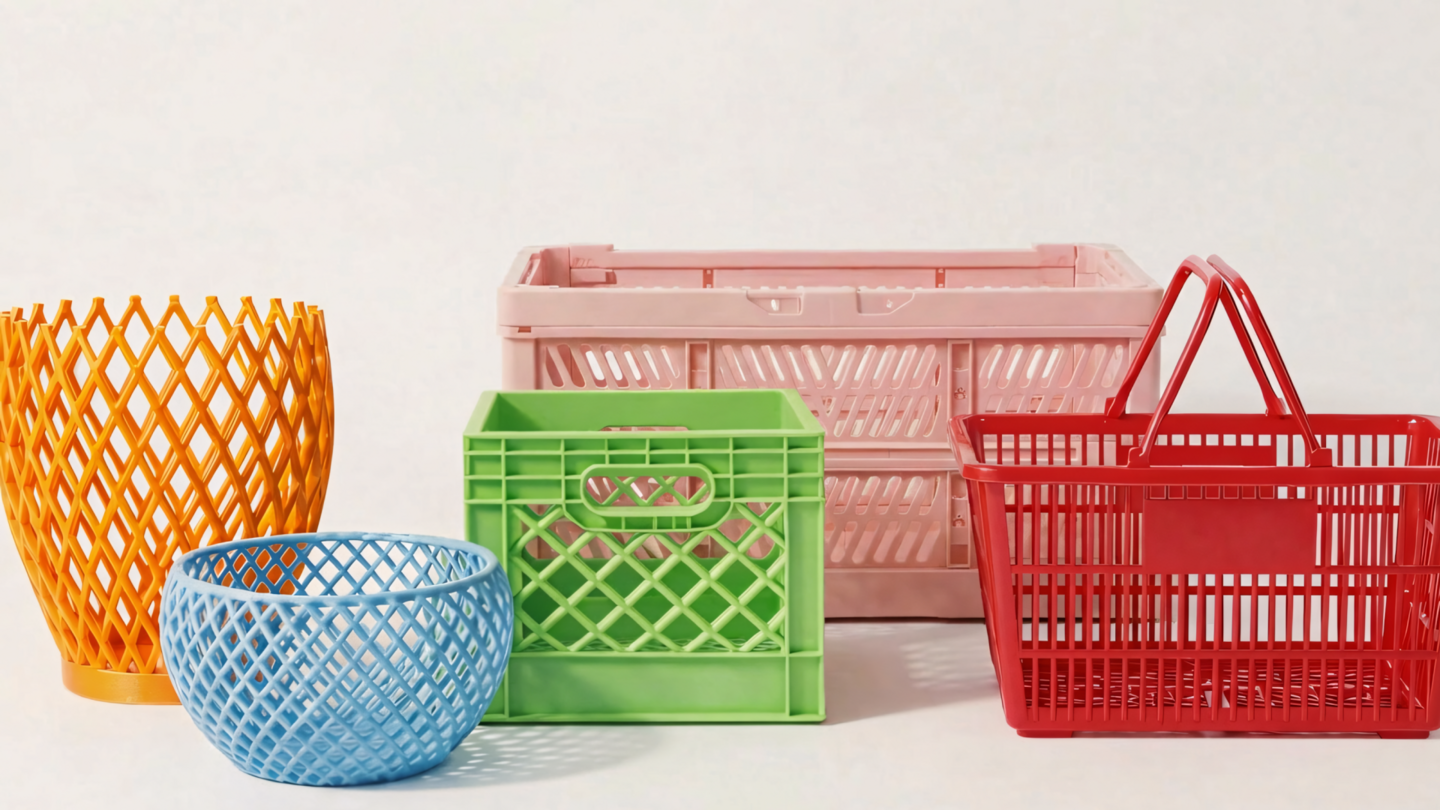
Fragile! — a brand of kitchen vases and fruit bowls inspired by supermarket objects. The fruit netting, crate, and basket transcend their utilitarian function to become decorative elements of everyday life. This brand is built on contrasts, vibrancy, and irony, aiming to bring a touch of whimsy and playfulness into the routine in simple ways.
The design process began with observing the protective netting placed over fruits in supermarkets to prevent damage. This simple yet expressive form became the starting point for the entire series, establishing the principle of gently containing the object.
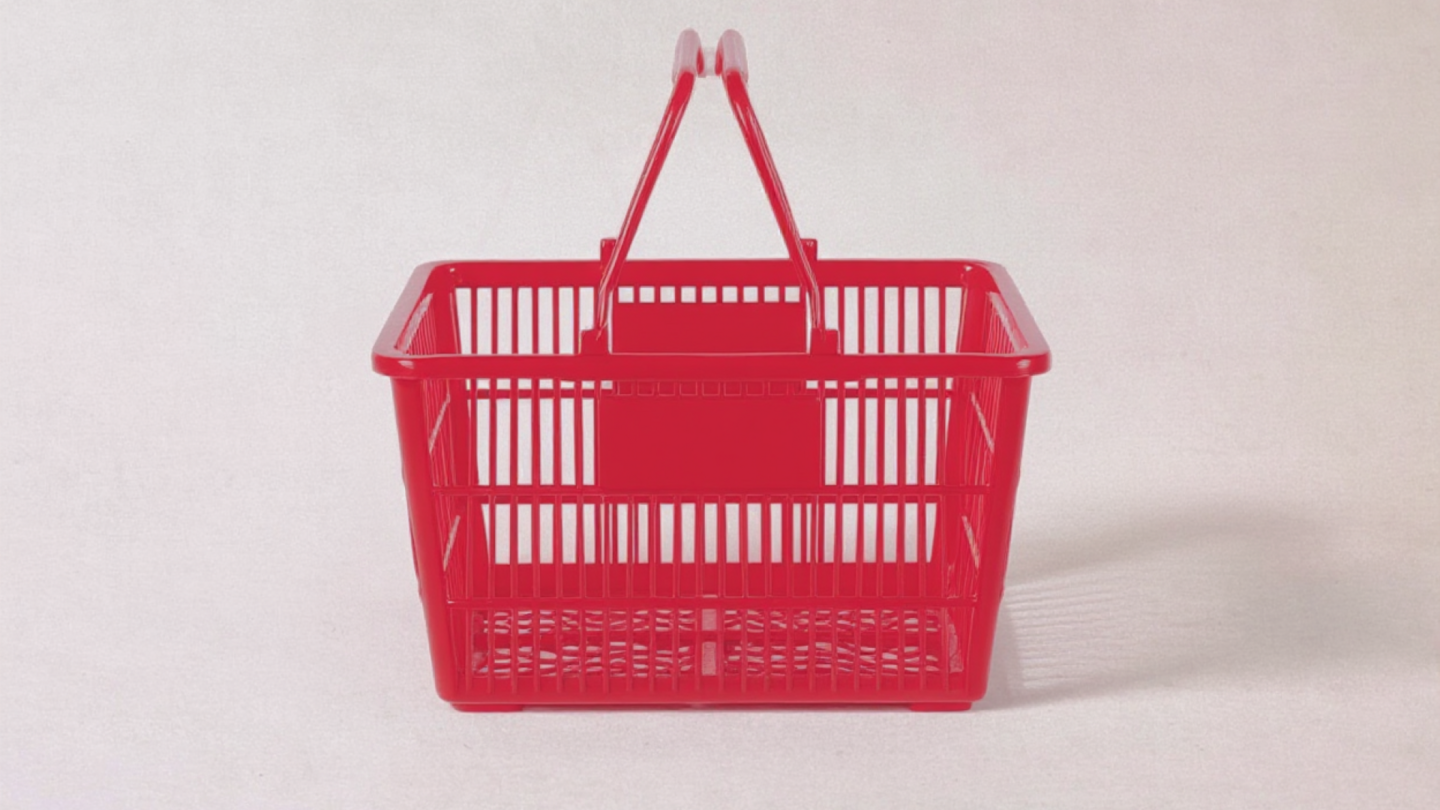
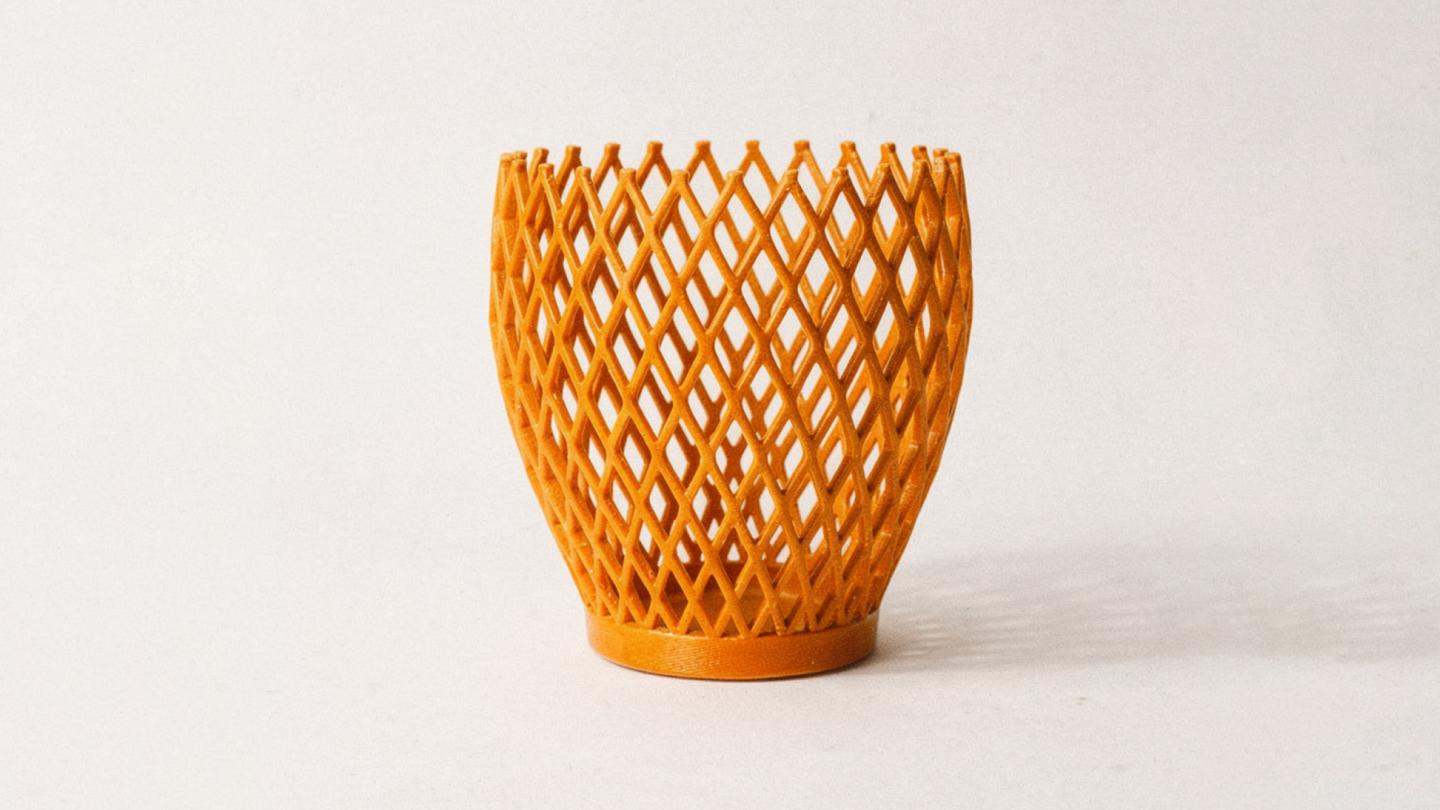
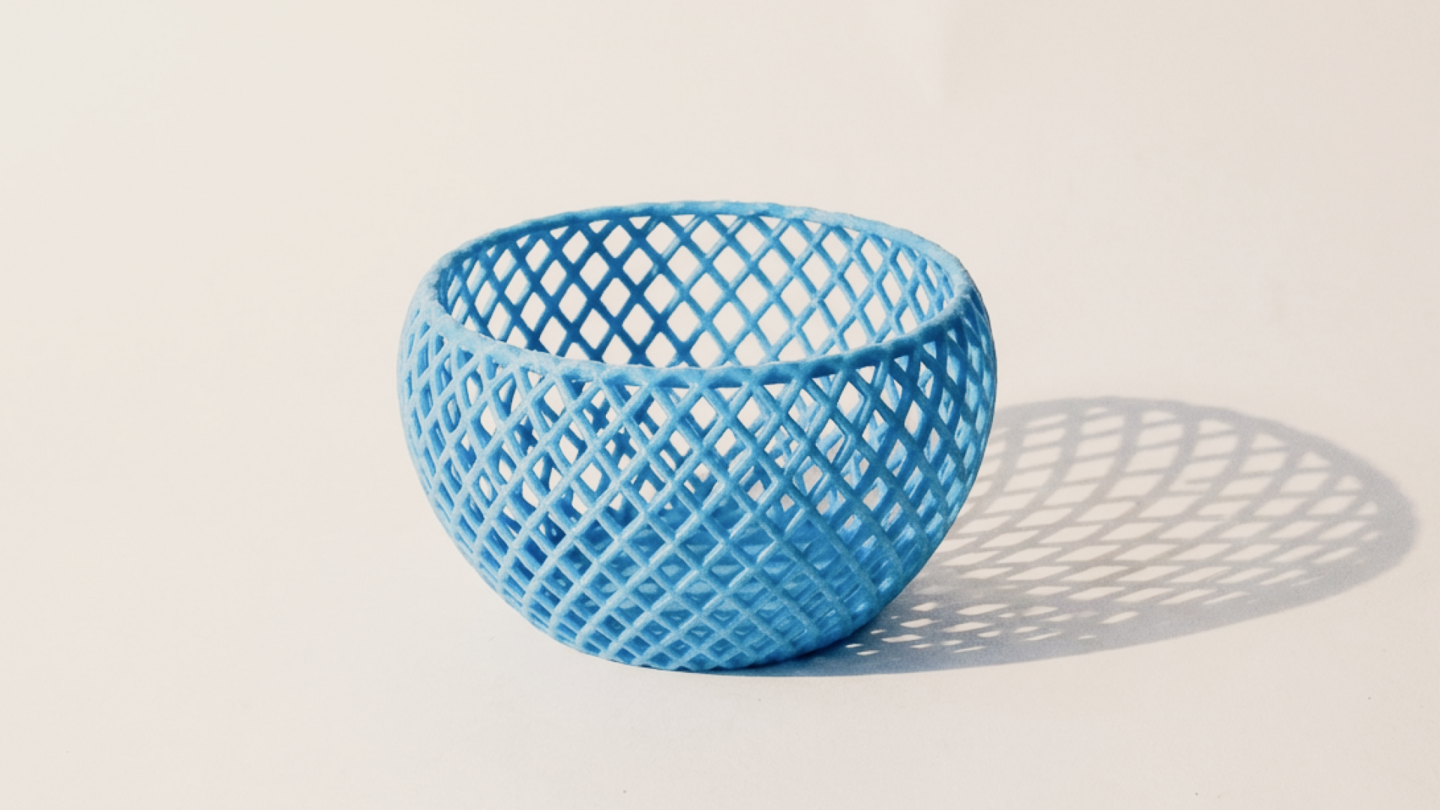
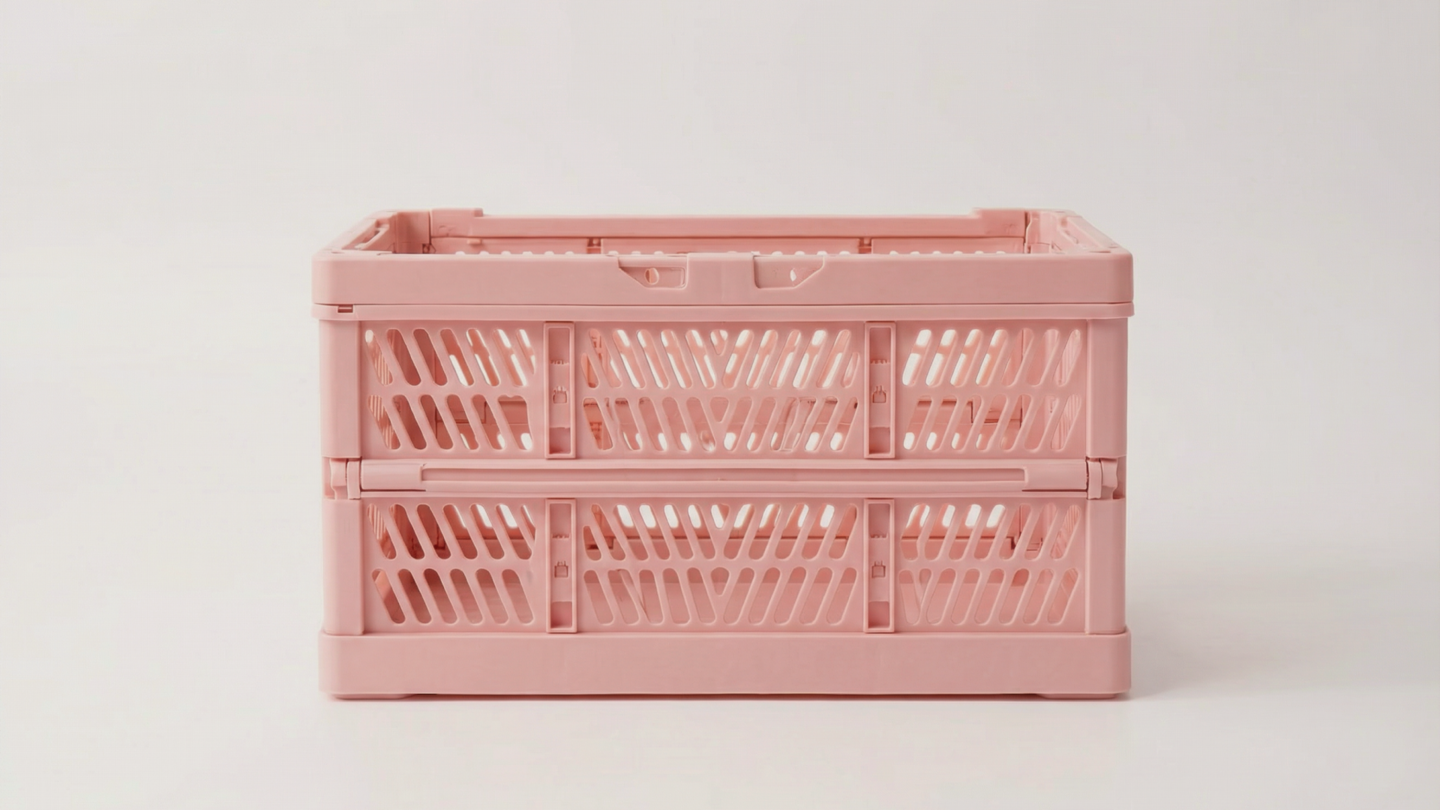
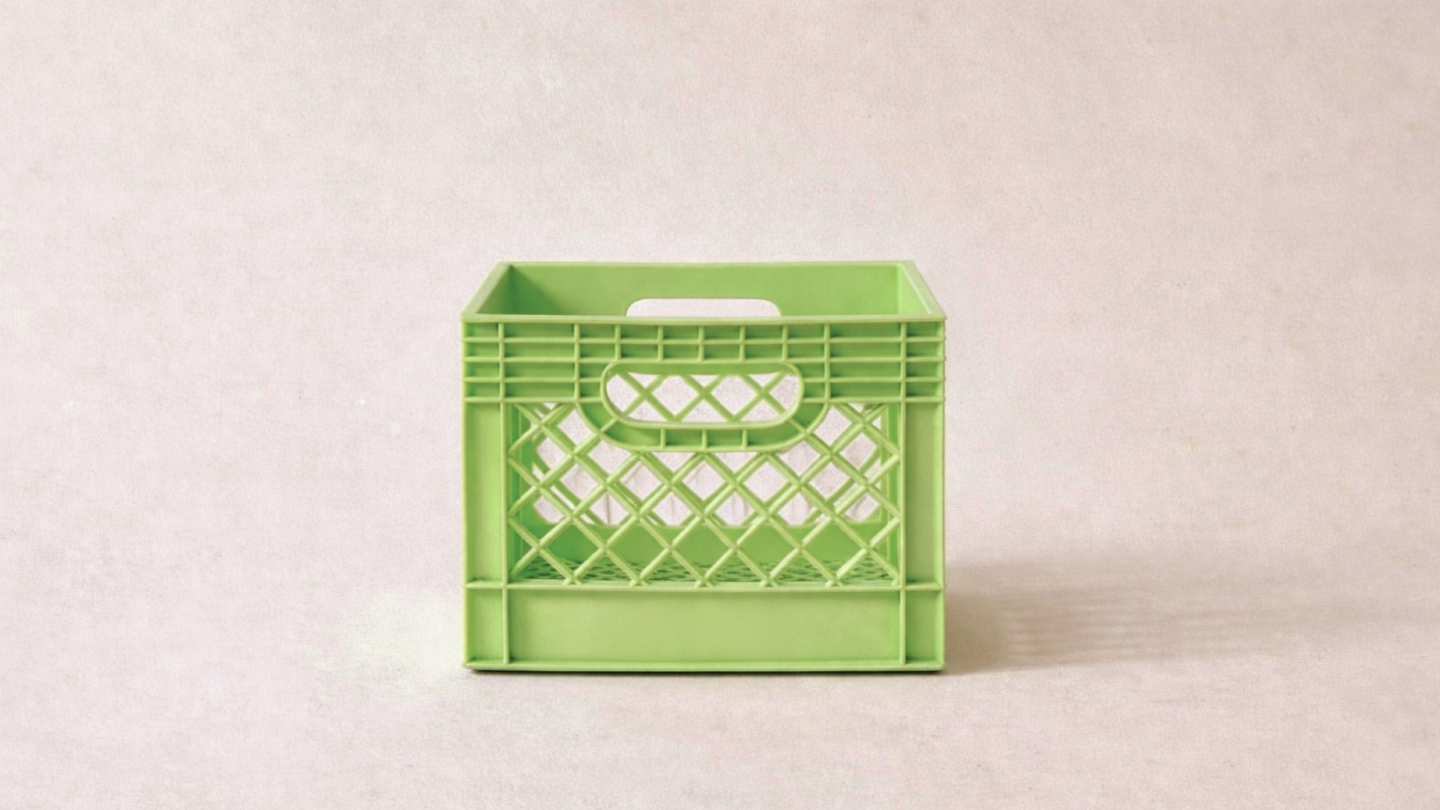
all series objects
First, initial sketches were developed using ChatGPT to establish the overall form and proportions. Following this, the concept was refined and visually detailed in Nano Banana, and in the final stage, a complete 3D model was created in 3D Hunyuan, prepared for subsequent 3D printing production. The models were then checked and repaired in Anycubic Photon Workshop.
Object sketches
Promotional Materials
Thanks to its simple form and monochromatic design, each object can be rendered in any shade that complements a specific interior.
Process
Dimensions and Size
Bowls (mesh): Diameter: 180–260 mm Height: 80–140 mm
Vases (box/basket form): Length: 250–400 mm Width: 180–300 mm Height: 200–350 mm
Wall Thickness: 2.5–4 mm (depending on the object’s scale)
Tolerances: ±0.5 mm on overall dimensions ±0.3 mm on mesh and perforation elements
Manufacturing Technology
Primary Method: FDM Printing
Layer Height: 0.2 mm (standard) 0.28 mm — acceptable for large vases
Infill: 15–25% (Gyroid / Grid) Main structural strength is achieved through wall geometry
Print Orientation: Vertical, minimizing overhangs Lattice structures must be printed without internal supports
Materials
Main Material: PLA — for interior and decorative objects
Colors: Matte or semi-gloss plastic, solid color (referencing the colors of supermarket bins and baskets)
Material Requirements:
uniform color across the entire surface
absence of gaps or breaks in the mesh
structural stability without deformation after printing
Structural Features
All objects are printed as single, non-assembled pieces
The mesh structure serves as the load-bearing part of the form
Rounded edges are mandatory (minimum radius of 2 mm)
The bottom of the objects is reinforced, solid, or partially perforated
Absence of sharp edges or technical burrs
Post-Processing
Removal of minimal supports (if used)
Mechanical smoothing of seams and print marks
Light matte finishing or polishing (as needed)
Additional painting is not required—the color is set by the material
Quality Control
Checked items:
- integrity of the mesh structure
- symmetry and geometric stability
- absence of cracks, layer separation, or sagging
- stability of the object on a flat surface
Acceptable:
- minor layer lines as part of the FDM aesthetic
Unacceptable:
- deformation of the shape
- mesh breaks
- visual defects that compromise object integrity
Production Process (Sequence)
- 3D Model Preparation (STL / OBJ)
- Checking thicknesses and overhangs
- Slicing
- Test printing of a reduced sample
- Final object printing
- Cooling without forced cooling
- Post-processing and quality control