Исходный размер 1140x1600

Duolingo | Communication Strategy

Данный проект является учебной работой студента Школы дизайна или исследовательской работой преподавателя Школы дизайна. Данный проект не является коммерческим и служит образовательным целям
Проект принимает участие в конкурсе
Исходный размер 3500x1300

Brand Overview

Founded by Luis von Ahn and Severin Hacker in 2011, Duolingo is the world’s most popular language-learning app, utilizing a freemium model and gamification, monetizing through premium tiers (Super Duolingo, Duolingo Max) and English proficiency testing, while keeping its core educational content universally accessible.

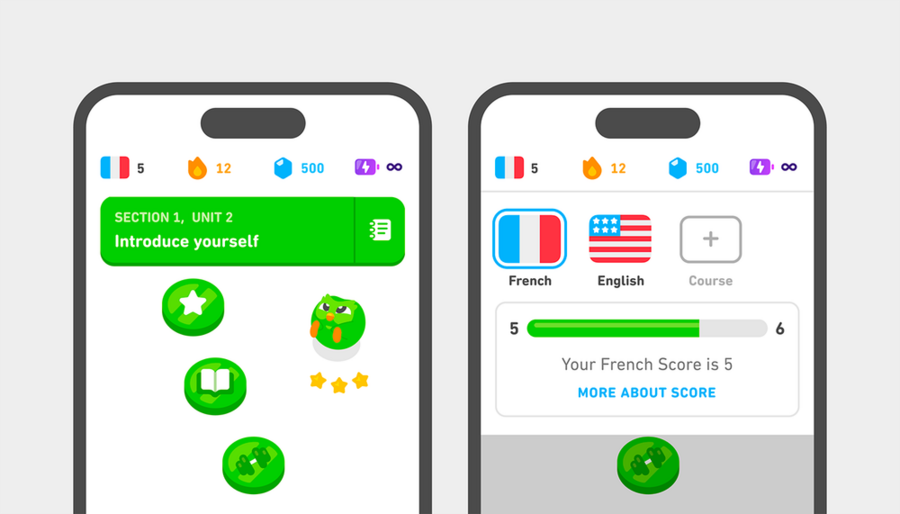
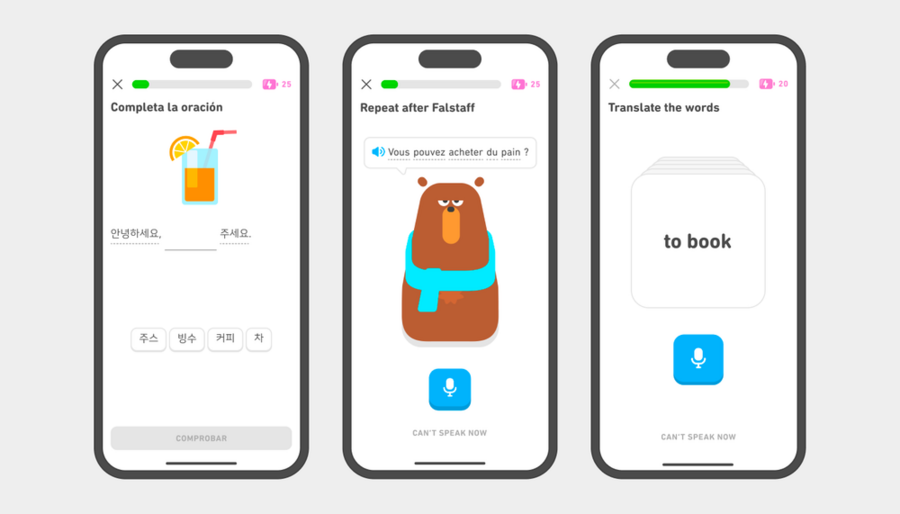
At its technological and pedagogical core, Duolingo treats language acquisition not as a rigorous academic chore, but as a hyper-gamified digital experience. By converting syntax, vocabulary, and grammar into bite-sized lessons, the platform utilizes behavioral psychology mechanics — such as experience points (XP), daily streaks, virtual currencies (Gems), and competitive leagues — to foster long-term user retention. Rather than relying on traditional rote-learning memorization or explicit grammar instruction, Duolingo emphasizes implicit learning through repetitive exposure, translation, and interactive mini-lessons. This operational framework allows the brand to seamlessly straddle the line between a functional utility app and a digital entertainment platform.
0

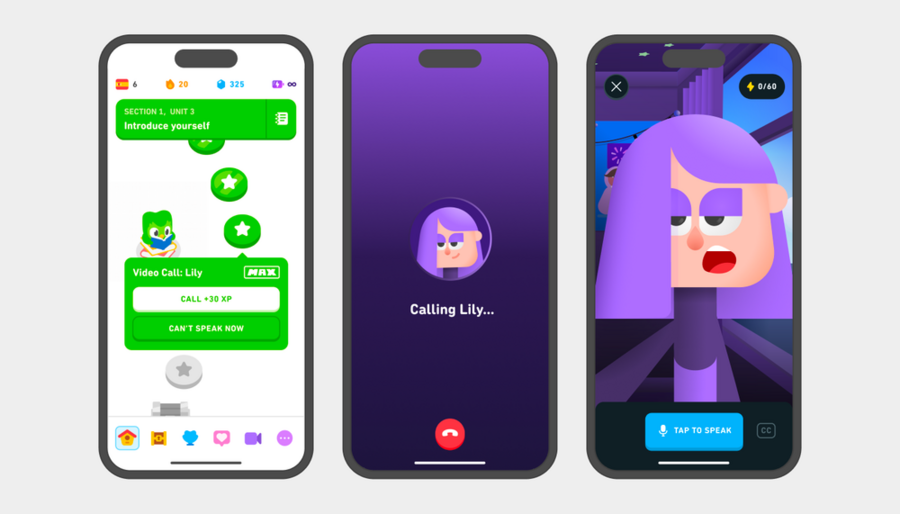
Duolingo’s app interface

Brand Identity and Strategic Positioning

Duolingo’s market positioning is defined by a radical departure from traditional educational paradigms. Conventional language institutions and software (e.g., Rosetta Stone, Babbel) historically positioned themselves through corporate seriousness, academic rigor, and the promise of professional fluency. Duolingo inverted this standard by establishing a core positioning centered on accessibility, fun and low-stakes consistency.

Исходный размер 2000x700

According to the brand’s official design and narrative guidelines, Duolingo’s corporate identity is consciously anchored in five defining adjectives: Inspiring, Inclusive, Can-do, Curious, and Quirky.

Inspiring: Rather than framing language learning as a mandatory academic chore, Duolingo positions itself as a motivational partner, emphasizing personal growth and the life-changing potential of knowing a new language.

Inclusive: This principle dictates that the brand must remain accessible to everyone, regardless of their background, skill level, or identity, positioning the platform as a democratic tool for global communication.

Can-do: This attribute shifts the focus from rigid grading to positive reinforcement. By emphasizing what a user can achieve in 5 minutes, the brand lowers the barrier to entry and reduces the «fear of failure» associated with traditional learning.

Curious: Duolingo positions the learning process as an active exploration rather than passive absorption, encouraging users to maintain a sense of wonder about languages and cultures.

Quirky: This is the brand’s primary differentiator. By embracing a unique, eccentric, and humorous personality (often manifested through Duo the Owl), Duolingo breaks the «sterile» corporate mold, allowing it to connect authentically with a younger audience that values humor over perfection.

Together, these attributes create a brand position that feels less like a school and more like a supportive, entertaining digital community.

Исходный размер 3500x772

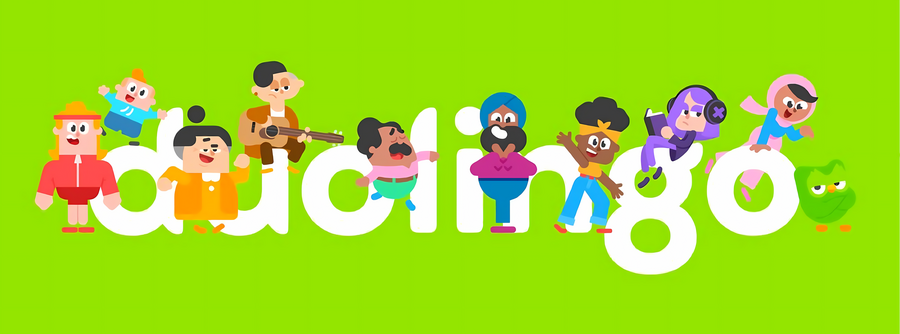
Various sides of Duo’s personality

Target Audience

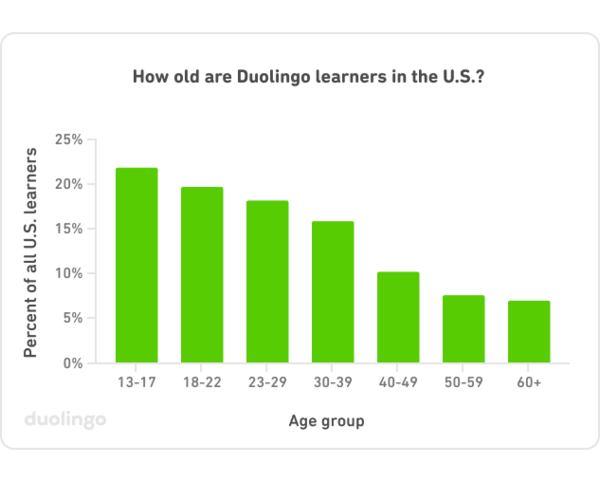
While Duolingo serves a broad global demographic, its communication strategy aggressively targets Gen Z and younger Millennials (ages 18–34). Globally, people under the age of 30 account for approximately from 50% to 60% across the years of all language learners on the platform. This audience is particularly responsive to the brand’s «unhinged marketing» style, which utilizes meme culture and viral trends on platforms like TikTok and Instagram to drive engagement.
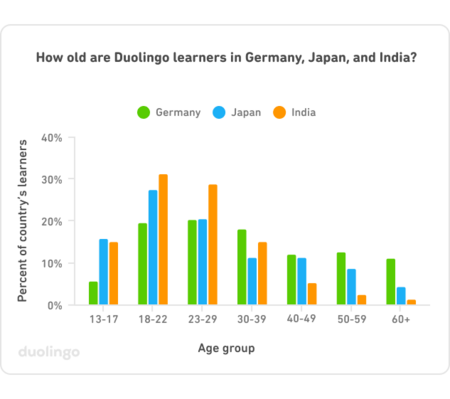
Charts showing the age distribution of Duolingo users in different countries, highlighting the dominance of the Gen Z and Millenials age groups

Исходный размер 3500x1300

User Motivations

Users engage with Duolingo for diverse reasons, often driven by a combination of intrinsic and extrinsic factors.

Travel and Culture: Travel is a primary motivator for 45% of users globally. Additionally, many learners, particularly from Gen Z, use the app to connect with cultures and media they enjoy, such as Japanese anime or Korean dramas.

Career and Education: Professional advancement is a significant driver, particularly for English learners in Latin America (60%), while 30% of French learners study to meet school or university requirements.

Brain Training and Family: For older demographics, such as U.S. Boomers, the primary motivations often include brain training (17% for Italian learners) or the desire to connect with family members who speak a different language.

Gamified Experience: The «fun» aspect is a major draw; approximately 33% of users explicitly state they use the app because it «feels like a game».

Social Media Ecosystem

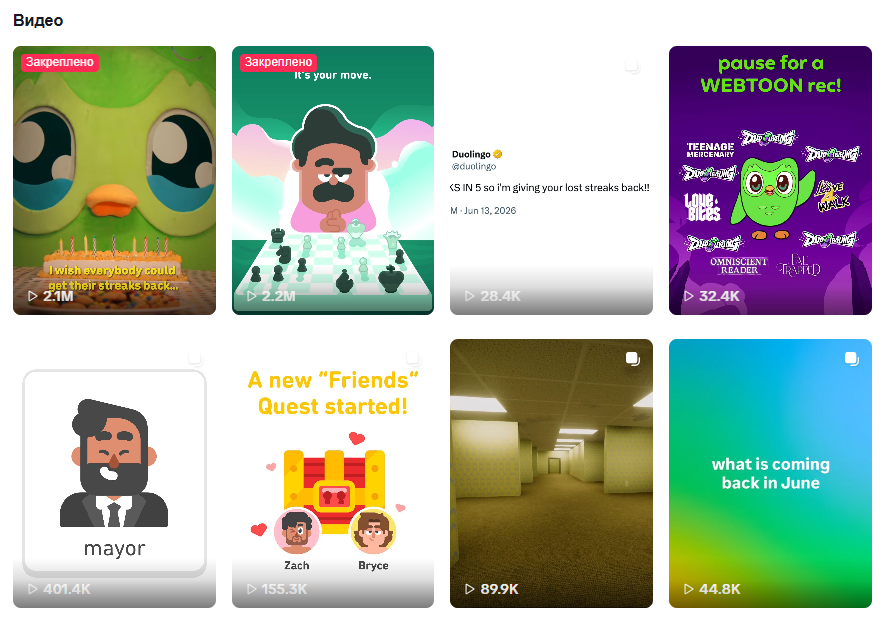
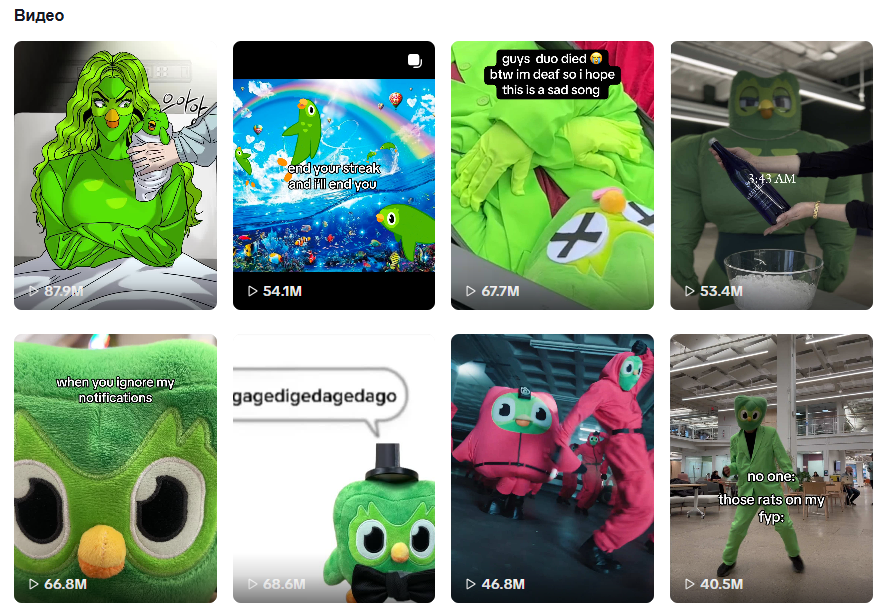
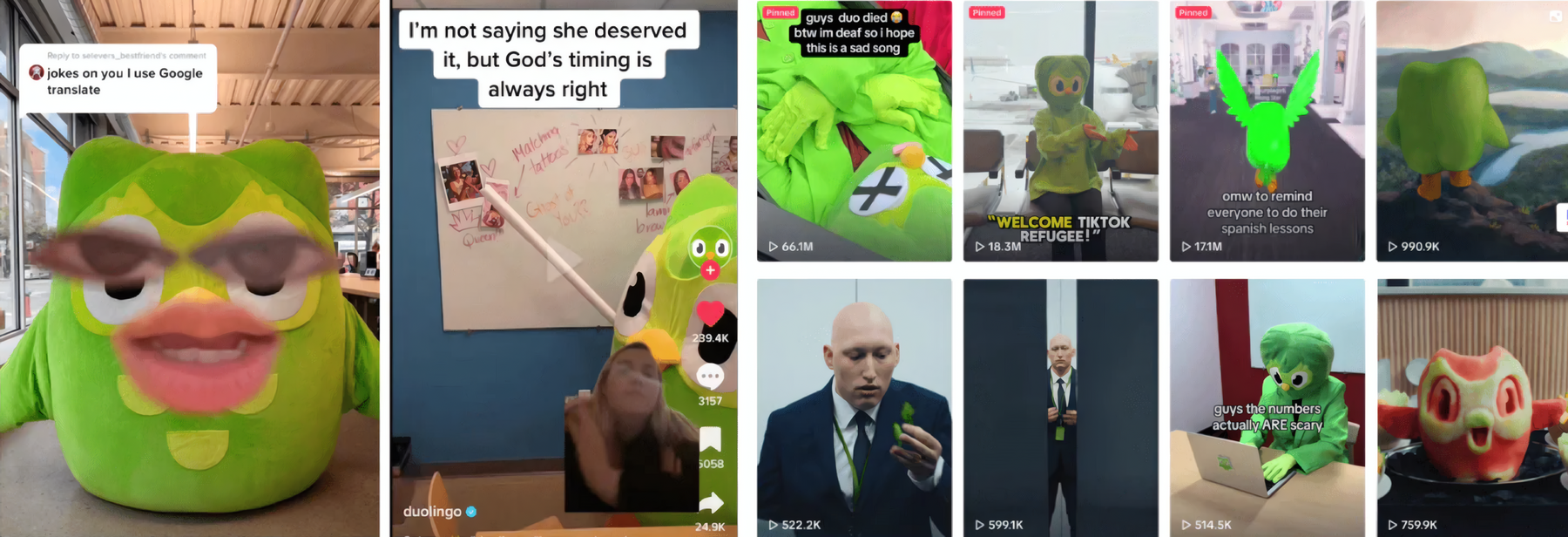
Duolingo’s presence in the public field is characterized by a disruptive, high-engagement strategy that prioritizes viral storytelling over traditional corporate messaging. The brand has cultivated a massive following across several major platforms.

TikTok: This is Duolingo’s best-performing channel, currently reaching over 17 million followers. A 2025 content analysis showed an engagement rate of 13,3%, categorized as «Very High».

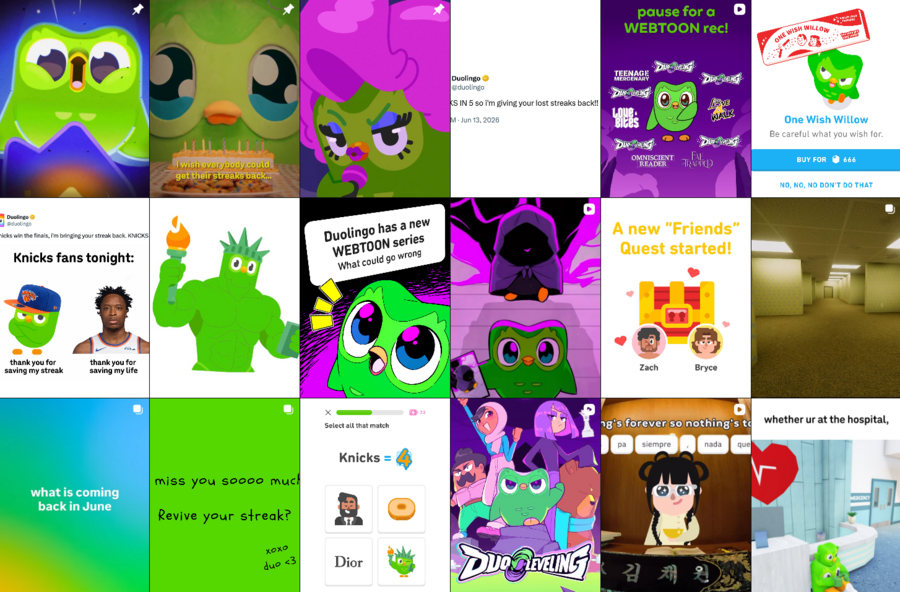
Instagram*: Reaching 5 million followers, the brand maintains a significant focus on visual storytelling mainly through Reels, similarly to TikTok.

YouTube: This platform (approximately 6.68 million followers) was reported in 2024 to drive 52,57% of all social media traffic to the Duolingo website, hosting both long-form brand content, campaign features, fun ways of learning languages and interactive product reveals, and short-form entertainment (Shorts).

X (Twitter): With 1 million followers, this channel drives 68% of all brand mentions on social media due to frequent community interactions and retweets. Used for real-time witty commentary, reactive PR, and sharing user-generated content (UGC), memes, and screenshots of funny notifications.

Facebook* and LinkedIn: These platforms maintain 2.3 million and over 800k followers respectively, though they typically see lower relative engagement than video-first platforms.
0

Duolingo’s posts on TikTok and Instagram

Internal Communication Channels

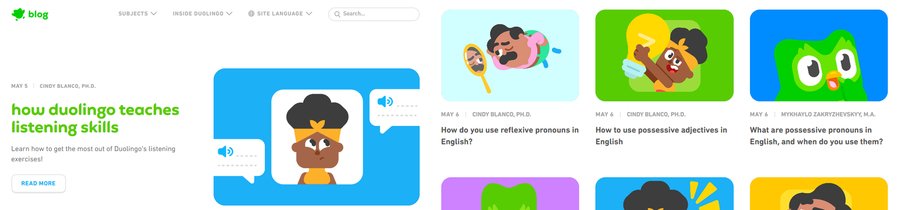
Duolingo Blog: Hosted on the official website, the blog functions as a vital anchor for institutional trust, providing a professional counterbalance to the brand’s «unhinged» social media persona by establishing deep educational credibility. It serves as a primary channel for transparency, articulating the strategic «why» behind product evolutions and company goals while detailing the brand’s broader mission to make high-quality education universally available. By hosting research-backed series like «Dear Duolingo» which addresses complex linguistic questions and explains the science of learning, the blog reinforces Duolingo’s position as a serious, evidence-based educational tool rather than just a gamified pastime

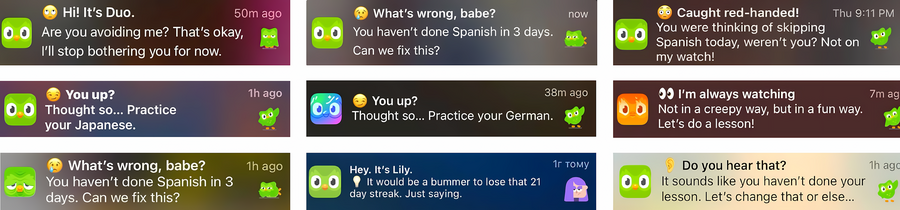
In-App and Push Notifications: Duolingo sends approximately 1.5 billion daily reminders. These are known for their passive-aggressive or guilt-tripping tone, which has become a viral meme in itself
0

Duolingo app notifications and Duolingo Blog website

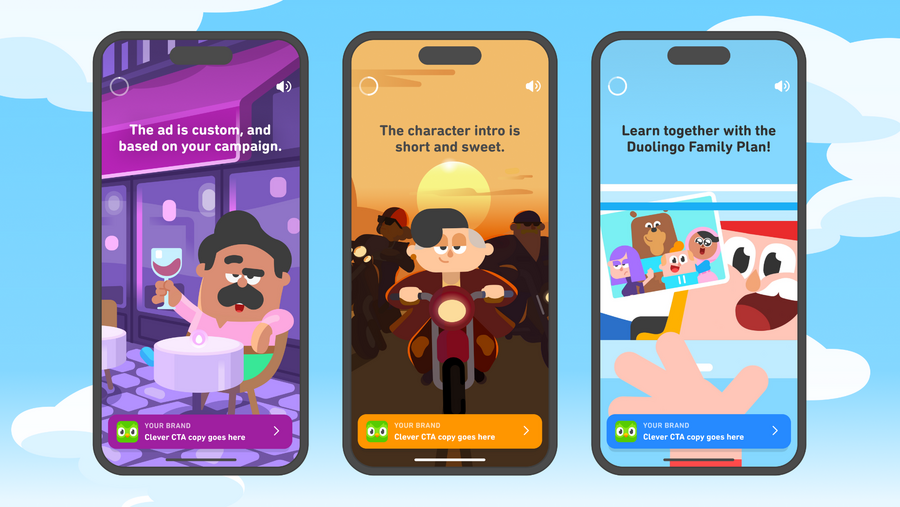
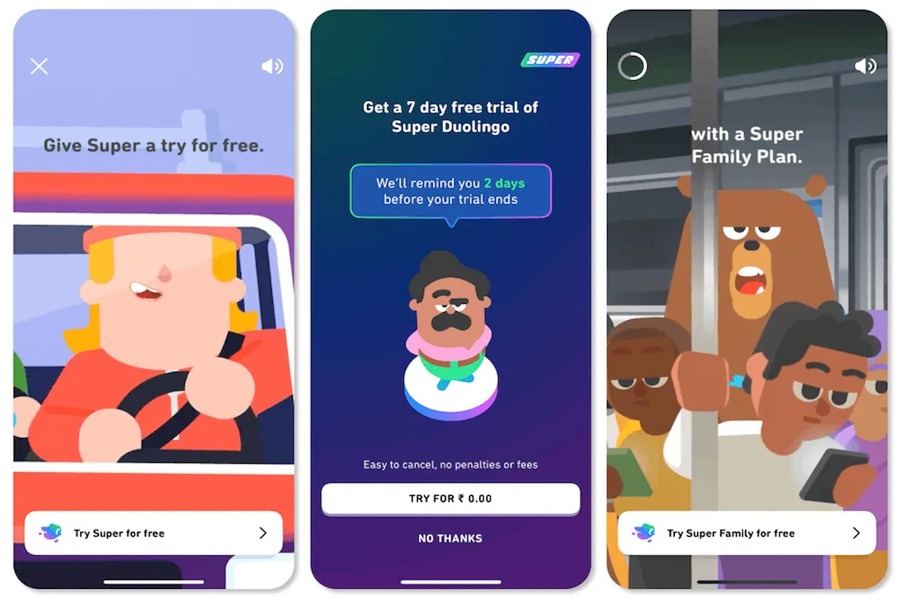
In-App Self-Promotion Ads: The platform uses its free tier to advertise «Super Duolingo», utilizing features like limited «Hearts» (punishing mistakes) or «Energy» to motivate users toward paid subscriptions that offer an uninterrupted experience


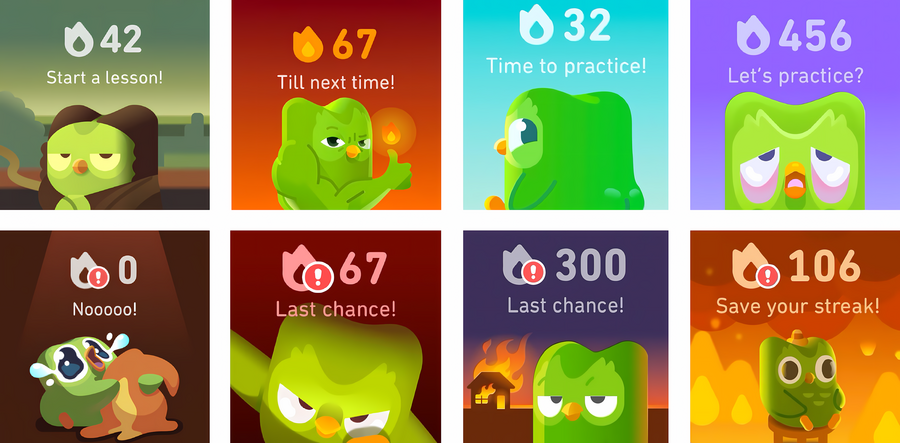
Mobile Widgets: Users can add interactive icons to their home screens that feature Duo’s expressions changing from happy to «furious» throughout the day as a visual cue to complete lessons
0

Duolungo’s mobile widgets and in-app ads

Public Relations and Marketing Strategies

Duolingo’s public relations framework is defined by a disruptive approach known as «Unhinged Marketing». This strategy abandons traditional, safe corporate communication in favor of boldness, irreverence, and a willingness to push boundaries to capture the attention of Gen Z and Millennial audiences.

Personification of the Mascot: Duolingo has successfully transformed its logo into an anthropomorphized «creator» personality. Duo the Owl is portrayed as an unpredictable, sassy, and sometimes menacing character, which humanizes the brand and makes it feel like an authentic participant in internet culture rather than a functional utility.

Strategic Meme Integration: A defining moment in the brand’s PR evolution was the decision to embrace the «Evil Duolingo Owl» meme. Instead of distancing itself from user-generated jokes about a threatening owl that haunts users who miss lessons, Duolingo leaned into this persona, using it as a primary narrative tool for engagement.

Исходный размер 889x500

Duolingo x Netflix’s Squid Games series collaboration

Direct «Dialogic» Engagement: The brand maintains a «Very High» engagement rate (13.3% on TikTok and 6,7% on Instagram as of 2025) through proactive community management. Community managers actively reply to user comments with sarcastic, witty, or «roasting» remarks, creating a Dialogic Loop where users return to the comments specifically to interact with the brand.

Agile Trend-Jacking and Parodies: Duolingo maintains cultural relevance by participating in real-time internet dramas and viral trends. This includes high-relevance parodies, such as Duo dressing as Taylor Swift or Lady Gaga for album cover recreations, and strategic collaborations like the late 2024 partnership with Netflix’s Squid Game to promote Korean courses.

Cross-Brand Collaborations: Duolingo frequently breaks the fourth wall of corporate isolationism by interacting with other brand accounts (such as Scrub Daddy or Ryanair), creating what internet users refer to as a shared «brand cinematic universe» on TikTok and X.

Viral Stunt Campaigns: To drive massive spikes in brand reach, Duolingo employs high-risk stunts, such as the 2025 campaign where it was faked that Duo the Owl had passed away. This «Death of Duo» narrative resulted in a massive surge of mentions and interactions, illustrating the brand’s commitment to high-stakes, unhinged storytelling.

Theoretical Framework

Uses and Gratifications Theory (U&G) Main Principle

Uses and Gratifications Theory (Katz, Blumler & Gurevitch, 1973) shows a shift in communication research:

From: What impact does media have on individuals? To: The uses and gratifications model represents a significant shift in thinking about how the audience interacts with media. Rather than seeing the audience as passive recipient of media effects, the model posits that individuals are active, goal-oriented individuals consuming media to meet specific psychological and/or social needs. Active, goal oriented individuals using media to meet their specific psychological and/or social needs.

Why U&G is Relevant to Duolingo Duolingo is not a traditional educational brand. Its social media presence (TikTok, Instagram, X) does not primarily teach languages. Instead, Duolingo’s communication strategy satisfies non‑educational gratifications — especially entertainment, diversion, and social integration. By fulfilling these needs, the brand builds massive awareness and positive affect, which indirectly drives app downloads and retention.


Исходный размер 2122x1206

Duolingo

Politeness Theory Positive face — being liked, appreciated and approved of by others. Negative face — a wish for freedom, independence and immunity from pressure / imposition.

Based on the theory, people attempt not to do Face-Threatening Acts (FTAs), i.e. requests, criticisms, threats, apologies and even compliments as these are perceived to put someone’s face at risk. People employ facework in order to mitigate or offset FTAs. They can be either preventative (not talking about certain things; diverting attention) or restorative (joking; apologizing; explaining; giving an excuse).

Brown and Levinson identify five politeness strategies, ranging from the most indirect to the most direct:

Avoidance — staying away from the face threatening act completely. Off record — imply indirectly via a hint. Negative politeness — acknowledging that a hearer needs autonomy and reducing impingement. Positive politeness — friendly, complimenting etc to lower the threat. Bald-on-record — expressing the message directly without softening it.

Depending upon power, prestige (social standing), and potential discomfort / offence the choice may vary.

Analysis

post

Duolingo Under Uses and Gratifications Theory (U&G)

  1. Entertainment — The Primary Driver What Duolingo does:
On TikTok and Instagram, Duolingo posts «unhinged» sketches: Duo threatening users, dancing to trends, reacting to dramas. The content satisfies a need for light‑hearted amusement. According to U&G, fulfilling entertainment needs creates positive feelings that transfer to the app — making users more willing to engage, even with rude notifications. Entertainment becomes a gateway to product use. Example: Duo dressing as Taylor Swift or Lady Gaga — pure entertainment, no educational value.
Исходный размер 680x431

Duolingo recreated Lady Gaga’s «Mayhem» album cover

  1. Diversion — Escape from Stress and Routine Duolingo reframes learning as low‑stakes play. Memes like «5 minutes of Spanish instead of work» position the app as legitimate procrastination. Push notifications use guilt and humor to pull users from daily stress. Duolingo offers a quick escape that feels productive but is fun. U&G predicts people turn to media for breaks. Duolingo never feels like serious studying and lowers the barrier to what you can achieve in 5 minutes. This is especially powerful for Gen Z and young Millennials.

  2. Belonging to the «Duo Fam» Duolingo replies with sarcastic or roasting remarks. Social integration is the need to belong. Duolingo transforms its audience into a group sharing humor and references. Users return for interaction and recognition.

  3. The Quirky Learner Self‑Image Brand personality: quirky, unhinged. Users share memes, notification screenshots, and streaks to perform an identity. People use media to construct self‑image. Following Duolingo signals: I am fun, internet‑savvy, learn without being a nerd. This satisfies personal identity — presenting oneself as approachable and culturally relevant. The «unhinged» persona gives permission to be silly about education.

  4. Information/Learning Informational content lives on the website and YouTube, not on TikTok or X. Information is a valid gratification, but for Duolingo’s social media strategy, it is not the primary driver. Users don’t follow @duolingo on TikTok to learn grammar — they follow for entertainment, diversion, and social belonging. The informational need is met elsewhere. This separation is intentional: social media builds affective loyalty, the blog builds cognitive trust.

Conclusion Duolingo’s communication strategy is not primarily educational from a U&G perspective. By fulfilling the emotional gratifications, Duolingo builds massive brand awareness and positive affect, which then drives users to the product — where actual learning occurs. This is a powerful inversion of the traditional edtech model.

Исходный размер 1152x928

Duolingo engages users by changing Duo’s facial expressions in the app icon which reflect user’s practice time

Duolingo Under Politeness Theory

  1. Notifications as FTAs FTAs limit an individual’s freedom of movement (the negative face) by asking/reminding them to return to the app and using bald-on-record to do so (rather than using other strategies such as compliments or encouragement). While Duolingo’s notifications use bald-on-record to threaten both positive and negative faces by pointing out inactivity, they do not conceal or mitigate that face threat.

  2. Guilt and Emotional Pressure Duolingo has used messages to create a sense of 'guilt' in users by blaming them for negative outcomes from their inactivity (for example, losing a streak or letting 'Duo' down). Consequently, Duolingo increases the threat to users by creating emotional pressure (positive face) and pressure to act (negative face).

  3. Face Threat and Duo the Owl The character of 'Duo' gives the personal nature of reminders an anthropomorphized character, so notifications feel less like they are being sent from a corporate entity and more like they are sent from an individual. The expression on Duo’s face (for example, being disappointed or unhappy) provides users with a greater sense of social impact resulting from his message and, thus, users are more impacted by the use of social approval/disapproval in their activity decisions.

Исходный размер 1928x899

«Evil Duo» meme

  1. Limited Politeness and Social Media Most brands like to «act» nice through praise and encouragement; in contrast, Duolingo employs sarcasm, mock threats and excessive drama to communicate with their users. Deliberately creating a low level of politeness makes for a humorous and surprising experience, which helps make the content memorable and enjoyable.

  2. The Evil Duo Meme Some users created the «Evil Duo» meme because they recognized that the way in which Duolingo communicates is «face threatening,» and therefore it served as a way to make fun of the company. Duolingo recognized the potential for the meme to create brand affinity between the user and the company, and therefore embraced it as part of their brand.

Conclusion Duolingo stands out from other brands in that they use FTAs, guilt-inducing methods of communication, and bald-on-record communication styles, rather than traditional positive politeness; Duolingo utilizes these strategies within their notifications, social media content, and through the character of Duo to challenge their users' positive and negative faces while creating humour, engagement, and brand loyalty.

«It is with heavy hearts that we inform you that Duo, formally known as The Duolingo Owl, is dead. Authorities are currently investigating his cause of death, and we are cooperating fully. Tbh he probably died waiting for you to do your lesson, but what do we know…We appreciate your understanding during this difficult time and kindly ask you to respect Dua Lipa’s privacy.»

- Official announcement on Duolingo’s Instagram*

Conclusion

Effectiveness Evaluation

Duolingo’s communication strategy is highly effective for its core audience but carries risks for older or more traditional users.

The brand successfully satisfies entertainment, diversion, and social integration needs. With TikTok followers and engagement rate, users follow for amusement, not grammar. The feels like a game experience lowers psychological barriers to daily practice. Social integration through «Duo fam» and sarcastic replies creates belonging. These gratifications build positive affect that transfers to the app itself.

Duolingo deliberately uses bald‑on‑record Face‑Threatening Acts (FTAs) — guilt‑tripping notifications, passive aggression, mock death announcements. Most brands avoid this because it threatens users’ positive face (being liked) and negative face (autonomy). Duolingo gets away with it because its audience is in on the joke. The «Evil Duo» meme turns potential offense into virality.

Informational needs are underserved in social media. Older demographics do not share the same gratifications and may find rudeness off‑putting. Bald‑on‑record FTAs risk crossing from funny to annoying, especially in high‑context cultures where direct FTAs are unacceptable. The one‑size‑fits‑all politeness strategy ignores individual and cultural differences.

Recommendations

Create a separate informational channel (U&G) Launch «Duolingo Deep Dive» on YouTube — in‑depth grammar, linguistics, polyglot interviews. Retains serious learners who might switch to Babbel.

Turn «Evil Duo» into a two‑way roasting game (U&G + Politeness) Launch #RoastDuo campaign — users roast Duo, brand roasts back. Turns one‑way FTAs into collaborative play. Enhances social integration.

Use restorative facework after extreme stunts (Politeness Theory) After campaigns like «Death of Duo, ” post a follow‑up with apology + joke + small gift, free streak freeze. Repairs face damage while keeping the humour.

Duolingo’s «unhinged» strategy is an anomaly — it proves that deliberate impoliteness can drive loyalty when the audience shares the joke. However, to scale globally and retain older users, the brand must segment its communication: keep the evil owl for those who enjoy threats, but offer a gentle mode for everyone else.

*Owned by Meta, recognized as an extremist organization, banned in the territory of the Russian Federation.

Библиография
1.

Duolingo Blog. Duolingo’s company strategy: how our mission fuels our growth [Online]. URL: https://blog.duolingo.com/duolingo-company-strategy/ (accessed: 07.06.26).

2.

International Journal of Social Science and Human Research. Kusuma K.J., Fauziati C., Damayanti A. «Unhinged Marketing» on Social Media Marketing: How Duolingo’s Content Engage the Audience [Online]. URL: https://ijsshmr.com/v4i6/Doc/22.pdf (accessed: 07.06.26).

3.

ResearchGate. A Typology of Freemium Business Models for Mobile Applications [Online]. URL: https://www.researchgate.net/publication/303176091_A_Typology_of_Freemium_Business_Models_for_Mobile_Applications (accessed: 07.06.26).

4.

Duolingo Design. Duolingo Brand Guidelines: Brand Narrative [Online]. URL: https://design.duolingo.com/writing/brand-narrative (accessed: 07.06.26).

5.

Similarweb. duolingo.com Traffic Analytics, Ranking & Audience [May 2026] [Online]. URL: https://www.similarweb.com/website/duolingo.com/ (accessed: 07.06.26).

6.

Duolingo Blog. How does language learning differ across generations? [Online]. URL: https://blog.duolingo.com/dear-duolingo-how-does-language-learning-differ-between-generations/ (accessed: 07.06.26).

7.

Duolingo Research Papers. Michalowski A., Cardwell R., Nydick S., Naismith B. Duolingo English Test: Demographic and Score Properties of Test Takers [Online]. URL: https://duolingo-papers.s3.us-east-1.amazonaws.com/other/demographic+report+(Aug+15+2025+version).pdf (accessed: 07.06.26).

Источники изображений
1.

Brand24. Duolingo Social Media Strategy [Online]. URL: https://brand24.com/blog/duolingo-social-media-strategy/ (accessed: 13.06.26).

2.

Campaign Asia. Duolingo Rolls Out Its New Ad Platform [Online]. URL: https://www.campaignasia.com/article/duolingo-rolls-out-its-new-ad-platform/0f72en252w7cs17gqw0n1m6rqr (accessed: 13.06.26).

3.

Duolingo Blog. Official Duolingo blog [Online]. URL: https://blog.duolingo.com/ (accessed: 07.06.26).

4.

Instagram. Duolingo official Instagram account [Online]. URL: https://www.instagram.com/duolingo/?hl=ru (accessed: 07.06.26).

5.

LBB Online. Duolingo Launches Duolingo Ads [Online]. URL: https://lbbonline.com/news/Duolingo-Launches-Duolingo-Ads (accessed: 13.06.26).

6.

Medium. The Surprising Upside to Killing the Heart of Your Brand [Online]. URL: https://medium.com/marketing-in-the-age-of-digital/the-surprising-upside-to-killing-the-heart-of-your-brand-a653ab1953c0 (accessed: 13.06.26).

7.

Pinterest. Communication sources photo [Online]. URL: https://ru.pinterest.com/pin/787567053621846970/ (accessed: 07.06.26).

8.

Pinterest. Communication sources photo [Online]. URL: https://ru.pinterest.com/pin/267542034103209786/ (accessed: 07.06.26).

9.

Pinterest. Communication sources photo [Online]. URL: https://ru.pinterest.com/pin/1146095805186842858/ (accessed: 07.06.26).

10.

Pinterest. Communication sources photo [Online]. URL: https://ru.pinterest.com/pin/808325833151995566/ (accessed: 07.06.26).

11.

Pinterest. Communication sources photo [Online]. URL: https://ru.pinterest.com/pin/1069182767809285740/ (accessed: 07.06.26).

12.

Pinterest. Communication sources photo [Online]. URL: https://ru.pinterest.com/pin/1025131933927230570/ (accessed: 07.06.26).

13.

Pinterest. Communication sources photo [Online]. URL: https://ru.pinterest.com/pin/1082904672896850820/ (accessed: 07.06.26).

14.

Pinterest. Communication sources photo [Online]. URL: https://pin.it/6aRabJdVF (accessed: 13.06.26).

15.

Pinterest. Duolingo app notification example [Online]. URL: https://ru.pinterest.com/pin/357051076731031702/ (accessed: 13.06.26).

16.

Pinterest. Duolingo app notification example [Online]. URL: https://ru.pinterest.com/pin/826973550360115068/ (accessed: 13.06.26).

17.

Pinterest. Duolingo app notification example [Online]. URL: https://ru.pinterest.com/pin/1100426490194890688/ (accessed: 13.06.26).

18.

Pinterest. Duolingo app notification example [Online]. URL: https://ru.pinterest.com/pin/789748484696574904/ (accessed: 13.06.26).

19.

Pinterest. Duolingo app notification example [Online]. URL: https://ru.pinterest.com/pin/954552083527698642/ (accessed: 13.06.26).

20.

Pinterest. Duolingo app notification example [Online]. URL: https://ru.pinterest.com/pin/1005287948067385662/ (accessed: 13.06.26).

21.

Pinterest. Duolingo app notification example [Online]. URL: https://ru.pinterest.com/pin/1056446025085287539/ (accessed: 13.06.26).

22.

Pinterest. Duolingo app notification example [Online]. URL: https://ru.pinterest.com/pin/747808713172256585/ (accessed: 13.06.26).

23.

Pinterest. Duolingo app notification example [Online]. URL: https://ru.pinterest.com/pin/300685712642789148/ (accessed: 13.06.26).

24.

Pinterest. Duolingo app notification example [Online]. URL: https://ru.pinterest.com/pin/174866398026647663/ (accessed: 13.06.26).

25.

Pinterest. Duolingo app notification example [Online]. URL: https://ru.pinterest.com/pin/955044664745996128/ (accessed: 13.06.26).

26.

Pinterest. Duolingo app notification example [Online]. URL: https://ru.pinterest.com/pin/895231232192072713/ (accessed: 13.06.26).

27.

Pinterest. Duolingo app notification example [Online]. URL: https://ru.pinterest.com/pin/1125970344323286299/ (accessed: 13.06.26).

28.

Pinterest. Duolingo app notification example [Online]. URL: https://ru.pinterest.com/pin/1146729123864279332/ (accessed: 13.06.26).

29.

Pinterest. Duolingo app notification example [Online]. URL: https://ru.pinterest.com/pin/895231232192072757/ (accessed: 13.06.26).

30.

Pinterest. Duolingo notification example [Online]. URL: https://ru.pinterest.com/pin/1137862662121107795/ (accessed: 13.06.26).

31.

Pinterest. Duolingo social media campaign example [Online]. URL: https://ru.pinterest.com/pin/343258802868091984/ (accessed: 13.06.26).

32.

Pinterest. Evil Duo meme example [Online]. URL: https://ru.pinterest.com/pin/1140044093204127826/ (accessed: 13.06.26).

33.

Pinterest. Evil Duo meme example [Online]. URL: https://ru.pinterest.com/pin/975733075515356769/ (accessed: 13.06.26).

34.

Pinterest. Evil Duo meme example [Online]. URL: https://ru.pinterest.com/pin/899805200561368505/ (accessed: 13.06.26).

35.

TikTok. Duolingo official TikTok account [Online]. URL: https://www.tiktok.com/@duolingo (accessed: 07.06.26).

36.

UX Design. Duolingo’s Small UI Switch That Changes Everything [Online]. URL: https://uxdesign.cc/duolingos-small-ui-switch-that-changes-everything-fae257203633 (accessed: 13.06.26).

37.

X (Twitter). Duolingo official X account [Online]. URL: https://x.com/duolingo (accessed: 15.06.26).

38.

YouTube. Duolingo official YouTube channel [Online]. URL: https://www.youtube.com/user/duolingo (accessed: 07.06.26).

Мы используем файлы cookies для улучшения работы сайта НИУ ВШЭ и большего удобства его использования. Более подробную...
Показать больше