
Исходный размер 1140x1600

Young&Yandex · communication analysis

Данный проект является учебной работой студента Школы дизайна или исследовательской работой преподавателя Школы дизайна. Данный проект не является коммерческим и служит образовательным целям

Pt 1: Introduction

Исходный размер 1920x1080

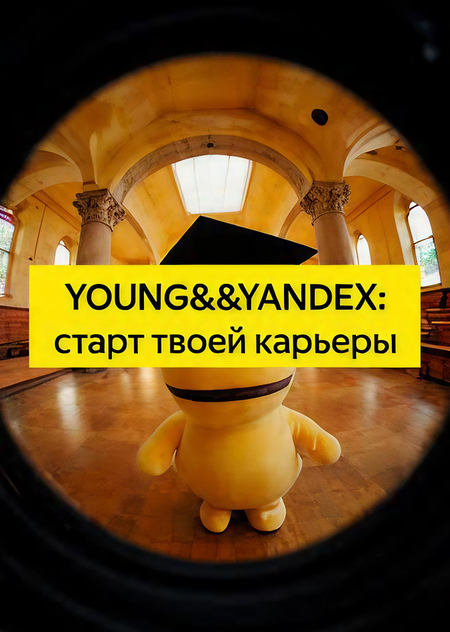
3D dino mascot / Young& & Yandex wordmark

YOUNG&YANDEX Starting your career feels less like a job — and more like an adventure. A communication analysis through the Elaboration Likelihood Model and Uses & Gratifications Theory.

Young&Yandex is Yandex’s early-career ecosystem: paid internships, summer schools, olympiads, championships, lectures, contests, events and merch, tied together by a landing site and a Telegram channel. It is not a consumer-product brand and not a plain vacancy page — it is an employer brand and an educational communication platform.
Исходный размер 1756x965

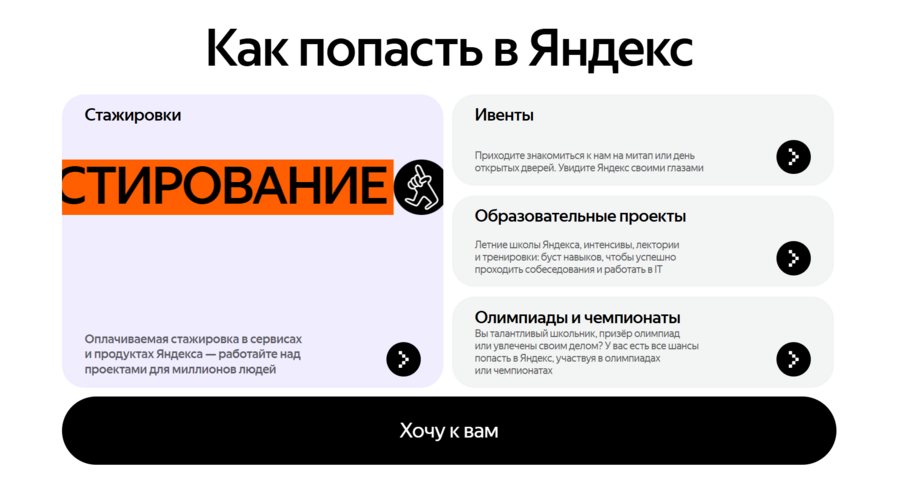
«Как попасть в Яндекс» section + the «Хочу к вам» button

The main «product» is career opportunity, and the brand communicates it on two levels. Functional level: information about internships, directions, applications, schools and events. Symbolic level: access to «big IT», professional growth, mentorship, real products at scale, and belonging to a smart community. The emotional promise is that the audience is not just applying for a job — they are entering a world.

The defining feature of the audience strategy: the funnel opens far upstream of hireability. Yandex begins building affiliation when a person is a schoolchild and harvests the application years later, as a graduate. Three segments sit on one continuous path.

Исходный размер 1920x1080

audience diagram — three levels: school students → students/graduates → early-career

Olympiad circles, math and CS preparation, contests for teenagers. At this stage there is no job to offer — so the communication sells a future self, not a position. The strategic logic: by the time these students can be hired, they already identify with the brand and have trained on its own tasks. Hiring effectively begins at school.

The core conversion segment: paid internships, summer schools, ambassadors, campus events, the University Battle. This is where curiosity built earlier turns into applications.

Specialists who want to change direction, join a larger company, or test their skills through contests and events — across all stacks: development, ML, analytics, testing, security, management, business, marketing, design. «All stacks, Non-IT» is a literal event tag.

Pt 2: Communication Channels

Исходный размер 1920x1172

collage of channels

Young&Yandex uses a multi-channel system in which each channel has a distinct role: the website structures the ecosystem; internship pages convert interest into applications; events build community; Telegram keeps daily contact; YouTube carries long-form video; contests work as selection-and-training infrastructure; olympiads and schools feed the school-age funnel.

The site presents the ecosystem as a map of entry points — internships, events, educational projects, olympiads, summer schools, CodeRun, Young Con. It makes the brand feel less like a vacancy page and more like a full career environment.

Исходный размер 2540x1281

screenshot of yandex.ru/yaintern

The internship page is highly practical. It presents paid internships in Yandex services, emphasises real work on products with large audiences, and lists directions. It answers the audience’s main question: «Where can I apply and what exactly will I do?»

The Telegram channel keeps regular, informal contact between events — tips, calls for events, behind-the-scenes, interview prep. It lives natively on the platform the audience already uses.

Events let the brand speak to candidates before they formally apply, which lowers psychological distance: first attend, listen, observe — then decide whether to enter selection. Young Con, a festival about career and technology, turns Yandex from an abstract employer into a physical, social environment young people can meet.

Lectures, training and summer schools position Yandex as a company that invests in development, not only one that selects ready candidates. A school format implies a serious learning path and deeper immersion. For school-age and early audiences, this is the channel that reduces distance long before any internship is realistic.

Исходный размер 2000x1006

Yandex campus coworking interior HSE / MFTI with branding

Yandex has placed branded coworking spaces inside universities — first at ITMO (2023), then MFTI and HSE (2025) — designed in the style of its own offices: soft seating, soundproof booths for online calls, a Yandex Station with Alice and smart-home devices, and a shelf of programming and science books curated by Yandex Education experts.

On-site events run with Yandex experts and the joint Computer Science Faculty. As a channel its role is ENVIRONMENTAL: it puts the brand into students' daily routine, on their own campus. Scope note: these spaces sit at the boundary of Young&Yandex and Yandex Education (the university-partnership sub-brand) — treat them as Yandex’s wider student-facing presence, not a pure yaintern property.
0

Battle of universities

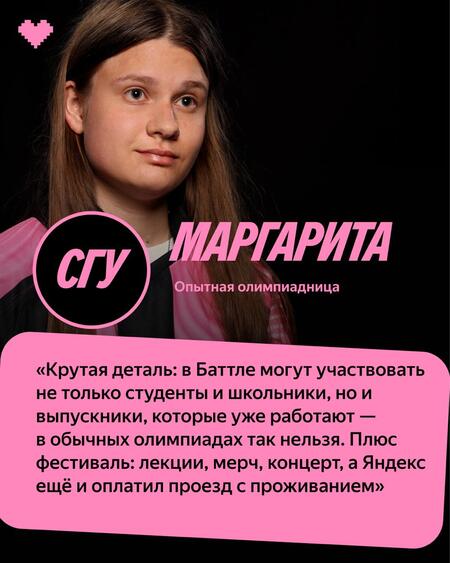
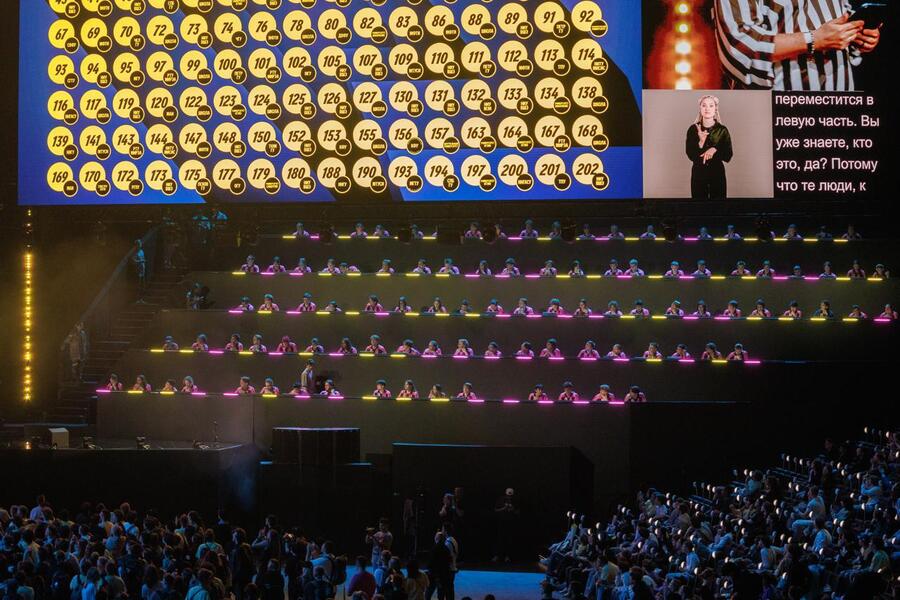
The PR strategy is continuous community-building rather than seasonal recruitment: an always-on event calendar, peer advocacy (ambassadors), earned attention (championships, the ₽1M University Battle prize) and owned media (Telegram, the documentary film). The relationship is maintained year-round, so the eventual «apply» feels like a next step, not a cold start.
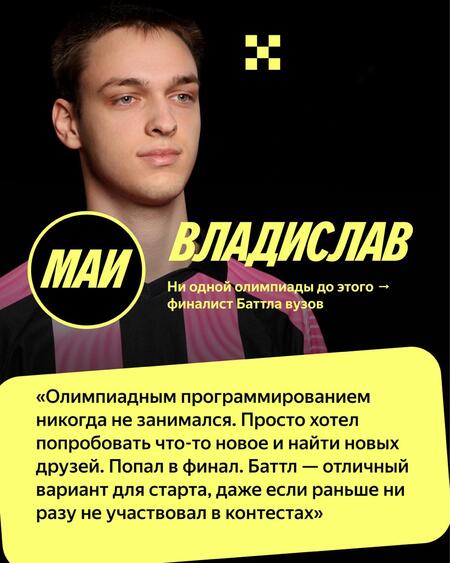
Real stories about Battle of universities

Pt 3: Theoretical Framework

An employer brand has to do two jobs: persuade people to want in, and keep them engaged for years across a long funnel. We use one theory for each. — Elaboration Likelihood Model (ELM) — HOW the communication persuades. — Uses and Gratifications Theory (UGT) — WHY the audience keeps choosing to engage.

Исходный размер 1920x793

two theories

ELM describes two routes to attitude change. The CENTRAL route works through careful processing of strong arguments and evidence; it requires motivation and ability to think. The PERIPHERAL route works through cues — emotion, attractiveness, mood, identity signals — when motivation or ability to elaborate is low. Most communication uses both, aimed at different readers.

UGT treats the audience as ACTIVE: people choose media to satisfy specific needs. The classic gratifications (McQuail, Blumler & Brown, 1972) are: SURVEILLANCE / information; PERSONAL IDENTITY (modelling and reinforcing who you are); INTEGRATION & SOCIAL interaction (belonging, shared talking points); and DIVERSION / entertainment.

The two theories interlock. ELM explains the persuasion architecture of the brand — strong arguments for serious candidates, attractive cues for everyone else. UGT explains its longevity — the audience returns because each visit pays off in information, identity, belonging or fun. Together they describe a system that moves a 14-year-old’s curiosity to a graduate’s application.

Pt 4: Analysis

For high-motivation candidates (a graduating developer), the brand supplies strong, checkable arguments: paid internships, «real work on products for millions», named stacks and directions, clear selection steps. This is central-route persuasion — attitude change earned through substance the reader actively evaluates.

The documentary film, the open lectures and the contests give high-elaboration users even more to process: long-form proof, expert speakers, measurable tasks. Depth itself becomes an argument that this is a serious place to grow.

Исходный размер 1208x680

As this screenshot shows, the internship vlog «Стажировка в Яндексе ➤ Полное прохождение» is styled as a video game: a pixel-art avatar, a HUD with lives and coins, and chapter titles like «Level 4: прод, нервы и факапы». The adventure framing is made literal — the internship is presented as a playable quest, not a job. In ELM terms this is a pure peripheral cue (game aesthetics and affect over argument); in UGT terms it doubles as a diversion gratification, since the video is enjoyable to watch on its own. The honest «факапы» also add central-route credibility — it is not a glossy ad.

This is the heart of the visual strategy. The communication systematically frames a career at Yandex as an ADVENTURE rather than a job: a friendly dinosaur mascot, festival logic, bright playful graphics, movement, and informal calls to action like «Хочу в Яндекс». The game styling works on feeling, not on logic. In ELM terms it is a peripheral cue: the viewer is drawn in by the playful look and mood, not by any argument that Yandex is a good place to work. The video also meets a UGT diversion gratification — people watch it because it is fun in itself, like a gaming let’s-play. And because it shows the hard parts openly («факапы» — the fails and stress), it also earns central-route credibility: the honesty gives a thoughtful viewer something real to trust, so it reads as a genuine account, not a glossy ad. One piece of content therefore persuades on several levels at once.

0

«Святочный бал» by Young&Yandex

0

«НИИ WHY&WHY» by Young&Yandex

The brand reaches for ready-made imaginative worlds: the «НИИ WHY& & WHY» symposium echoes the Strugatsky brothers; the «Yule Ball» borrows Harry Potter. These are peripheral cues with a double payload — they read as fun, and «getting the reference» quietly signals that you belong to the same culture. Recognition becomes a low-effort entry test into the in-group.

Every company has its own unique culture, and its main bearers are people

Daria Zolotukhina Yandex HR Director

The U-Team ambassador programme is the clearest identity evidence: students officially represent Yandex at their own universities — they get to be «a Yandex person» years before any job. This lets the audience model and reinforce who they want to become. For a school or first-year student especially, the brand offers a future identity to try on long before a position exists — which is exactly why building affiliation early works.

Merch — socks with the pixel dinosaur, branded desk objects — is the brand identity made wearable and physical. As the screenshot shows, the socks split the wordmark across the pair and carry the dino mascot (reading a book on one, flexing on the other), while the acrylic «Поисковые сервисы и ИИ» cube keeps the brand on your desk. In ELM terms this is a peripheral cue: it works through affect and the playful adventure aesthetic, not through argument — the same dino-and-fun world, now something you own. In UGT terms it serves the personal identity and social gratifications at once: wearing or owning the merch is a way to display «I belong to Young&Yandex» and to be recognised by others in the same in-group. And because merch is handed out at events and to ambassadors, people wear the identity long before they are hired — the affiliation-before-hireability funnel turned into a physical object.

Pt 5: Conclusion and Recommendations

Young&Yandex works because it combines rational clarity with emotional accessibility. The rational side (ELM central route) explains directions, internships, contests and educational paths. The emotional side (ELM peripheral route + UGT entertainment and identity) creates motivation through community, adventure and the promise of entering big IT. Its strongest move is treating recruitment not as one isolated application form but as a journey from curiosity to preparation to application.

— clear positioning — a strong link to the Yandex employer brand — practical career information — educational depth — event energy and regular Telegram contact.

The adventure framing builds a distinctive culture that a competitor cannot cheaply copy.

For schoolchildren there is no job to «use» the brand for — yet the platform still satisfies two real needs: surveillance (preparing for a future career) and personal identity (imagining yourself as someone who codes, competes, belongs). Satisfying these needs years early is what lets Yandex cultivate loyalty before hireability — recruitment that begins at school.

ELM persuades (substance for the ready, adventure for the curious), and UGT retains (information, identity, belonging, fun keep people in the ecosystem). The result is a single funnel that carries a 14-year-old’s curiosity all the way to a graduate’s application.

Our 3 main recommendations

Firstly, make career paths visually explicit: simple «from zero to internship» maps for school students, first-year students, graduates, and switchers. This strengthens central-route persuasion — users can see what to do next without drowning in options.

Secondly, systematize and implement a dialog system in the comments in Telegram. Instead of leaving it as just a public chat for subscribers, you can make it a common place for quick answers to your questions.

And converting disparate responses into recognizable formats enhances social and personal satisfaction and makes support visible to readers who are just hiding.

Библиография
1.

Young& & Yandex — старт карьеры в Яндексе // Яндекс [Электронный ресурс]. URL: https://yandex.ru/yaintern (дата обращения: 12.06.2026).

2.

Оплачиваемая стажировка в Яндексе // Young& & Yandex [Электронный ресурс]. URL: https://yandex.ru/yaintern/internship (дата обращения: 12.06.2026).

3.

Ивенты Young& & Yandex // Яндекс [Электронный ресурс]. URL: https://yandex.ru/yaintern/events (дата обращения: 12.06.2026).

4.

Образовательные проекты Young& & Yandex // Яндекс [Электронный ресурс]. URL: https://yandex.ru/yaintern/edu (дата обращения: 12.06.2026).

5.

Олимпиады и чемпионаты с поддержкой Яндекса // Young& & Yandex [Электронный ресурс]. URL: https://yandex.ru/yaintern/olympiads (дата обращения: 12.06.2026).

6.

Летние школы Яндекса // Young& & Yandex [Электронный ресурс]. URL: https://yandex.ru/yaintern/schools/summer/index (дата обращения: 12.06.2026).

7.

Young Con — фест Яндекса про карьеру и технологии // Яндекс [Электронный ресурс]. URL: https://yandex.ru/youngcon (дата обращения: 12.06.2026).

8.

Young& & Yandex: Telegram-канал [Электронный ресурс]. URL: https://t.me/Young_and_Yandex (дата обращения: 12.06.2026).

9.

Young& & Yandex: YouTube channel [Электронный ресурс]. URL: https://www.youtube.com/@Young_and_Yandex (дата обращения: 12.06.2026).

10.

Yandex Contest is a platform for solving programming problems // Yandex [Электронный ресурс]. URL: https://contest.yandex.com/ (дата обращения: 12.06.2026).

11.

Yandex Jobs [Электронный ресурс]. URL: https://yandex.com/jobs (дата обращения: 12.06.2026).

Мы используем файлы cookies для улучшения работы сайта НИУ ВШЭ и большего удобства его использования. Более подробную...
Показать больше