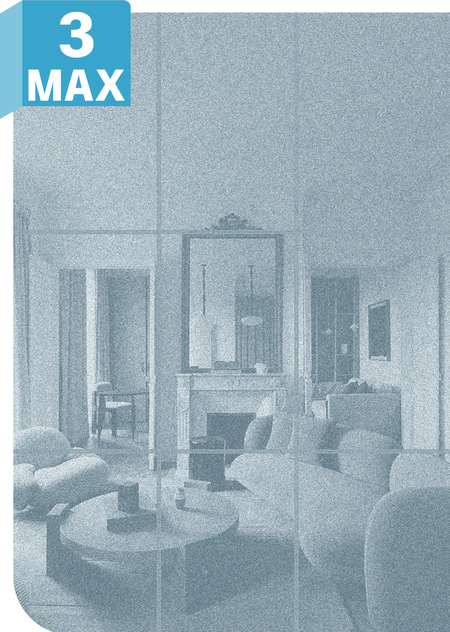
Composition in interior design is the art of harmoniously arranging furniture, décor, and architectural elements. It helps direct the viewer’s attention, convey the atmosphere of the space, emphasize volumes, and reveal the core concept.
Compositional Forms

Static and DynamicA static composition evokes a sense of stillness, unity, and balance. This is achieved by placing key elements perpendicular to the horizon line. Symmetry can be employed by positioning objects vertically.A dynamic composition generates a feeling of movement through the use of diagonals, rhythm, and color accents.

Symmetry and Asymmetry
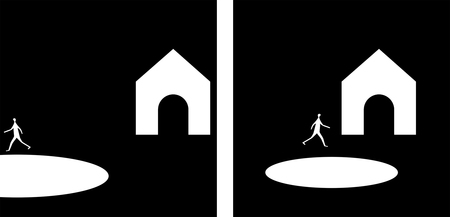
Closed and open composition
Principles of Frame Composition
Rule of Thirds
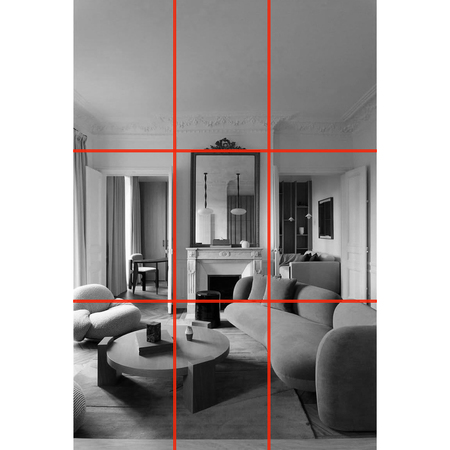
According to this rule, the canvas is divided into nine sections by two horizontal and two vertical lines. Major interior elements should be placed at the intersection points of these lines.
The Golden Ratio
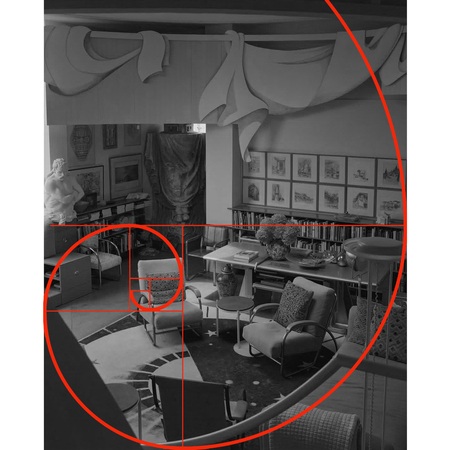
Just as with the rule of thirds, the main elements in the golden ratio should be placed along the grid lines and at their intersections. The golden ratio scheme can appear as a grid or as a spiral.
Golden Triangles
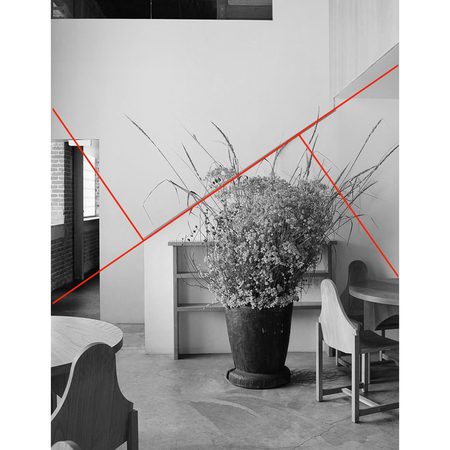
This technique allows you to convey dynamism within the frame. When setting up such a perspective, you need to run a diagonal across the entire frame. This diagonal could be an architectural element (like the staircase in the photo), a shadow, or a piece of decor, among other things. Next, from this main diagonal line, create two more perpendicular lines. Key elements of the frame should also be positioned along these lines—for instance, the doorway and the table in the image.
Diagonal Rule
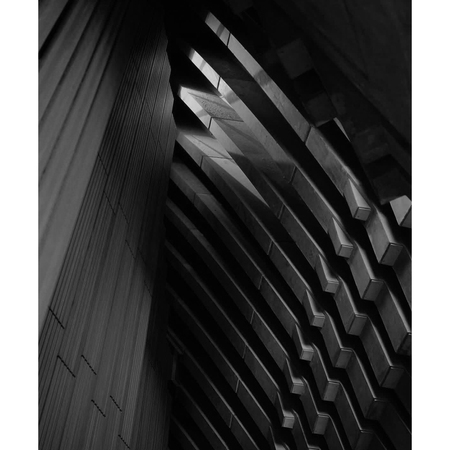
This is another way to give dynamism to a composition. According to this rule, important elements of the composition should be placed diagonally.
Leading Lines
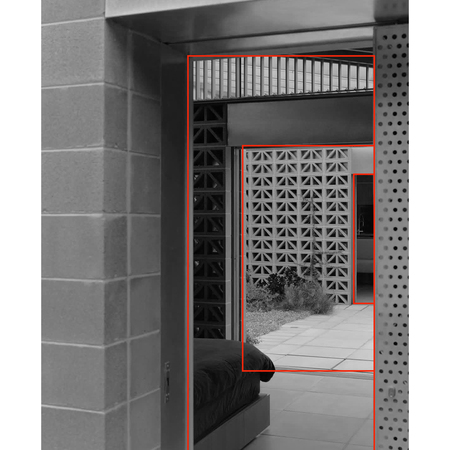
They guide the viewer’s eye toward key elements within the frame. Leading lines can be straight or curved.
Triangle
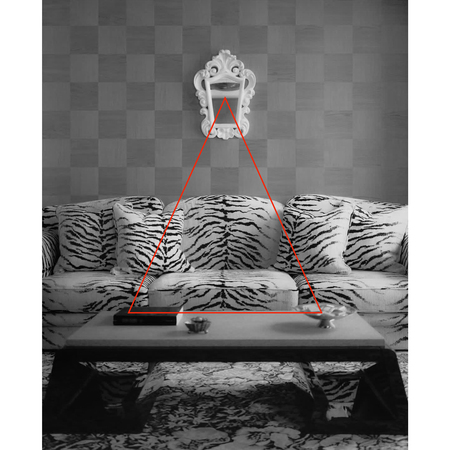
These methods are mainly used when composing medium and wide shots. In interior photography and visualization, triangles are built using decorative elements. The more well-defined the triangle, the stronger the sense of stability.
Camera Angles
Front view
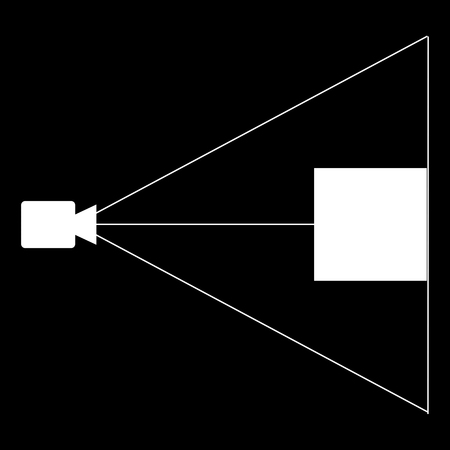
Shooting directly opposite the subject. This provides a static, symmetrical, and calm image.
Diagonal view
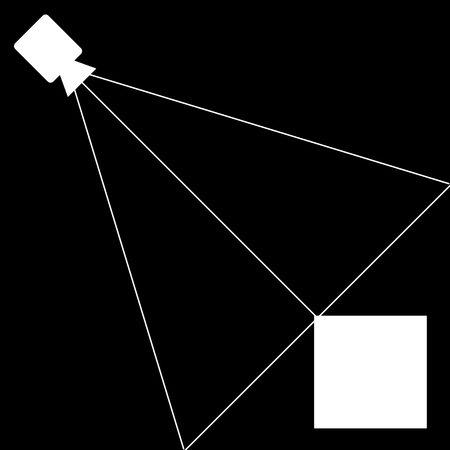
Turning the camera at an angle to the subject. This adds volume and depth to the frame. It is advisable to avoid small rotation angles.
Top view
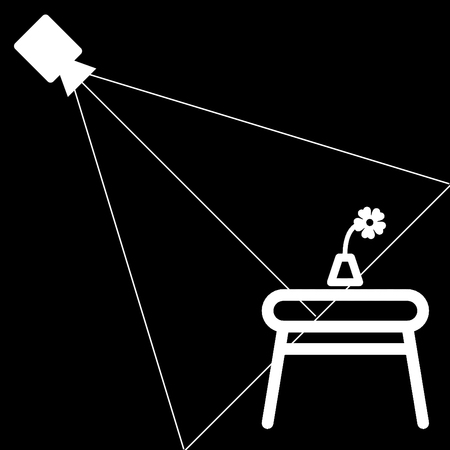
The camera is positioned above the subject and angled downward. This creates a feeling of focus on the object or space, while keeping the frame dynamic.
Planning in Composition
Overview
The overall plan helps the viewer orient themselves within the space. In interior visualization and photography, it illustrates the relationship between different zones—for example, the transition from the kitchen to the living room, or the connection between the first floor and the mezzanine, and so on.
Medium Shot
It is suitable for displaying individual areas from different perspectives. This type of plan allows the viewer to focus specifically on the design of a particular interior space. A medium shot provides detailed information about the spatial organization.