Navigation
- Introduction
- The Relevance of Educational Comics in the Modern World
- Pedagogical Potential in Working with Comics
- Visual Literacy
- Overview of Comics for Kids
- Historical Prototypes and the Development of the Genre
- Panorama of Contemporary Educational Comics
- Conclusion and Future Directions
- Bibliography
- Image Sources
Introduction
As a mother of a young child, I am interested in comics that are educational and developmental. In my visual research, I want to examine what is important to parents when choosing a comic, what types of comics are available for kids, and how they aid both children and parents in learning and understanding the world.
The Relevance of Educational Comics in the Modern World
What is an educational comic?
An educational comic is adapted literature—meaning it is reworked and tailored for the reader, utilizing grammatical structures comprehensible to a specific target audience, in our case, children categorized by age group.
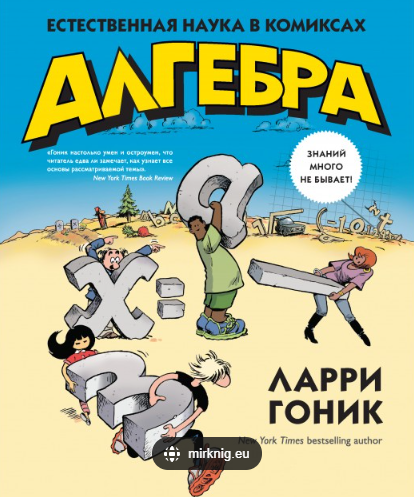
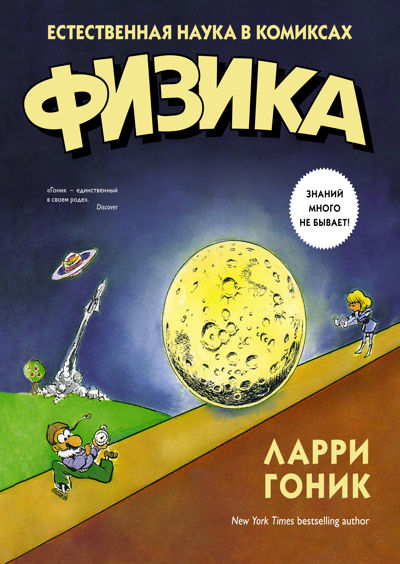
Larry Gonick’s Comic
Why is this relevant? In an era of digital noise and clip-based thinking—where attention is the ultimate currency and the volume of information is doubling at an alarming rate—traditional teaching methods face serious challenges. It is within this context that the educational comic ceases to be a niche genre and transforms into one of the most relevant and effective pedagogical tools. Its contemporary importance is determined by three key factors.
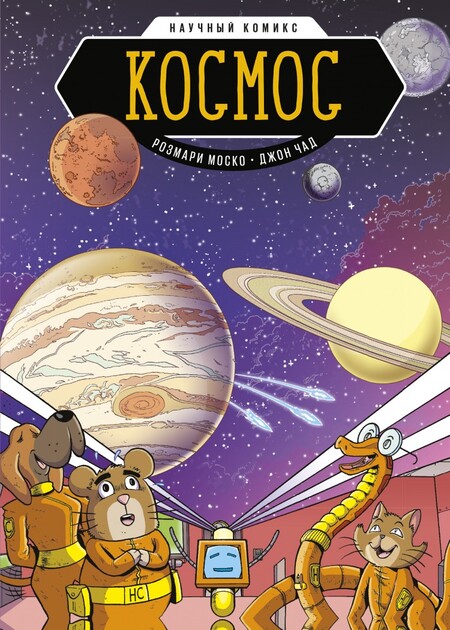
Scientific comic «Cosmos,» Rosemary Mosco, John Chad

- Comics speak the language of «visual natives.» Modern kids are the first generation to grow up immersed in an environment dominated by visual content. They intuitively decode the language of icons, memes, and short videos. To them, a static textbook page filled with dense text is alien and cognitively complex. Comics, conversely, employ their «native» language—a synthesis of image and text. It does not require «translation, ” lowering the barrier to entry and allowing students to immediately focus on the core material, making the learning process natural and organic.
„Sasha P. and His Friends' Shenanigans“ by M. Konoplyastaya and Anna Khopta
- Comics—the ideal filter in the age of information overload. The structure of a comic—panels, spreads, and speech bubbles—is a brilliant tool for organizing knowledge. It breaks down a complex topic into logical, easily digestible blocks, filtering out everything extraneous. This reduces cognitive load and helps combat the frustration students often feel when facing large-scale subjects. A comic teaches not just how to memorize facts, but how to see the connections between them, transforming informational chaos into a coherent and understandable system.
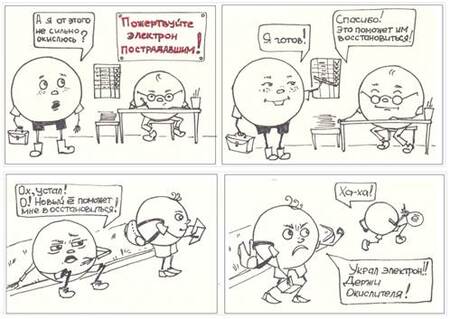
An educational comic designed to overcome the cognitive barrier of a student learning the concepts of «oxidizer» and «reducer.» By Vavilova and Gavronskaya.
- Comics develop meta-skills, not just transmit knowledge. The relevance of the comic lies not so much in what it tells, but in what it teaches us to think. Reading a comic is an active process that requires the brain to constantly work on fleshing out the plot in the «gaps» between panels. This directly trains critical thinking and logic. Analyzing the visual sequence develops a key competency in the modern world. Furthermore, following the drawn characters and their emotions fosters visual literacy, emotional intelligence, and empathy.
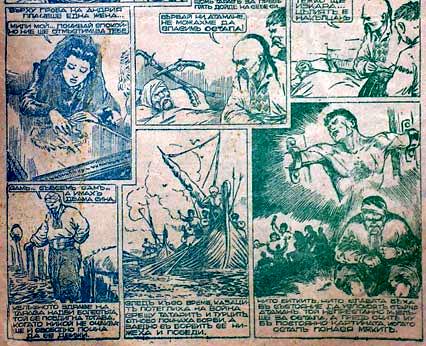
«Taras Bulba» by N. V. Gogol. A comic by Serbian artist Nikolai Navoyev.
The relevance of the educational comic today is higher than ever. It is not about simplifying knowledge, but about its intelligent and humane adaptation to the cognitive and cultural realities of the 21st century. It does not merely inform; it engages, structures, and develops, proving that the image combined with the word remains one of the most powerful tools for understanding.
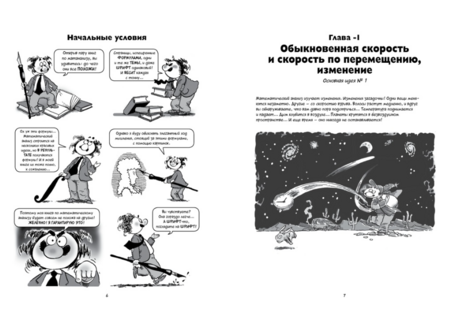
«Math. A Short Course in Comics» by Larry Gonick, comic spread
Pedagogical Potential in Working with Comics
Comics are an effective pedagogical tool. For a long time, the academic environment held a bias against comics—they were considered «literature for the lazy, ” a simplification that discouraged children from serious reading. However, modern research in neuroscience, psychology, and pedagogy has radically altered this perspective. Today, the comic is recognized as a complex medium with unique educational potential.
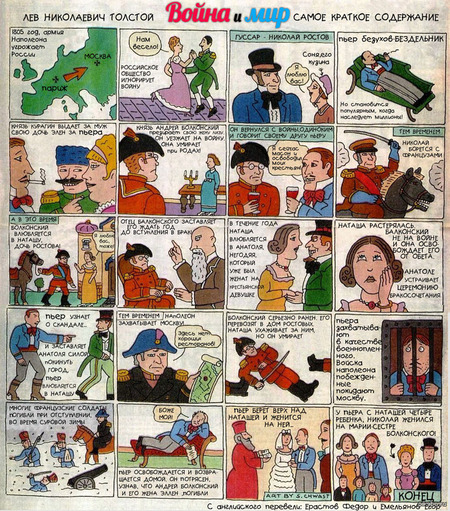
Comics author of „War and Peace,“ S. Kleinst
What is its pedagogical power?
- Dual Coding Theory and Memory Enhancement. According to Dual Coding Theory, proposed by psychologist Allan Paivio, the human brain processes visual and verbal information through separate channels. When learning material is presented only as text, only one channel is engaged. A comic book activates both: the reader simultaneously perceives the word and the image. This creates stronger associative links in memory, allowing students to grasp and retain information more quickly.
- Reducing Cognitive Load and Boosting Motivation. For many modern students, accustomed to bite-sized content consumption, a solid wall of text can trigger subconscious fear and aversion. Comics break information down into manageable «chunks» (panels), making the reading process less daunting. The visual component acts as «scaffolding,» supporting the reader and helping them maintain context—something especially crucial when studying complex scientific topics or historical events. This increases motivation: reading stops being a strenuous task and becomes an engaging exploration.
- Developing Critical Thinking and «Active Reading.» Comic book theorist Scott McCloud introduced the concept of «closure.» All the magic of a comic happens in the space between panels (the gutter). The author shows only individual moments, and the reader’s brain must independently construct what happened in between—linking cause and effect. This process demands constant active participation, analysis, and logic. The comic reader is not a passive consumer but a co-author of the story, which directly trains critical thinking skills.
- Inclusivity and Supporting Special Educational Needs. Comics are an indispensable tool for working with children who have learning difficulties. Dyslexia: Clear fonts (often sans-serif), short sentences, and, most importantly, visual context help children with dyslexia decode meaning without excessive stress. ASD (Autism Spectrum Disorder): Comic characters often feature simplified yet highly expressive facial expressions. This assists children with ASD in learning to recognize and interpret human emotions in a safe environment.
https://dzen.ru/a/ZTXrKJt_gCmiOebZ (11.11.2025)
Visual Literacy
Visual literacy is a 21st-century skill. We live in a visually saturated world. The ability to «read» images, understand infographics, interpret nonverbal cues, and recognize compositional techniques is becoming as vital a skill as knowing how to write. Educational comics teach kids to analyze visual content, grasp metaphors and symbols, and develop into competent media consumers.
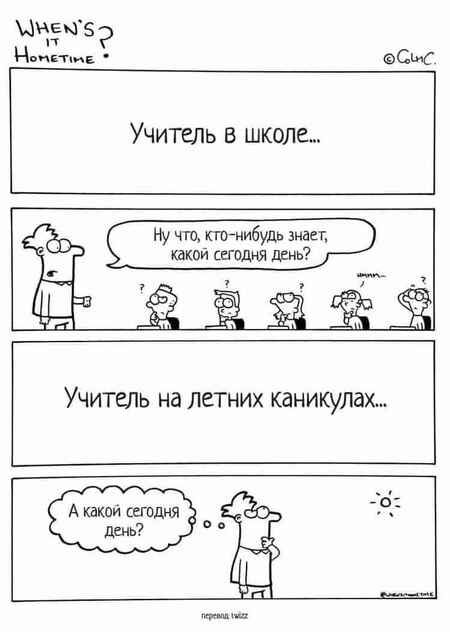
Educators from all over the world actively utilize methods that involve drawings and images. This extends beyond learning foreign languages to include comprehensive visual guides and textbooks across various specialties, themed strips on different subjects, and webcomics that teachers create on their personal websites and educational portals. The challenge with this method and approach is the scarcity of such resources in Russian, and translations from foreign languages are infrequent. Often, teachers of the «old school» dismiss comics, mistakenly treating them as mere entertaining «cartoons.»
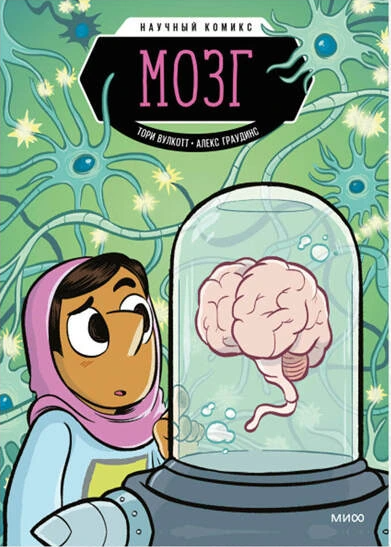
Reading comics engages both hemispheres of the brain because it requires processing both visual (image) and verbal (textual) information, which enhances the potential of a child’s perception.
Terry Wincott, Alex Graudins «The Brain» Science Comic
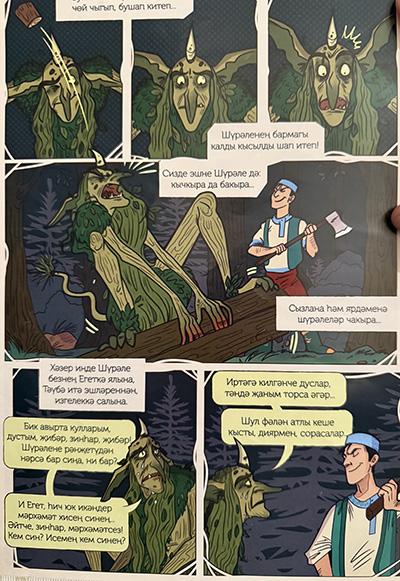
I would specifically like to note the value of comics in learning foreign languages and the folklore of the peoples of Russia. A vivid example for studying the Tatar language with a child is the comic series about the Water Witch («Su anasy») and Shurala in Tatar, based on the fairy tales of Gabdulla Tukay. My child (3 years old) and I read and describe the characters, actions, and objects.
The comic «Shurala» in Tatar (from the archive of Kristina Gorelova)
The «Shurale» Comic in the Tatar Language (from Kristina Gorelova’s archive)
The comic «Su Anasy» in Tatar (from the archive of Kristina Gorelova)
Comic Book Review for Kids
Important! Before letting children read the comic, parents should conduct a «parental review» to ensure it matches the reader’s age category and the child’s preferences.
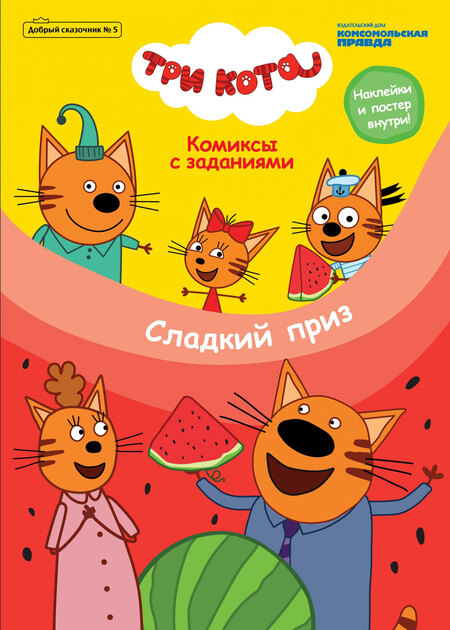
How to Choose a Comic Based on a Child’s Interests? Talk with the child and ask what they enjoy at this age—what they want, what games they play, or what cartoons they watch. A large number of comics based on popular animated series are being released right now, and these will be perfect for the youngest kids. Older children will be interested in detective stories, science-based non-fiction, biographies, fairy tales, adventure stories, fantasy, and stories about the lives of their peers in kindergarten or school, or about family, brothers, and sisters. Below is a list of the most popular comics for children today, categorized by age group.
Kids aged 3 to 7
Comics for Kids Aged 4–5 «Keshka: All Stories About the Extraordinary Cat, ” Snegirevy; „The Mosquito: A Lifesaver Flying to Help, ” Sophie Gerryw; „Forest Detectives“ (a comic book series about Connie), Yulia Biome; Manhwa „The Tale of the Gold-Eyed One, ” Vol. 1, Konsam; „Hilda and the Troll, ” Luke Pearson; „About Mira and Gosha. Simply About What Matters. Learning to Manage Our Emotions, ” Natalia Remish, Nadezhda Koncha; „The Surprised Owl, ” Mazena Sova, Joanna Loro.
Keshka—the most popular character in the history of Russian comics—has charmed readers across multiple generations. He recently celebrated his 25th anniversary. Cheerful, energetic, cunning, and a bit self-obsessed, Keshka hasn’t changed in the least and certainly hasn’t aged. Recently, stories about him have been published in Switzerland.