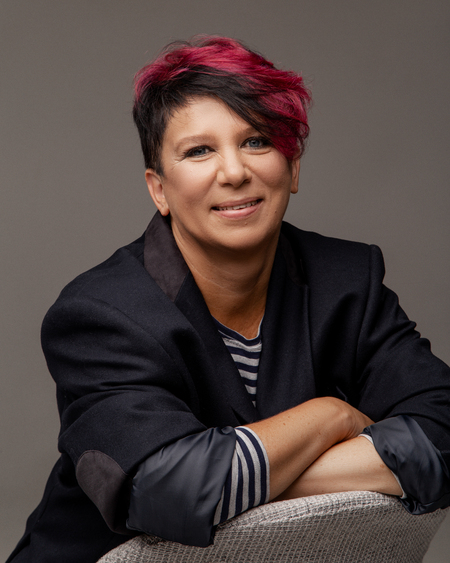
The press service of the Institute for the Development of Creative Industries spoke with Larisa Matveeva, Director of the Chelyabinsk Nuclear Energy Information Center (ICAE). In the interview, she discussed how a psychologist and psychology instructor found their niche in science popularization, why Chelyabinsk is far from being just a «harsh» industrial city, and how the mission of shaping a scientific worldview unites people of all ages—from preschoolers to retirees. We discussed the center’s unique projects, ranging from science performances featuring active researchers to intellectual tournaments for adults, and we also talked about the place that science and creativity hold within the region’s cultural landscape and how they help families view each other in new ways.
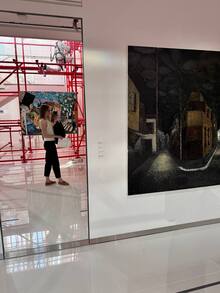
Photo: Larisa Matveeva
For over a decade, Larisa Matveeva has led the Atomic Energy Information Center in Chelyabinsk. Her arrival in February 2011 marked a new chapter in her professional biography, but not a break from her past. Before this, her life was closely tied to the South Ural State University, where she shared knowledge about psychology with students, teaching complex and fascinating psychodiagnostics.
The work she is dedicated to now is the popularization of science. Under her direction, the Center has become a magnet for curious people of all ages—from the youngest preschoolers to seasoned seniors. Larisa’s team introduces guests to the world of modern science: they discuss outstanding researchers, their work, and major discoveries.
Larisa pays particular attention to atomic technologies. She and her colleagues engage in career guidance with a human touch—instead of presenting dry facts, they talk about professions through stories and examples of real people.
— As a Candidate of Psychological Sciences, how did you come to work at the Nuclear Energy Information Center in Chelyabinsk?
I continued working in my field because, in addition to teaching psychodiagnostics at the university, I also supervised work with gifted children there. Essentially, I was involved in career guidance. Therefore, when I was offered a job change, I accepted it.
— Are there any differences between your previous work and what you are doing now?

—Yes, of course. I have more opportunities now, much less paperwork, and more room for creativity—for creating and hosting events, and for meeting people from different professions and ages. It’s more interesting, but fundamentally, the work hasn’t changed much. I am truly applying all the knowledge of psychology that I possess in practice.
Photo: Larisa Matveeva
— How did Chelyabinsk influence your professional path and worldview?
— To be honest, probably not. In my opinion, a city cannot dictate one’s professional path or worldview because people influence those things, no matter where they live.
I believe that the people I studied with and collaborated with on various projects—including international ones—are what influenced my career and worldview. I have many friends all over the globe, so people have influenced me, but the city has not.
— Chelyabinsk is often associated with industry and metallurgy. How does such a delicate field, like science popularization, thrive in what seems like such a rugged city?
— The myth of harsh Chelyabinsk — it truly is just a myth. In reality, Chelyabinsk is, on one hand, an industrial city. It became industrial because many factories were evacuated here during the Great Patriotic War. If this hadn’t happened, Chelyabinsk probably would not have become a major industrial city.
But not everyone knows that in addition to factories, the capital’s theaters were also evacuated to Chelyabinsk. And if you consider the number of theaters per capita, I believe the percentage in Chelyabinsk is quite high.
Considering that the atomic industry was emerging in the region—and the atomic industry was created by people possessing very high intellectual potential—intellectual capital is also one of Chelyabinsk’s assets. As far as I know, and this is not just my opinion, Chelyabinsk has a very strong school system, with many interesting schools and bright students who are receptive to science and everything new.
Therefore, those who believe that Chelyabinsk is only composed of metallurgical plants are profoundly mistaken. We have a great deal of greenery, we have very kind people, and we have spacious streets, so Chelyabinsk is definitely not a harsh city.
— What do you see as the core mission of your center specifically for the residents of Chelyabinsk and the region?
— Our center does not have separate missions for the Chelyabinsk region. We are a network organization, and regarding the mission level, the mission cannot be separate for Smolensk, separate for Chelyabinsk, or separate for Ulyanovsk. The mission will be common across the entire network.
The mission of the Atomic Energy Information Centers is to shape a scientific worldview. This is so that people of all ages understand that the Earth isn’t supported by three pillars and two turtles. So that they understand that horoscopes can be read, but they shouldn’t be treated as a guide for their lives. So that they understand that science governs the world.
Globally, our mission is for people to know that science is a reliable and appropriate way to explain the world around us.
Photo: Atomic Energy Information Center, Chelyabinsk
— How does the popularization of the nuclear industry, and the formation of a brand that you support through your events and projects, connect with the brand of the city or territory where you operate?
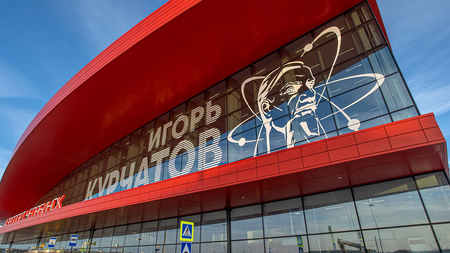
— The atomic industry is one of the foundations upon which the Chelyabinsk region gained a powerful stimulus for intellectual and material development in its time. We have three highly significant closed atomic cities and enterprises for the nuclear sector. This is where it all began.
Igor Vasilievich Kurchatov, the man who created, founded, and served as the scientific director of the atomic project, was born in the Chelyabinsk region. Therefore, when the public voted to decide whose name the airport should bear, there were no other options. Our airport is named after Kurchatov.
2025 marks the 80th anniversary of the atomic industry, and about one-third of the events taking place across Russia are held in the Chelyabinsk region. For us, the atomic industry is truly the base—the foundation of everything. Therefore, when we speak about nuclear technology and the nuclear industry, we are at the top, on the trend, whatever you want to call it, of topics significant to the region.
Photo: Kurchatov International Airport
— Tell us about the creative projects realized by your center in Chelyabinsk.
— We have a wealth of creative projects, most of which are networked. However, there are projects conceived specifically in the Chelyabinsk region that have become the intellectual property of the entire network of Information Centers. For instance, we were among the first to begin working with preschoolers, and this is now a significant area of our work.
It turned out that, as a psychologist, I have a particular affinity for material science. This isn’t a joke—it’s genuinely true. We have colleagues from the South Ural State University with whom we developed the «Material Science for Dummies» project, which is now successfully implemented across all our centers. For us, it serves as a signature piece for our specific center. We are also big fans of the Science Drama project—a play reading where the roles are performed not only by actors from Chelyabinsk theaters but also by working scientists. We were also among the first to start this project and strive to keep it going.
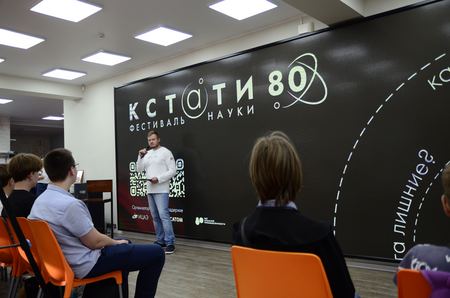
The «Kstati» Science Festival is one of the most beloved events across all our centers. This year, we held the fifth «Kstati» Science Festival, and we managed to make it exceptionally engaging. For example, we featured a composite fashion show where we discussed the use of composite materials, accompanied by a presentation of a designer clothing collection created by students from the International Institute of Design and Service. As part of the science-music talk show, «The Evolution Square, ” we successfully merged a lecture on quantum physics with a discussion on the evolution of organ music. On an open stage near the Southern Urals Historical Museum, a presentation on quantum technologies was accompanied by a performance on a touring organ by Vladimir Khomyakov, a distinguished organist and People’s Artist of the Russian Federation, and the master of the Grand and Chamber Music Hall „Rodina“ in Chelyabinsk.
These are the events we are proud of, although frankly, every one of our events is quite interesting. For example, the „Brainshaker“ intellectual tournament meets every third Thursday of the month, drawing 21 teams just in Chelyabinsk, and we hold it in all the cities where the network operates. Multiply that by six, and you get the number of people who come to us on a Thursday evening instead of going home to watch television, coming to train the most important organ of the human body—the brain.
„Brainshaker“ is our proprietary scientific quiz. The questions cover history, physics, popular culture, and atomic technology. It is quite comprehensive and significantly develops general knowledge.
Photo: ICAE // „Kstati“ Science Festival
Photo: Chelyabinsk Nuclear Energy Information Center // Brainshaker, 09/18/25
— The center often becomes a venue for academic discussions and lectures. Which of the Chelyabinsk speakers stood out to you the most?
— We have an entire pool of speakers we work with constantly—dozens of scientists from Chelyabinsk. For instance, there is Pavel Taranko, with whom we created «Composites for Dummies, ” and now we work more closely with his student, Anastasia Ignatova, a Candidate of Technical Sciences. Dr. Andrey Epimakhov, Doctor of Historical Sciences and Professor, gives incredibly insightful lectures. Among our experts are physicist Alexander Gerasimov, radiation therapist Ekaterina Mozerova, biophysicist Pavel Sharagin, and chemists Liliya Kovalenko and Fedor Yaroshenko from Chelyabinsk State University. Yevgenia Igorevna Tolstikh, Doctor of Biological Sciences, is ready to adapt virtually any topic for our non-professional audience. Yevgenia Blinova, Candidate of Biological Sciences, once won the first scientific debates in Chelyabinsk and can speak endlessly about her subject, uncovering new facets of radiobiology.
Pavel Pisklakov, Chairman of the Regional Branch of the Union of Designers, and we collaborate with him on very interesting poster exhibitions. Irina Bespal, Candidate of Physical and Mathematical Sciences, and astrophysicist Sergey Zamozdra—the topic of space is a favorite among our audience (and we have our own meteorite to boot). Sergey Zavyalov and Anna Gumina, young biologists, are willing to participate in experiments such as the popular science talk show „Science in Memes“ and „The Scientific Ring.“ Elena Selyutina, a philologist and Candidate of Philological Sciences, Yulia Kislitzyna, a psychologist, and Anastasia Novokhatsky, a medical psychologist—the list could go on forever.
We particularly enjoy our nuclear scientists who come to us from closed cities; these are young researchers and employees from our nuclear enterprises.
Furthermore, we have moderators who can brilliantly and uniquely host virtually any talk show. These include Rifat Abdrashitov, a designer, journalist, and instructor at the International Institute of Design and Service, and Liya Zakharova, a medical journalist.
— Can I watch your lectures online?
— We were very active with online broadcasts during the pandemic, but now we prefer not to stream live because, frankly, it isn’t beneficial for us. We are interested in having people come to the center rather than watching the lecture from home while it’s being held.
However, if the lecture has already taken place and you were genuinely unable to attend for any reason, you can watch the recording. Recordings are available in the VKontakte group VKontakte and on the Rutube channel.
— Do you collaborate with other cultural institutions in the city?
— Yes, we just finished a series of events we held in collaboration with the Regional Philharmonic. It was the experimental music lab, «KurchatovLab.» We served as the intellectual partner for this event. In collaboration with them, we hosted the science-music talk show, «Square of Evolution,» featuring Vladimir Khomyakov, which I’ve already mentioned. Furthermore, as part of the lab, Nikita Demin, a virtuoso violinist from the ICAE network, delivered a lecture-concert focusing on the evolution of electronic music and the use of AI.
We also collaborate very closely with the Southern Urals State Historical Museum. On their premises, we ran the science festival «By the Way,» and we periodically hold offsite events in their new creative space, «Atom.»
We partner with the «Kolibri» Center for Intercultural Communications at the Regional Universal Scientific Library—they also have a fascinating and unique space. We collaborate with various libraries, including the Regional Universal Scientific Library, the Mayakovsky Regional Children’s Library, and the Youth Library. Among our other partners are the «Znamya» Cinema and the A.S. Pushkin Cinema.
Overall, we work with a very broad range of organizations.
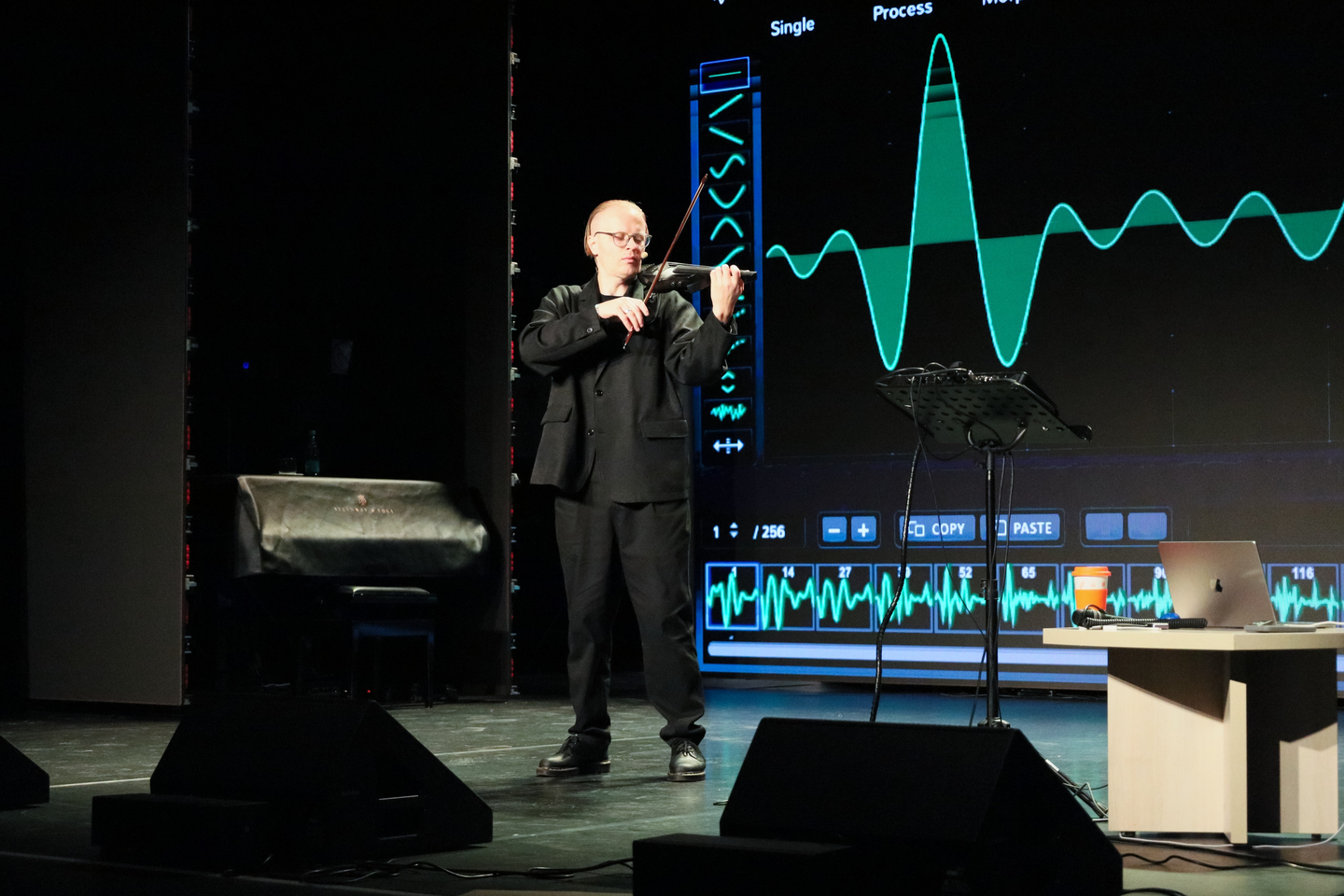
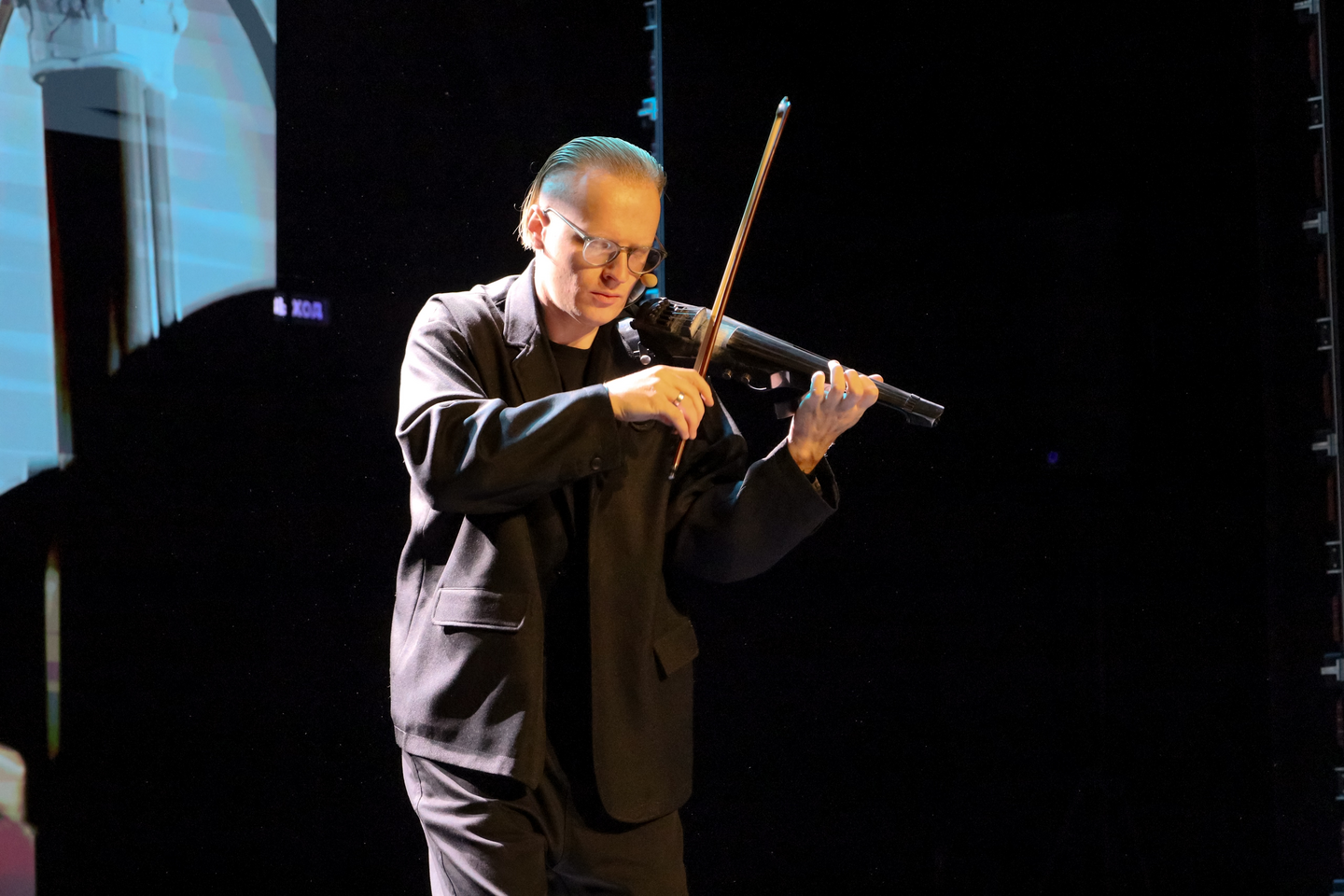
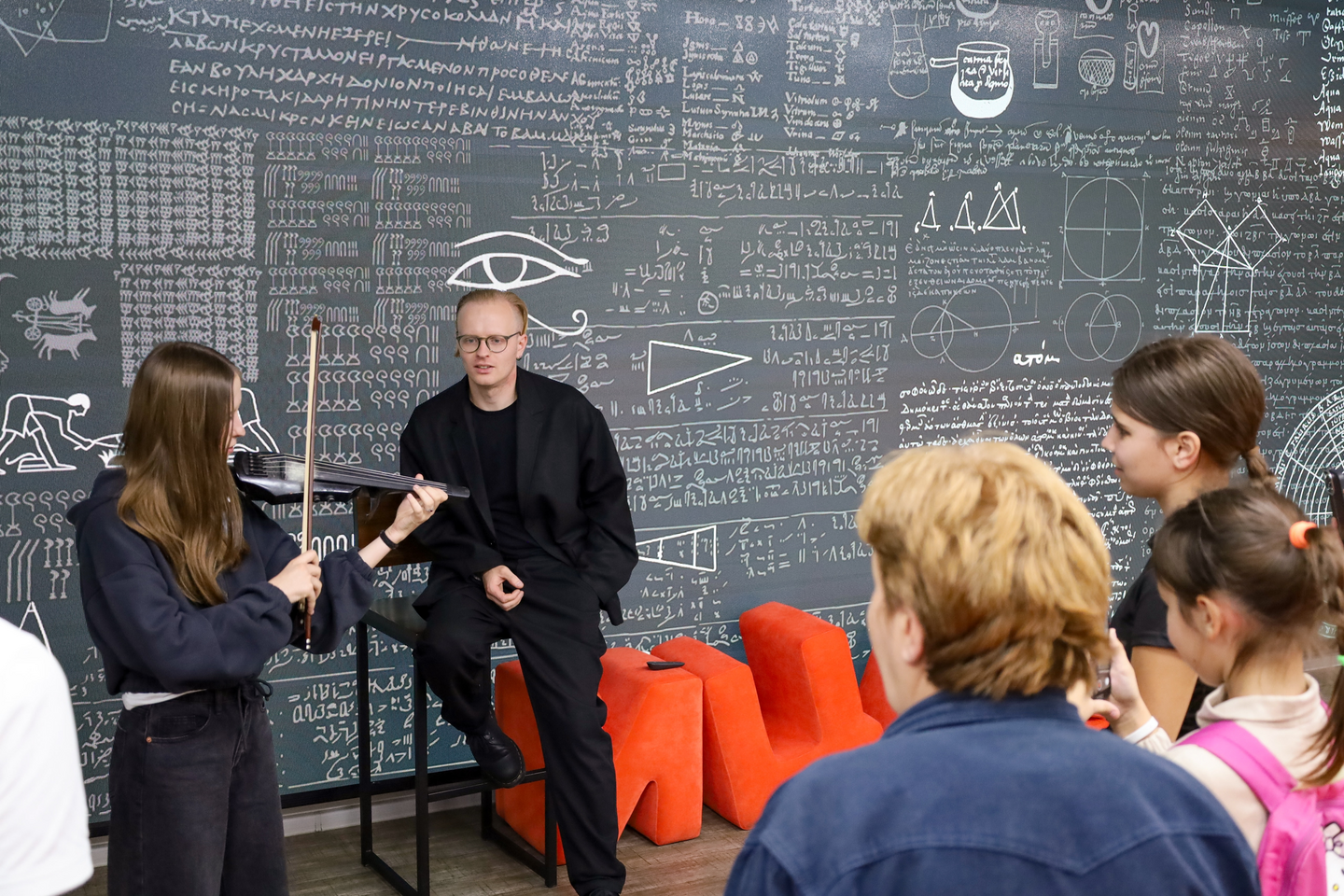
Photo: Information Center for Atomic Energy of Chelyabinsk // Nikita Demyin
— Where can a talented child interested in science study in Chelyabinsk? Are there enough opportunities in the city to realize their potential?
— Yes, the city offers many opportunities to realize his potential. Firstly, we have very strong schools that rank among the top ten in Russia. For example, Physics and Mathematics Lyceum No. 31 currently holds the third spot. The Chelyabinsk Regional Multidisciplinary Boarding School for Gifted Children features very strong educators in both physics and other natural sciences. For instance, they have an outstanding biology teacher.
You don’t have to study only in school; we have a very well-developed system of supplementary education. The «Kurchatovets» scientific society for students has been operating in the city for over 50 years. Under the guidance of university scientists, the kids conduct scientific research there.
We also have a quite strong Center for Technical Creativity. The students presented their projects at our recent science festival, «Kstati.» These were not mere fantasies invented by children, but real devices commissioned by specific enterprises. In other words, they were functional tools that help improve the enterprises' operations and enhance their systems.
The region has an entire system of engineering classes with in-depth training in engineering disciplines, aimed at preparing these students to pursue technical universities later on. The Young Technicians Stations are still operational with their own traditions, which also allow children to develop their engineering skills—and these skills are fundamentally based on physics and mathematics.
So, I will repeat: the system of general and supplementary education in the Chelyabinsk region is excellent. We have many interesting educators, and they visit us periodically. They come both as experts and as participants in events. For example, I know for a fact that several teams of young educators participate in the «Brainshaker» tournament. This means that after their regular work, they come to us to broaden their horizons, making them more engaging when interacting with the children later on.
— In your opinion, how has Chelyabinsk changed over the last 5–10 years in terms of educational and scientific activity?
— On the one hand, several science popularization projects that were public and relied on generating profit have died out.
On the other hand, several new projects have emerged, such as the «Green Monday» initiative at Chelyabinsk State University, where the university’s scientists give lectures to anyone interested every Monday. As far as I know, the Chelyabinsk branch of the All-Russian Society «Znanie» is developing very actively right now. They have a young director, and I’m hearing many positive reviews about the society beginning a new, modern life. There is also a family project called «Smart Chelyabinsk.»
However, compared to, say, neighboring Yekaterinburg, the science and educational life in Chelyabinsk is, in my opinion, much poorer. As the director of the CAAE, I am very satisfied with this on the one hand, because we don’t face much competition in Chelyabinsk. But on the other hand, it is disappointing because I wish there were more approaches to popularization and education—and that we could enrich each other.
— If you had the opportunity to create a large, popular science project from scratch for the entire city, what would it be and why?
— Yes, we have already created it. It is a project for the Information Center of Atomic Energy in Chelyabinsk. It was built from the ground up, it is constantly evolving, and it is doing wonderfully. In February 2026, it will turn 15.