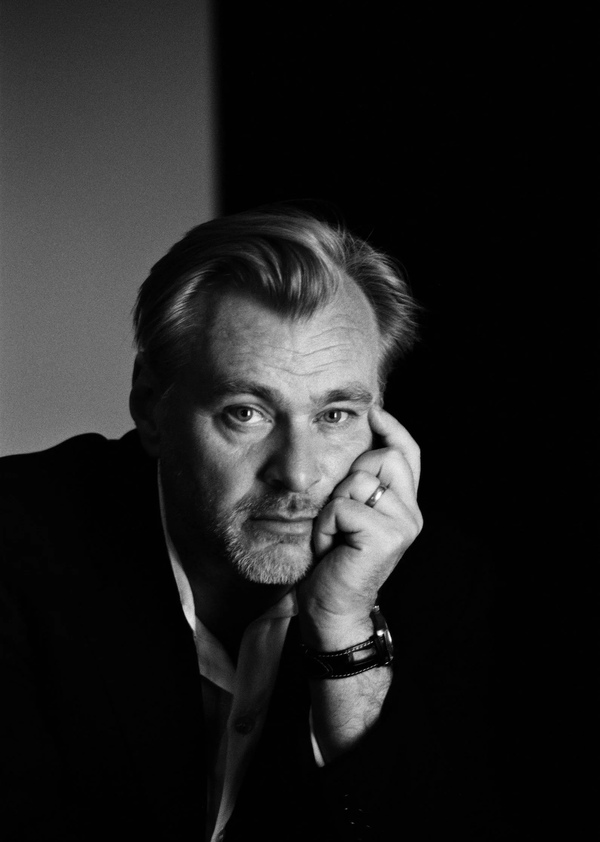
Christopher Nolan discusses how, why, and what motivated him to create his «Odyssey.»
All the conversation is about Christopher Nolan’s «Oppenheimer.» Sight & Sound magazine organized a discussion between the director and the esteemed popular culture scholar, Sir Christopher Freeling. In it, Nolan discussed why he sent Odysseus back to the sea after nearly three thousand years, why he filmed the movie using real IMAX cameras, and what common ground exists between Homer, «Citizen Kane,» Ray Harryhausen, and Sergio Leone. We are publishing a brief summary of his discussion.
I think I’ve been telling the same story my entire life. When I started working on «Odyssey, ” I suddenly realized how deeply interested I’ve always been in the theme of returning home. In „The Prestige, ” „Batman Begins, ” „Inception, ” „Interstellar, ” and „Dunkirk”—every single one has characters who are pulled away from their families and are trying to come back. It’s a very simple and universal theme. No matter what your lifestyle is, work still takes time away from family, and every person, in one way or another, understands what this conflict is like.
And this is what struck me about Homer: «The Odyssey» seems like a story utterly foreign to us—full of gods, monsters, and ancient rites—but if you look closely, it turns out to be incredibly modern. It is a story about a person who wants to go home. It is a story of family, marriage, and a son trying to understand his father, a man who is gone for ten years and returns completely changed.
The structure of the poem impressed me even more. For twenty-five or thirty years, I have been telling people about nonlinear narratives, flashbacks, parallel plots, and stories within stories. But then you reopen the Odyssey and realize: all of this was there from the very beginning. It is one of the first great texts of Western literature—and yet one of the most radically nonlinear. It is profoundly sobering. You realize that virtually no idea in the narrative is new.
Visual effects should not have created a separate world overlaid onto the film—they should have continued the existing physical world in front of the camera.
There is also a very cinematic logic at play here. Homer had an oral tradition—the narrator could begin right in the middle of events and gradually unfold the story. We have editing. We have the ability to place one image next to another and generate a third meaning. Eisenstein perfectly articulated this principle: image A plus image B creates thought C.
I enjoy cinema that doesn’t reveal all its secrets on the first viewing. Of course, I want the audience to be able to watch a film and simply enjoy the story. But I like it when layers remain within that story, beginning to reveal themselves on the second or third viewing.
In a way, «The Odyssey» contains almost all of cinema within itself. It has the problem of growing up—the story of Telemachus, the conflict between a child and their parents, and the search for their own father. There is a story of returning home. There is war. There is a love story. There is adventure, horror, thriller, and science fiction. There are monsters, sex, violence, humor, and politics. It is a vast set of primary narrative forms.
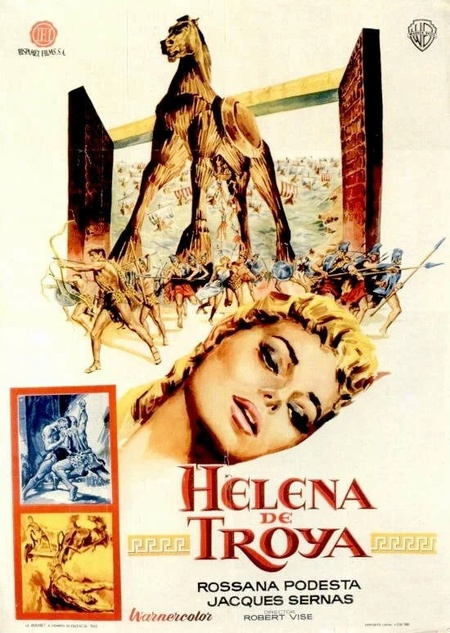
This is precisely why I find it strange that Hollywood didn’t commit to this story for so long. In the 1950s and 1960s, they could film «The Iliad,» «Helen of Troy,» and various stories about Ancient Greece, but truly tackling «The Odyssey» was nearly impossible. The technology simply couldn’t convey its fantastical elements convincingly.
Ray Harryhausen tackled this problem better than anyone. He could achieve what large studios could not. His films look handmade—and that is precisely why they still affect the imagination so profoundly. You can feel the effort of the person who created all of it.
I wanted to preserve that feeling, but render it on a completely different scale. That’s why in «The Odyssey, ” we utilized almost every resource at our disposal: puppets, animatronics, computer graphics, perspective tricks, and physical effects. But the core principle was very simple: if something could be achieved physically, we tried to do it physically first. We traveled to real locations. We went out onto the sea on actual ships. We worked with real wind, real water, and real light. Visual effects were not meant to create a separate world layered over the film—they had to continue the physical world that already existed before the camera.
This is especially important when shooting science fiction. If an entire film features real people and real locations, and then a completely computer-generated character suddenly appears, the viewer feels a disconnect. Therefore, visual effects and special effects must work together from the very beginning. Special effects create what can be accomplished directly on set: wind, rain, an explosion, a physical object. Visual effects complete this work after filming is done. With Cyclops, for example, it was precisely that. There were a huge variety of technologies involved, but they all had to be perceived as part of the same world in which we filmed the people on actual islands and in the real sea.
I don’t think I would have been ready to make such a film sooner. It required all the experience I had accumulated. In that sense, «Odyssey» continues my work with superhero cinema. When I was making the Batman trilogy, I also didn’t want to make a «comic book movie.» I thought about a world that isn’t reality but possesses its own physics and logic. It’s a kind of amplified reality. I did the same thing with «Odyssey.» I didn’t want to view it as just another film about antiquity—with its familiar columns, drapery, and the aesthetics of fifties Hollywood epics. I was much more interested in asking: if we were adapting a contemporary novel today, what world would we build? That is where I wanted to create my own reality.
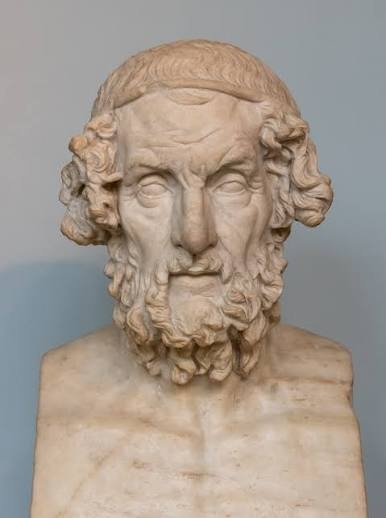
The problem is that we know very little about that era. Archaeological data are fragmentary. Therefore, we inevitably have to make inferences. But there is another interesting point: Homer, if we are speaking of a single person named Homer, lived roughly four hundred years after the events he describes. And the first depictions of the heroes of the Odyssey were created during Homer’s time, not during Odysseus’s. It turns out we have two sources: the archaeological reality of the era being described, and how the earliest listeners of the epic envisioned that era. We attempted to connect these two things.
The same thing happened with music. I started working with Ludwig Göransson even before the filming began. I told him, «We are moving away from conventional visual traditions, from typical British accents, from romantic aesthetics—so there’s no reason to automatically choose romantic music.»
The film begins with the words, «The Time of Apparent Magic.» This is an invitation to view what is happening a little differently—not the way we look at the world today.
Almost all modern film music has grown out of the tradition of Wagner, Rachmaninoff, and romantic classical music in general. But why should we revisit this path? That’s why Ludwig began exploring ancient instruments—lyres, aulos, bronze instruments, and various forms of vocalization. We found musicians who specialize in ancient and traditional performance techniques. However, I wanted to connect this ancient world with a highly cinematic tradition. In that sense, Sergio Leone was one of my touchstones. I appreciate how his music can exist both within the film’s world and beyond it.
Therefore, in «The Odyssey, ” the sound of Odysseus’s bow becomes part of the music. We specifically constructed the musical theme so that one note remained seemingly missing for a long time, and at the right moment, the bow itself provided it. This is a very Leonovsky idea—when the sound of an object within the frame becomes a part of the musical score.
With the gods, things were even more interesting. I decided not to present them as a group of celestial relatives who sit above and argue amongst themselves. The poem offers us a different possibility: the gods can walk among humans, change their form, and manifest through the surrounding world. For a Bronze Age person, nature itself was proof of the gods' existence. The tide, the sunrise, thunder, lightning—all of this wasn’t merely physical phenomena. It was a divine manifestation. I wanted the viewer to, at least for a time, inhabit such a way of perceiving the world. That’s why the film begins with the words, «The Time of Apparent Magic.» It is an invitation to look at what is happening differently—not the way we look at the world today.
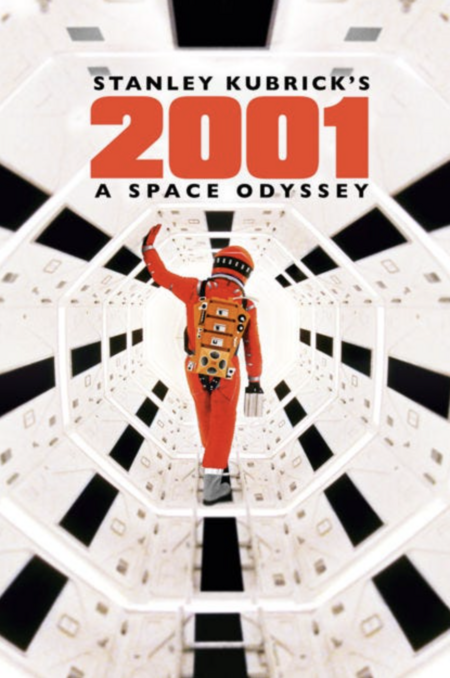
Kubrick once explained why he titled his film «2001: A Space Odyssey»: for the ancient Greeks, the sea was roughly equivalent to what space is to us. It is an unknown expanse where you do not know what lies beyond the next horizon. I think this is a very accurate comparison.
When we send a protagonist into space, it is easy for the audience to visualize the unknown—we ourselves have not yet been to most of those planets. But when we send a protagonist into the past, the reverse problem arises: we already know too much. We must make the audience forget the ending they already know.