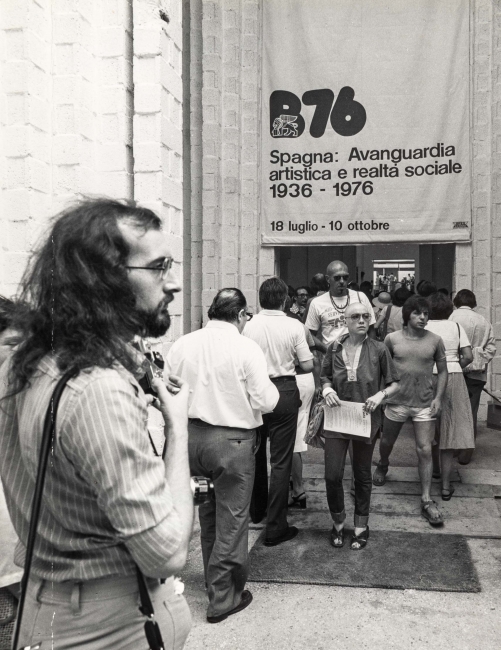
Cover image: Entry to the exhibition «Artistic Avant-garde and Social Reality. Spain 1936–1976.» Venice, 1976 Image source — URL: https://www.arteinformado.com/agenda/f/espana-vanguardia-artistica-y-realidad-social-1936-1976-163745 (accessed: April 21, 2026)
In the HSE Journal of Art and Design, Issue No. 11 (3/2026), Darya Pyrkina published the article «Artistic Avant-garde and Social Reality: Spain 1936–1976.»
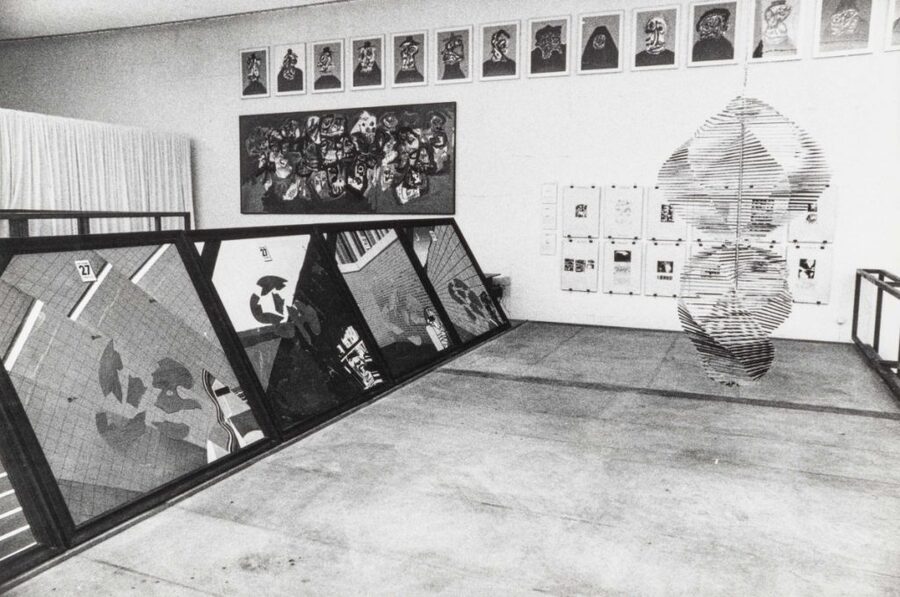
Exhibition View: «Artistic Avant-garde and Social Reality. Spain 1936–1976.» Venice, 1976. Image Source — URL: https://ivam.es/es/actividades/recorrido-a-la-exposicion-espana-vanguardia-artistica-y-realidad-social-1936-1976-a-cargo-de-sergio-rubira/ (Accessed: April 21, 2026)
The article title repeats the name of the exhibition that took place as part of the 1976 Venice Biennale (it was also shown at the Funda Mir in Barcelona a few months later). This occurred in the 40th anniversary year since the start of the Spanish Civil War and six months after the death of General Francisco Franco. The exhibition was held in the International Pavilion in Giardini. Furthermore, the Spanish national pavilion remained closed, meaning the exhibition was not positioned as an official artistic statement.
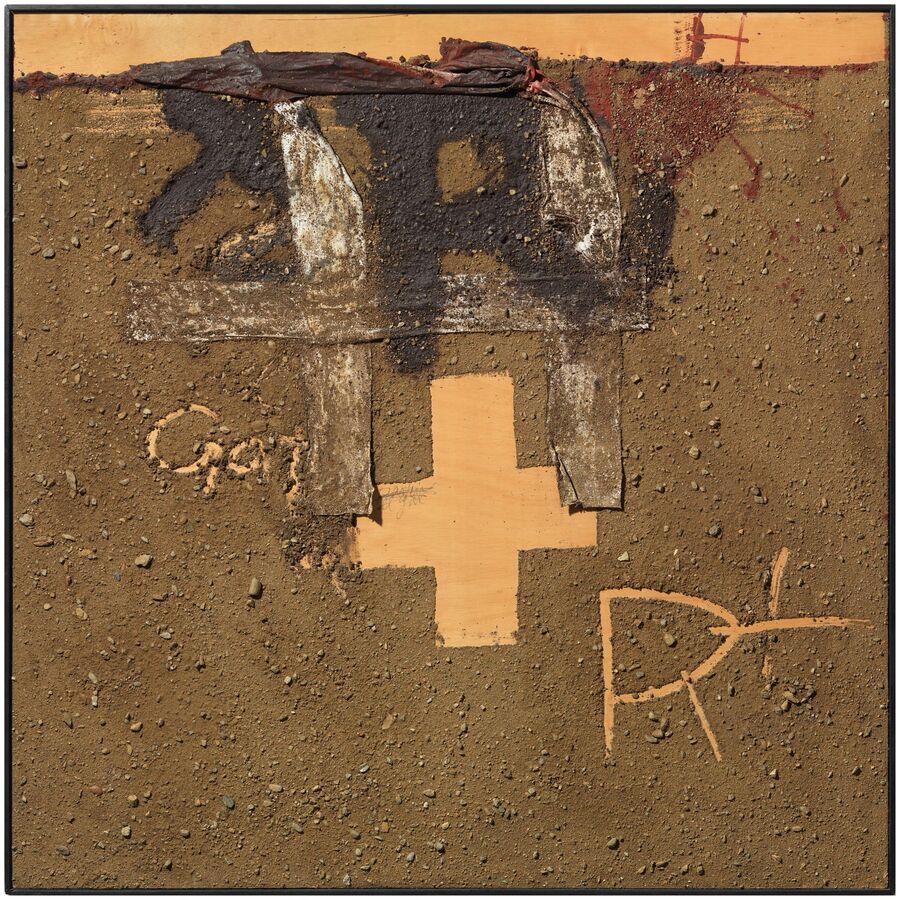
Antoni Tàpies. Cross I R. 1975. Barcelona Museum of Modern Art. Image source — URL: https://www.macba.cat/en/digital-repository/?slug=r1932-creu-i-r-baixa (Accessed: April 21, 2026)
The article examines the specific characteristics of Spanish avant-garde development during the reign of Francisco Franco. The author highlights the unique traits of the period—primarily, the duality of Francoist cultural policy concerning modernist art.
Having found itself in international isolation after the Second World War, Francism was forced to move away from fascist rhetoric, abandon the creation of an official classicizing aesthetic, and focus its intense interest on abstraction. It was under the support of the Francist government that Spain’s leading modernists gained international recognition, despite being committed anti-Francists, and some were even members of the banned Spanish Communist Party.
Eduardo Chillida. Three Irons. 1966. Guggenheim Museum Bilbao. Image source — URL: https://www.guggenheim.org/artwork/849 (accessed: April 21, 2026)
Abstract painting and sculpture are becoming tools of «soft power» for the ruling regime, through which certain foreign policy successes are achieved.
Manolo Millares. Killing of Love. 1966. Museo Nacional Centro de Arte Reina Sofía, Madrid. Image source — URL: https://www.museoreinasofia.es/en/collections/artwork/asesinato-del-amor-assassination-love (Accessed: April 21, 2026)
Among subsequent generations of artists, informationalism is often criticized as being official—supported by the regime—and overly «flexible» for interpretation and instrumentalization. Movements that directly convey the artists’ political and social stance come to the forefront—primarily Pop Art and Conceptualism. Their development coincides with the most conflict-ridden phase of the caudillo regime—a period when confrontation intensified on both sides, with protests expanding alongside corresponding repression.
Group de Travy. Solidarity with the Labor Movement. 1973. Barcelona Museum of Modern Art. Image source — URL https://www.macba.cat/es/obra/r0490-cartell-del-collectiu-solidaritat-amb-el-moviment-obrer/ (accessed: April 21, 2026)
However, following General Franco’s death in 1975, a period of declining political activity ensued after a brief phase of intense discussion, due to widespread fear of a new civil war. It was only in the first quarter of the 21st century that a period of reflection on the legacy of the recent Francoist past began.
Exhibition view of «Disagreements. On Art, Politics, and Public Life in the Spanish State.» Barcelona Museum of Modern Art, 2004. Image source — URL: https://www.macba.cat/es/obra/ahis00026-desacuerdos-reportatge-fotografic-exposicio/ (Accessed: April 21, 2026)