Concept
Rayism is an art movement with a visual code that is impossible to mistake for anything else. Based on the intersection of reflected rays, this style erases the boundaries between the object and space, transforming solid forms into pure light energy. When viewing works in this style, we do not simply see a city street or an interior—we perceive the dynamics of light streams penetrating matter, creating a unique visual experience at the intersection of painting and digital architecture.
I have always been fascinated by rayism’s ability to transform static reality into infinite expression through lines. In my project, the architecture of the metropolis ceases to be a collection of concrete boxes: towering buildings reaching into the sky resemble vibrating light columns, and narrow avenues turn into canyons filled with luminescence. House facades, bending and fracturing under the influence of light vectors, pulsating shop windows, and streets shimmering with a golden haze—all of this creates the sensation that the city around us is a living, energetic object in a state of perpetual quantum motion.
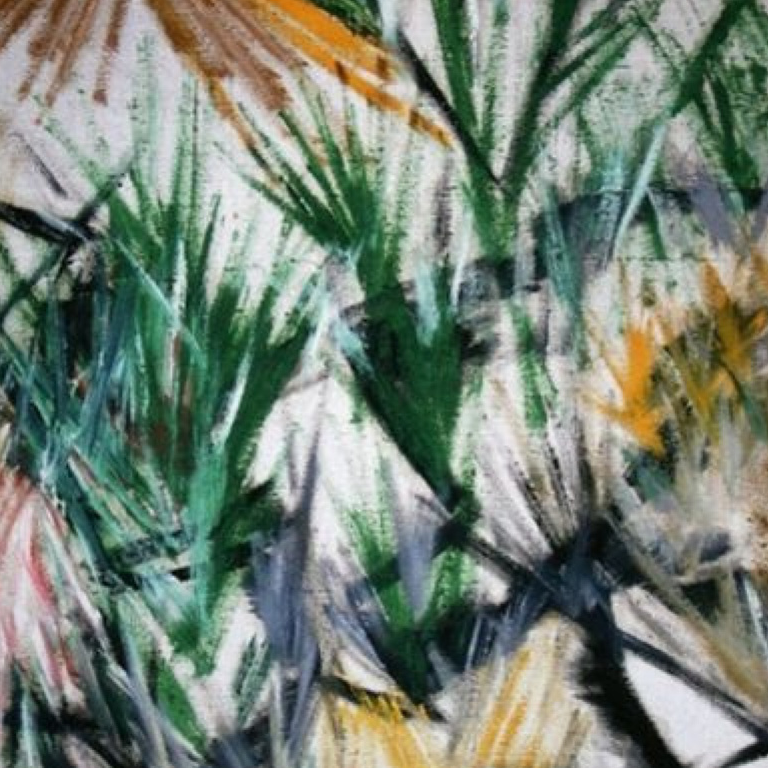
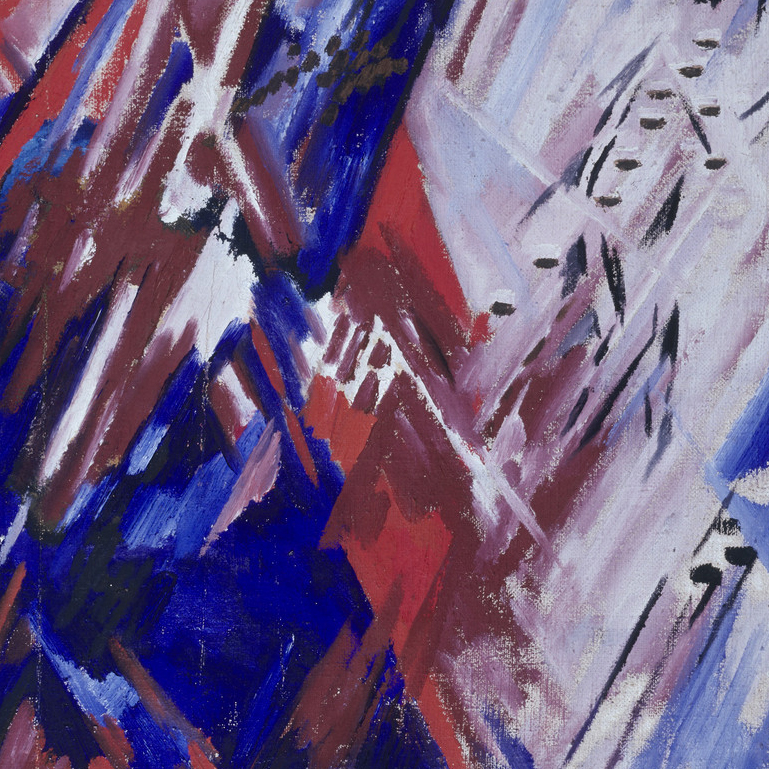
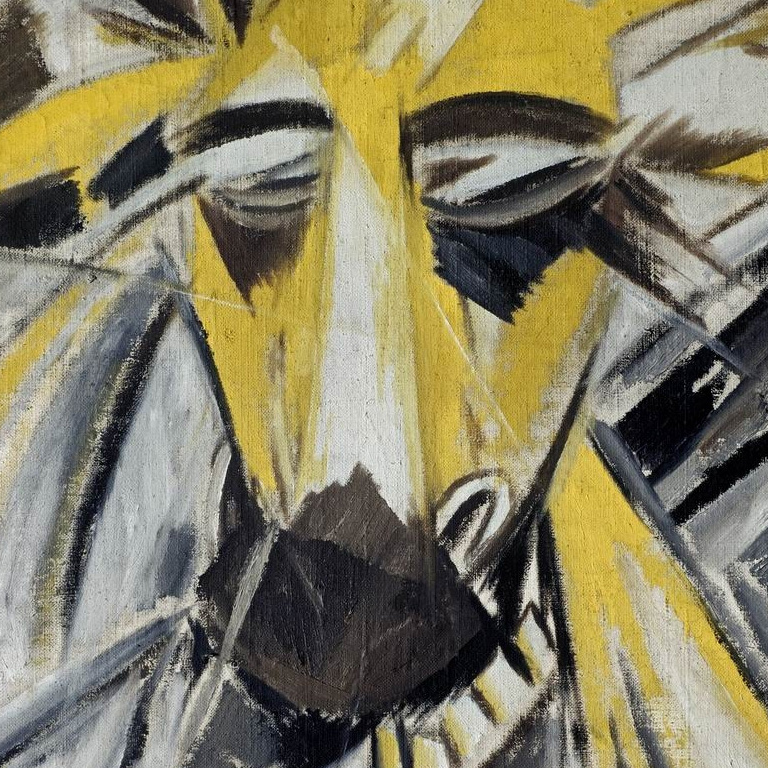
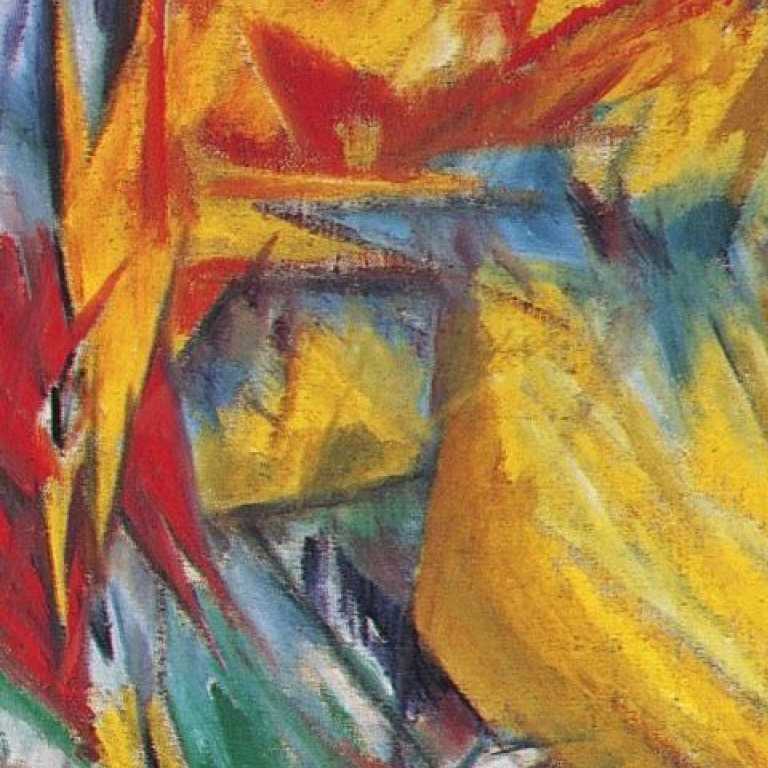
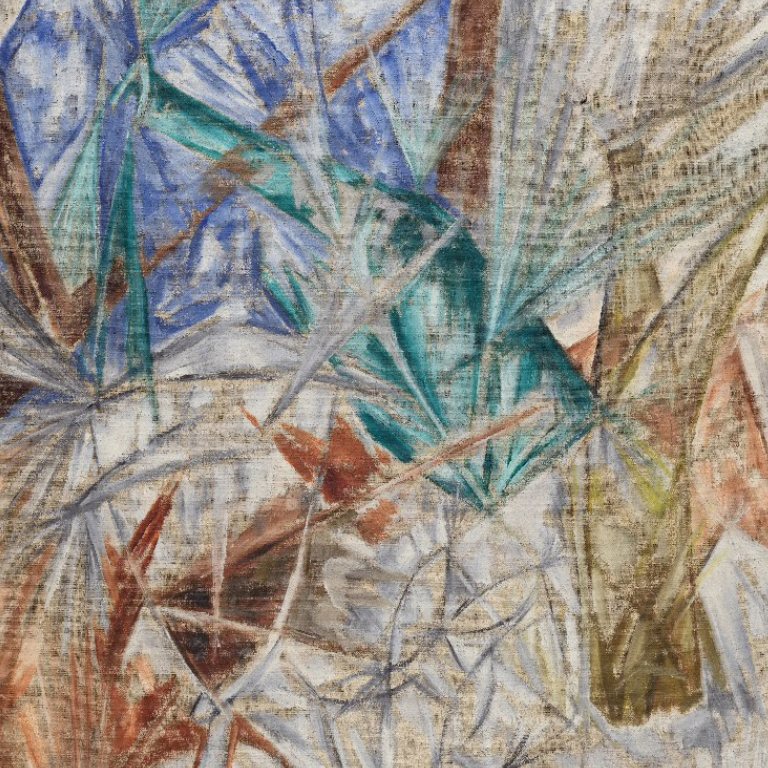
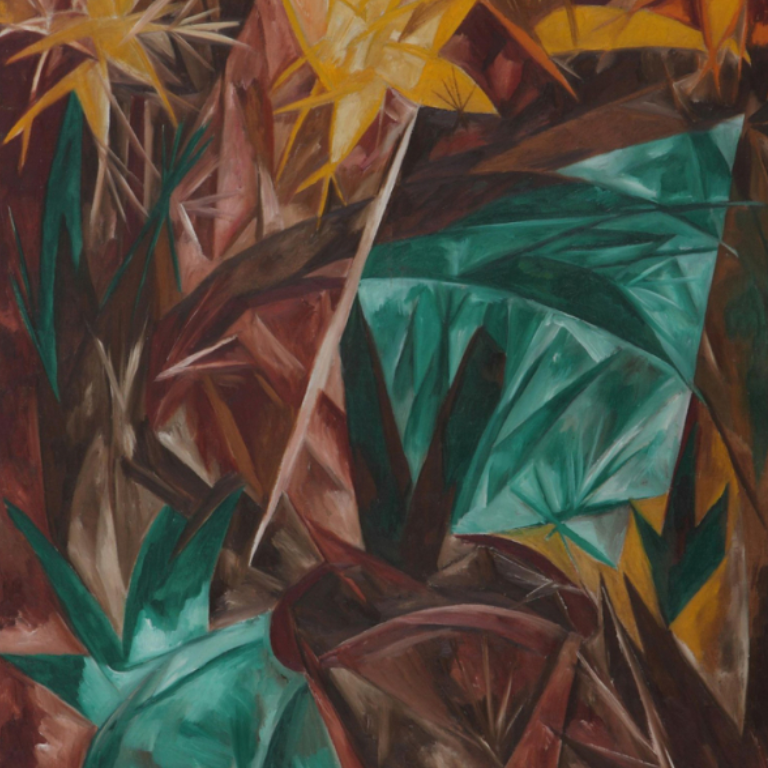
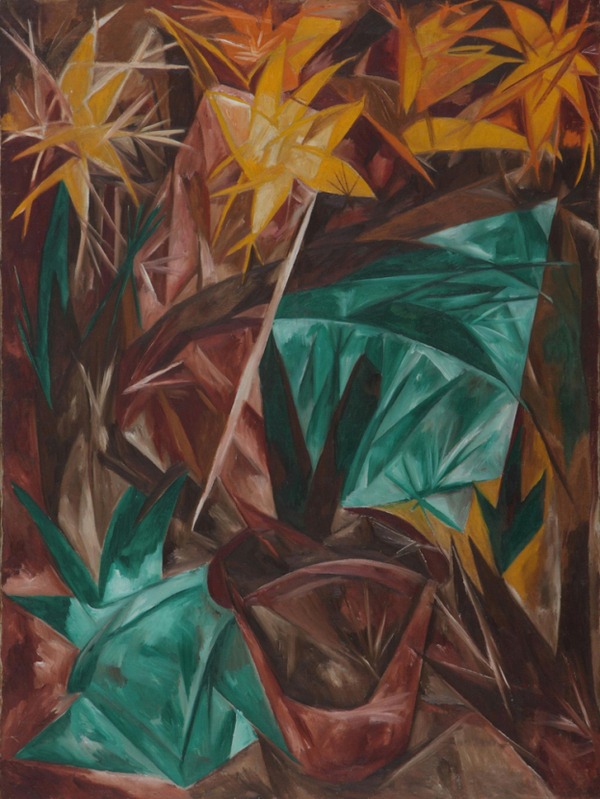
«Radiant Landscape» (1911) «Radiant Composition» (1912–1913) «Steklyad» (Glass) (1912) «Radiant Lines» (1913) «Radiant Sausage and Mackerel» (1912) «Portrait of Tatlin (Radiant)» (1913)
Project Goal
To train a generative neural network to reproduce the unique aesthetic of post-luminism, enabling the creation of new visual imagery that retains the key characteristics of this style: fragmentation of form into light vectors, vertical dynamism of «light columns, ” and the specific ochre-cyan palette of the future megalopolis.
The core hypothesis was that the Stable Diffusion model, fine-tuned using LoRA (Low-Rank Adaptation) on a compact yet stylistically curated dataset of 20 images, would be able to capture and reproduce the complex structure of the „radiant“ space, rather than simply copying individual lines. LoRA technology is the optimal solution for this task—it allows for the efficient integration of a specific artistic code into the neural network’s weights without computationally overloading it, while preserving the model’s foundational knowledge of real-world geometry and objects. This enables the generation of not only abstract rays but also recognizable architectural forms and interiors filtered through the prism of radiant expression.
Dataset for training
From the total image set, 20 benchmark samples were selected as they most vividly represent the project’s visual language.
Selection criteria: the presence of distinct «radiant» vectors, shape fragmentation, and a specific color palette (dominance of ochre, terracotta, and deep blue hues).
Plan diversity: The dataset was balanced so that the model could see both wide shots (city panoramas, streets) and detailed fragments (shop windows, abstract intersections of lines). This approach prevented «overfitting» to a single object type.
For the Stable Diffusion algorithms to correctly process brushstrokes and texture, the images underwent technical cleaning:
Cropping and Resolution: All source files were standardized to a single square format.
Artifact Management: The images were cleaned of extraneous noise so the neural network could focus specifically on the quality of the «brushstroke, ” rather than on compression artifacts.
A crucial preparatory step involved generating detailed textual descriptions for every image using the BLIP model. In the context of LoRA training, this process allowed us to establish a highly accurate semantic connection between the visual elements of post-luminousism and the text tokens. Instead of simply listing objects, the captions were structured so the neural network could clearly distinguish between content and style. This prevented a «blending» of concepts: the model learned that a «house» remains a «house, ” but its visual representation in this project is governed by the laws of intersecting light vectors. Using a unique trigger token alongside the BLIP descriptions ensured future generation flexibility, enabling the application of luminousist aesthetics to any new objects or scenes.
The Learning Process
Before launching the process, variables are defined in the code that set the «intensity» of the learning.
In Colab, training usually starts via the system command ! accelerate launch. This snippet is the «heart» of the project—this is where the dataset begins to adjust the neural network’s weights.
Code block for final generation. We load the trained LoRA weights into the base Stable Diffusion model and generate a series of images based on our prompt to test how well the neural network absorbed the style.
rayism style, a city
Rayism style, a city
«Rayism style, shops»
rayism style, a city
Rayism style, a city
rayism style shops
Rayism style shops
rayism style, a city
Conclusion
The final image series demonstrates a successful adaptation of Rayism principles to the visualization of contemporary architecture and interiors. The neural networks managed to capture a key characteristic of the style—the fragmentation of solid objects into dynamic light vectors, which transforms familiar urban spaces into vibrating energy flows. The specific ochre-turquoise palette is conveyed particularly vividly, creating an atmosphere of a light-filled, futuristic metropolis. The generated images maintain consistency: the vertical «light columns» and diagonal rays integrate organically into the geometry of buildings and shop windows. As a result, the project confirms the hypothesis that LoRA technology is capable of effectively transferring a complex artistic code onto new objects while preserving a balance between formal recognizability and abstract expression.
Generative Model Application Description
Stable Diffusion XL — a foundational model for image generation. BLIP — generating textual descriptions for training images. LoRA — an efficient fine-tuning technique for new styles. DreamBooth — a training method that allows incorporating a new concept into the model while preserving prior preservation loss. Google Gemini — assisted with debugging code.