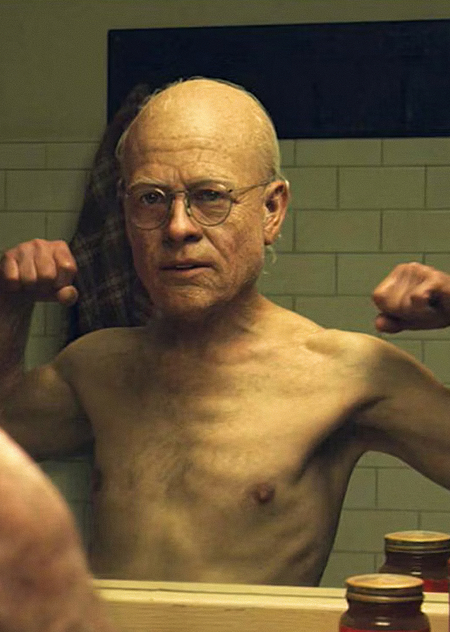
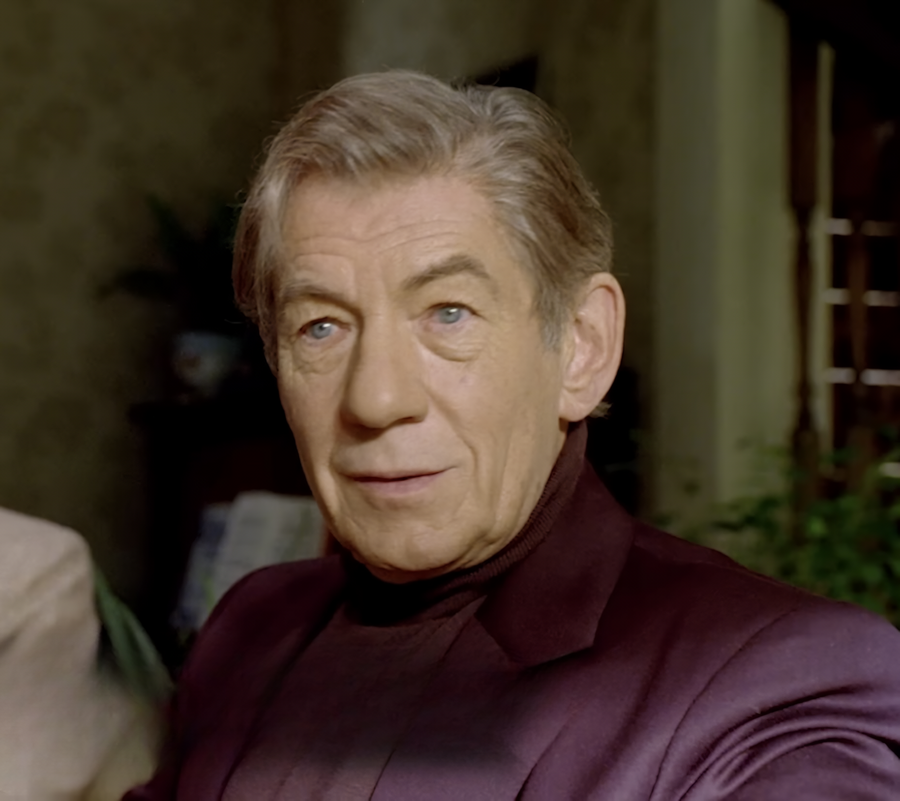
Digital age manipulation has become a powerful storytelling tool. In the mid-2000s, filmmakers first began convincingly altering the age of characters on screen. For instance, X-Men: The Last Stand (2006) utilized Lola VFX’s «digital skin swap» technology to rejuvenate Patrick Stewart and Ian McKellen, reducing their apparent age by approximately 20–30 years. Two years later, The Curious Case of Benjamin Button (2008) made cinematic history with Brad Pitt’s entirely computer-generated head, which was «aged» from 87 down to 63 while preserving his performance without loss. These breakthroughs proved valuable both artistically and commercially: aging and de-aging technologies allowed for the creation of new narrative devices (such as flashbacks or fantastical biographies) and even garnered recognition through numerous visual effects awards.
This visual study analyzes how digital technologies—aging, which makes actors appear older, and de-aging, which lends youth—have evolved within the film industry’s visual effects. I compare their evolutionary trajectories, determining which technology advanced more rapidly and assessing which yields more believable, realistic results. I have selected three pairs of films employing contrasting techniques but with similar execution.
The art of altering actors' ages on screen—making them look tens of years older or younger—has a rich cinematic history. For a long time, directors relied on the skill of makeup artists to add years to a character or, conversely, to erase them. However, with the advent and rapid development of digital technologies, these effects have become significantly more convincing.
With the advancement of CG and motion capture technology, aging and de-aging have undergone radical transformations. Digital facial aging requires meticulous rendering of skin folds, wrinkles, and other signs of senescence—a process that traditionally began with makeup and was then refined with digital tools. However, modern technologies have progressed far beyond this, allowing for the abandonment of tons of makeup and prosthetics, fully replacing them with computer-based methods. This innovative approach allows for the comparison of such polar effects. After all, de-aging—removing signs of aging, smoothing the skin, and «lifting» it—has predominantly been a digital endeavor from the very beginning.
Compositing and Rotoscoping
X-Men: Last Stand (2006) — De-Aging / Rejuvenation VFX Supervisor: John Bruno (Lola Visual Effects)
In the early years, the aging technology was achieved through optical effects and 2D compositing. For instance, optical transitions or rotoscoping were used to blend scenes with actors of different ages. These labor-intensive methods were less realistic. An example of these techniques in use is the film X-Men: The Last Stand (2006).
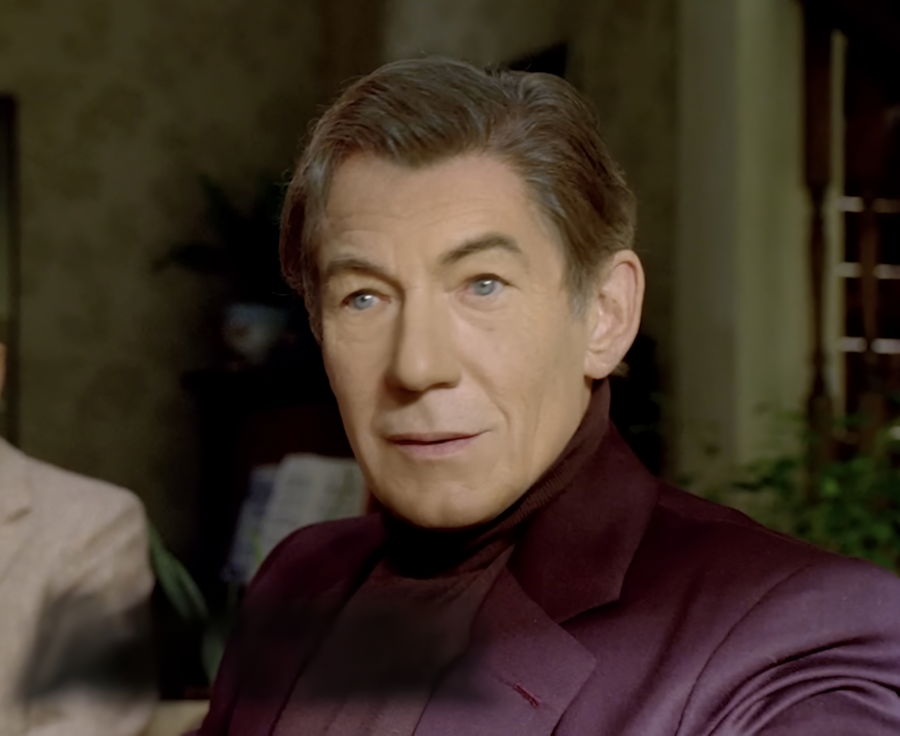
In 2006, the Lola Visual Effects team, led by VFX Supervisor John Bruno, made a significant breakthrough in digital de-aging techniques. While working on footage for the genesis of the X-Men story, they faced an ambitious challenge: to rejuvenate Patrick Stewart and Ian McKellen by 25 years while preserving the full depth of their acting.
The decision was made to fundamentally avoid facial markers on the actors to maintain maximum freedom of performance, and subsequently replace their faces with digital younger likenesses.
«We shot the scene without any restrictions… The opening scene was a kind of breakthrough,» Bruno recalls.
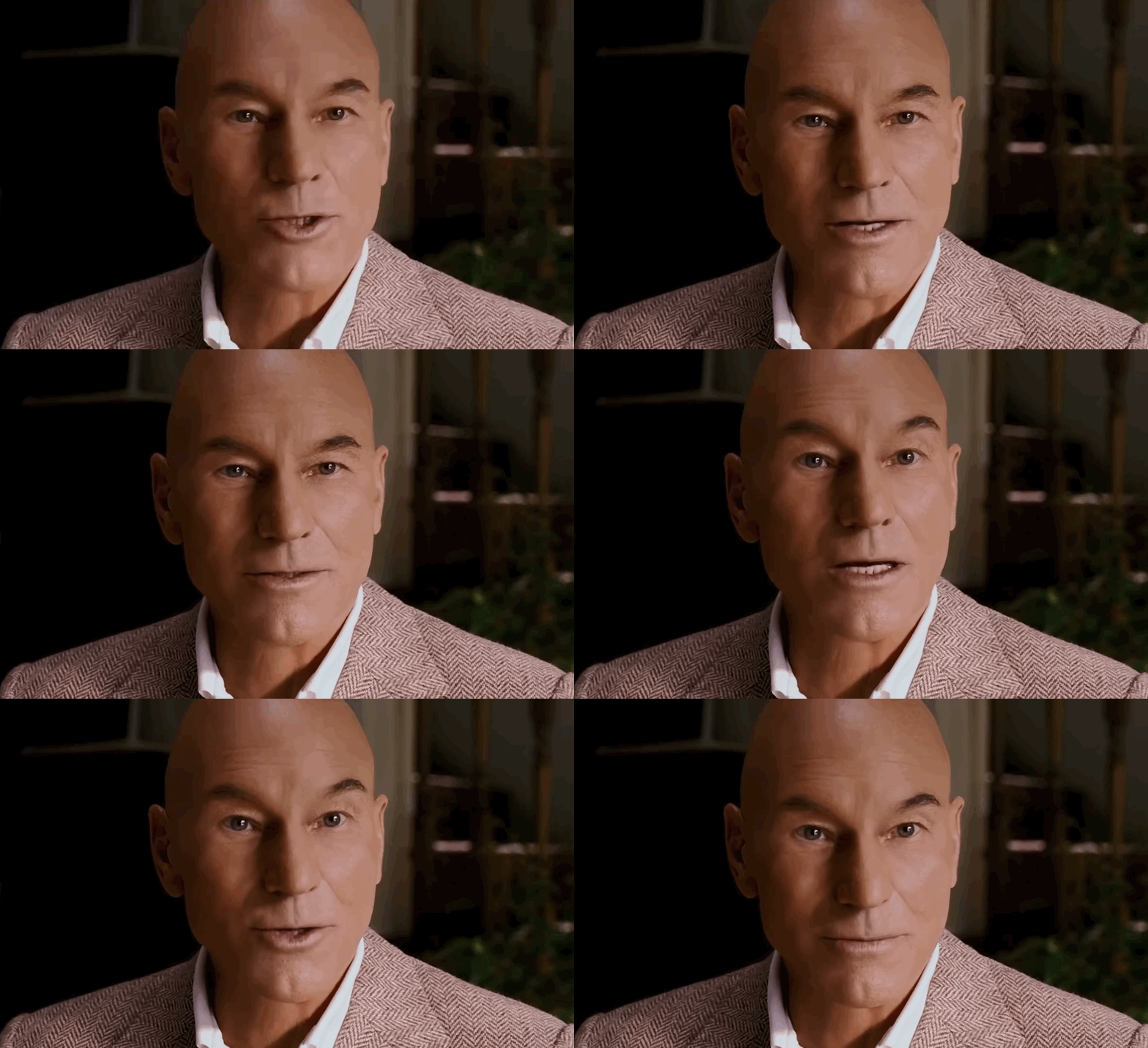
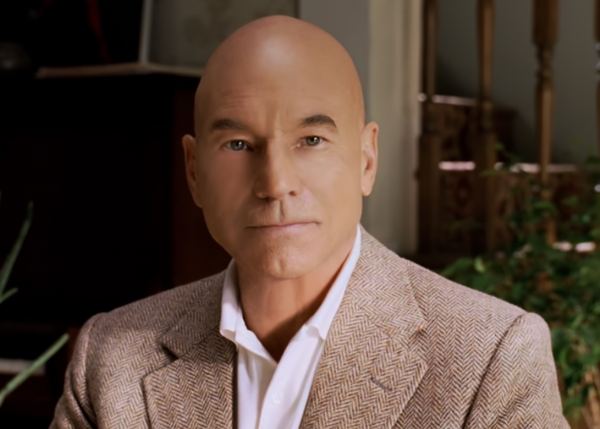
De-aging of Charles Xavier (Patrick Stewart) X-Men: The Last Stand (2006) directed by Brett Ratner
The markerless facial capture system developed by Lola Visual Effects demanded extreme precision and painstaking effort, as no comparable technology existed at the time.
A three-camera setup (RED and two ALEXA Mini) equipped with infrared illumination was installed on set; this system «neutralized the lighting on the actors' faces, ” enabling the creation of full 3D models in real time.
The FLUX system captured the facial geometry, after which ILM artists mapped a digital model—featuring an aged-reversal skin texture based on archival footage and photographs. Particular attention was paid to skin realism. The shaders incorporated subsurface scattering to simulate blood flow and reproduce pores. In 2006, this was a cutting-edge technology: one of the first applications of high-resolution facial scanning for de-aging.
«The Curious Case of Benjamin Button» (2008) — Aging
Composite treatment of a real actor’s face, tracking
The First Avenger: Another War (2014) — Aging
In the film «Captain America: The Winter Soldier» (2014), viewers saw a poignant scene of Steve Rogers meeting an aged Peggy Carter. Hidden beneath the apparent simplicity of this episode is a genuine technological breakthrough in visual effects that even earned the film an Academy Award nomination.
Lola VFX Studio, renowned for its innovative solutions in de-aging and aging, has developed a unique methodology for digital «aging makeup.» While traditional methods for aging actors utilized heavy prosthetics, the team, under the supervision of Edson Williams, took a completely different approach.
«The initial prototypes with traditional makeup didn’t work for us at all, ” recalls Williams. „At that point, I proposed what we called the 'Hail Mary'—a completely new approach: designing actual wrinkles using an aging double directly onto Hailey Atwell’s face.“
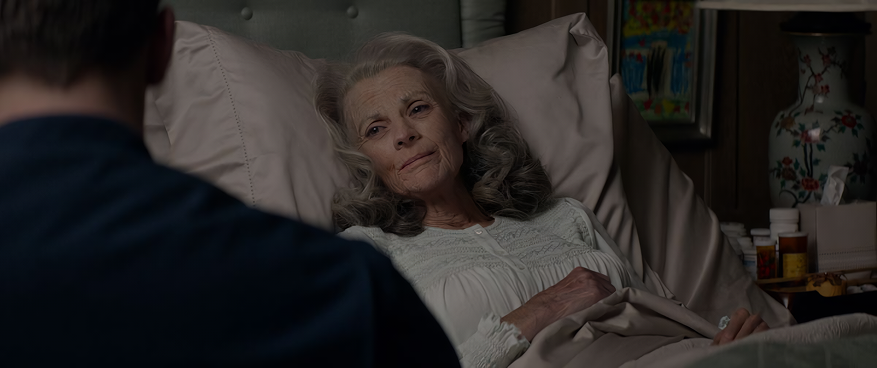
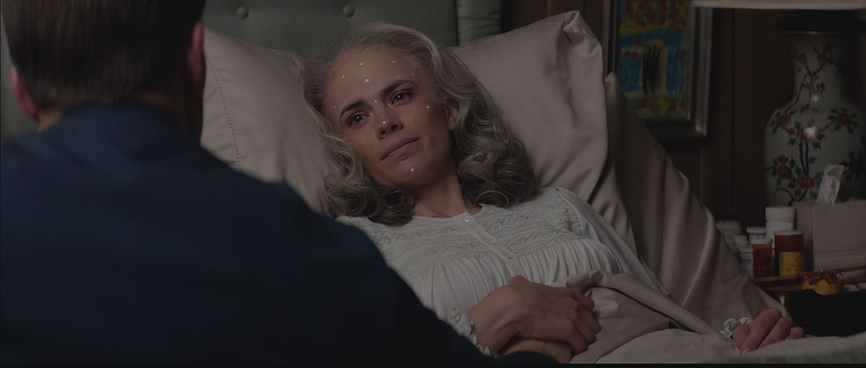
The process of creating the aged Peggy Carter was divided into several stages:
The primary filming was conducted on high-resolution cameras. Initially, 33-year-old Hayley Atwell was filmed as the «younger» version—without makeup, utilizing six facial tracking points for subsequent processing. Following this, shots of an older stand-in actress were taken in a specialized eight-camera rig (RGB stereo), meticulously reproducing Atwell’s facial expressions.
The post-production VFX pipeline involved 2D compositing: wrinkle texture shots were overlaid onto the face of the younger actress.
«We essentially created a digital wrinkle projector,» explains Williams. «This allowed us to achieve incredible naturalism—every wrinkle, every mole, all the skin texture looked absolutely authentic.»
A key feature of this method’s hybrid nature was preserving Ethel’s original eyes and mouth—this allowed for the combination of the actress’s unique facial expressions with 2D compositing, known as «digital makeup"—a multi-layered composition that demanded perfect alignment of lighting and expression between both actresses, without resorting to completely replacing the face with a digital duplicate.
The «Old Peggy» effect was recognized as the film’s most complex and memorable VFX technique. Critics noted that the audience barely notices the digital intervention—the elderly Peggy appears absolutely organic within the shot.
Captain Marvel (2019) — De-Aging / Rejuvenation VFX Supervisors: Janelle Krosh and Trent Claus (Lola VFX)
In «Captain Marvel, ” de-aging technology reached a new level of realism using similar methods employed to create the aging effect in „The First Avenger: Age of Ultron.“ However, the complexity and simultaneous novelty lay in the fact that the lead actors had to appear decades younger throughout the film, as the story is primarily set in 1995.
«We didn’t just create a convincing visual effect, ” Williams summarizes. „We learned how to work with acting performance on an entirely new level, preserving the character’s soul while radically transforming their physical appearance.“
Revitalizing Fury and Denver was a labor-intensive process. Every frame required meticulous tracking and artistic consideration.
The filming process relied on tracking markers placed on the faces of Brie Larson (Carol Danvers) and Samuel L. Jackson (Nick Fury). The «performance capture» performed on set meant fully shooting the scenes; real faces were always used as the base.
However, much like in the film Captain America: The Winter Soldier, Samuel Jackson wore a prosthetic «wig» to mimic the 1995 hairstyle; such additions allowed for a greater emotional depth in the acting performance.