
INDEX
1. CONCEPT2. «SHEEPLE» JOURNAL3. CHEMTRAIL THEORY4. THE DANGERS OF TECHNOLOGY5. CONCLUSION
CONCEPT
«What do conspiracy theories look like?»: The immediate thoughts that come to mind are either flat political cartoons or a hyper-exaggerated surrealist style where everyone’s eyes bulge from the madness unfolding—and this is precisely the visual language invented by the David Dis. I am researching.

Photography work by Cody Cobb for the documentary film «DO YOU SEE WHAT I SEE? (2021)»
David Eugene Dice — an American internet artist, graphic designer, and illustrator. He was born on July 9, 1957, in the United States.
Throughout his career, he achieved fame as a master of his craft, including working for major companies such as Paramount, Disney, and Hanna-Barbera, which is renowned for «The Smurfs» and «The Flintstones.»
He gained online notoriety through unconventional collages that addressed political secrets and conspiracy theories.
The artist passed away on May 31, 2020.
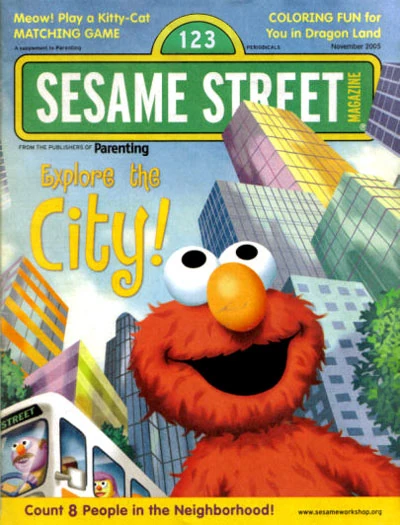
It is worth noting that David also worked on the children’s magazine, «Sesame Street» (English: Sesame Street). David Diaz created illustrations featuring characters from the program, such as Cookie Monster, Big Bird, and other «Muppets.»His drawings appeared in the magazine almost every month for about fifteen years. David designed seven magazine covers and fully illustrated four children’s books.These works are characterized by vibrant colors, expressive facial expressions, dynamic poses, and a humorous tone—and we can see these same refined techniques in his later works on abstract themes.To the right is the cover of the November issue of Sesame Street, illustrated by David Diaz in 2005.
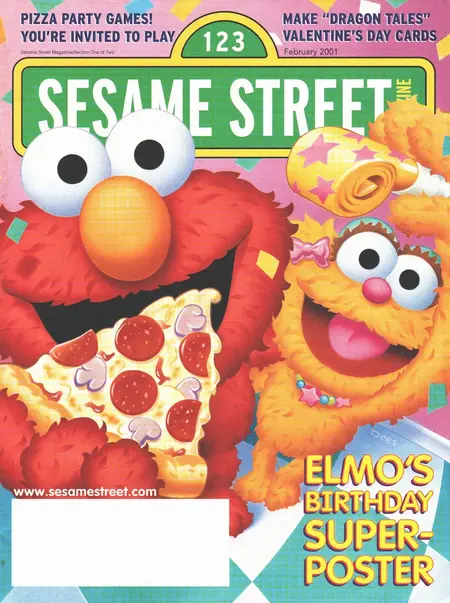
Журнал «Улица Сезам» Февраль 2001 год.
Журнал «Улица Сезам» Март 2005 год.
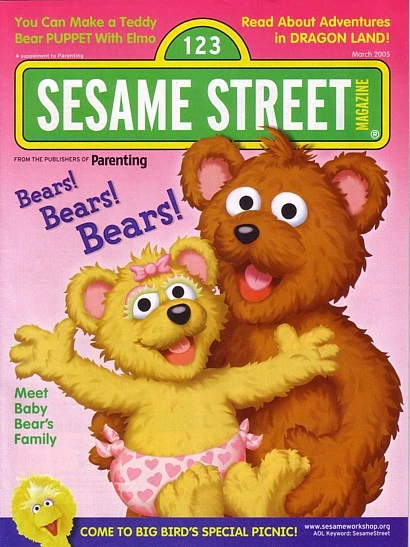
Cover Art for the Children’s Magazine «Sesame Street» Illustrations by David Dice 2001 and 2005
He can either be loved or hated,
because his work is maximally vibrant, radical, and screams of secrets and conspiracies.
[IMPORTANT NOTE!] I do not support his views and consider him a madman; I view his work strictly for educational purposes.Among the distinctive features of David’s work, one can highlight overloaded compositions, color contrasts, lighting that emphasizes the madness of the scene, grotesque elements, and exaggeration.He frequently uses imagery of politicians, children, corporations, and technology, placing them in catastrophic scenarios.His work is characterized by the combination of manipulated photographs with highly exaggerated, almost comic graphic elements.It is also worth noting that text plays an equal role to the image: large phrases and captions predetermine the interpretive direction for the viewer.
Still from the documentary film «DO YOU SEE WHAT I SEE? (2021)» Photographer Cody Bobb
And I would like to present the key research question:
How does David Dis use visual elements to create emotional impact and shape the viewer’s perspective?
[HYPOTHESIS]David Dice’s work constructs emotional impact through contrast, exaggeration, detail saturation, and most importantly—an abundance of symbolism.He combines photomontage, digital painting, and elements of poster design, blending photographs with fantastical and grotesque imagery.However, this expressiveness does not render the content believable. Dice’s pieces illustrate how a visually compelling form can amplify manipulative ideas and create an impression of truth without reliable evidence.
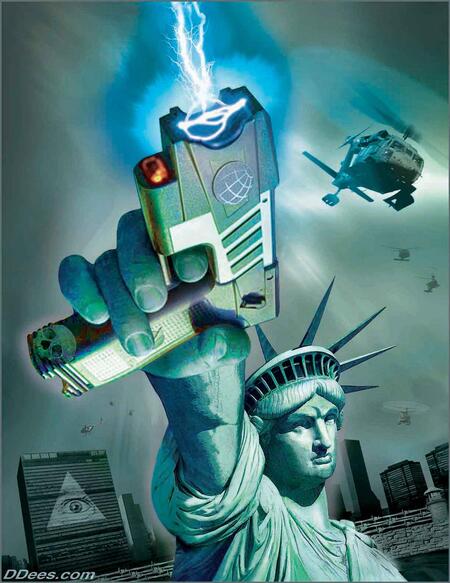

Illustrations for Volume 2 of David Dice’s book.
RESEARCH METHODOLOGY
In this study, I will evaluate the works based on several criteria:1. Composition: how it is constructed, the scale of the objects, the direction of the gaze, and the focal points. 2. Color and Light: what elements it emphasizes, what palettes are used in the works, and how it manipulates saturation to create a dramatic mood. 3. Symbolism: what recurring characters, objects, signs, and metaphors are present in the artist’s paintings, and what narrative he intends to convey through them.
Still from the documentary film about the life of David Dice, «DO YOU SEE WHAT I SEE? (2021)»
MATERIAL SELECTION PRINCIPLES
The selection principle relates to how clearly certain emphasis methods demonstrate compositional techniques.For this visual study, I chose works from open internet archives because both of David Dees’s portfolio sites (DDees.com and DeesIllustration.com) are currently unavailable or have been disabled by the provider.Furthermore, a large number of the works contain images of violence against people or animals, blood, weapons, and other unpleasant or explicit imagery. Such works were intentionally excluded from the visual study.


Illustrations by David Dice Untitled. Unfortunately, the year in the archive was not saved.
«SHEEPLE» JOURNAL
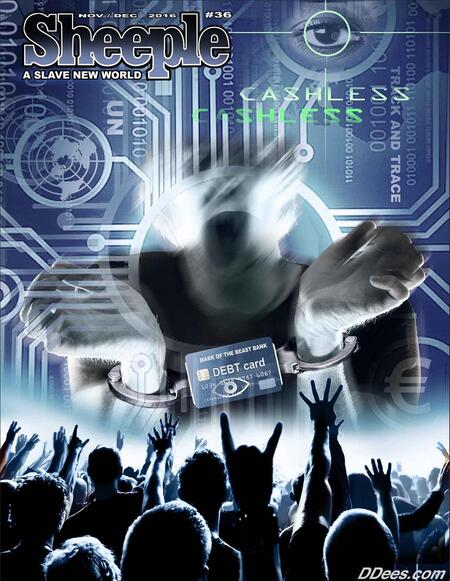
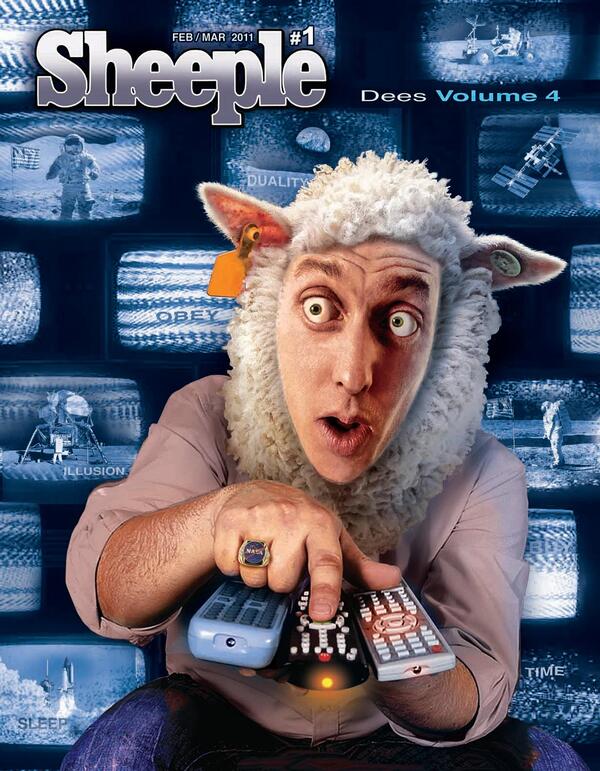
«Sheeple» Magazine is the name of a satirical art project by David Dice. The title is a play on words: sheep—the English word for «sheep"—and people—"people.»The result is the slang term for a «herd» of people—a dismissive metaphor for a large group who act thoughtlessly and succumb to mass suggestion.
Sheeple No. 42. 5G Smart Meters & WiFi

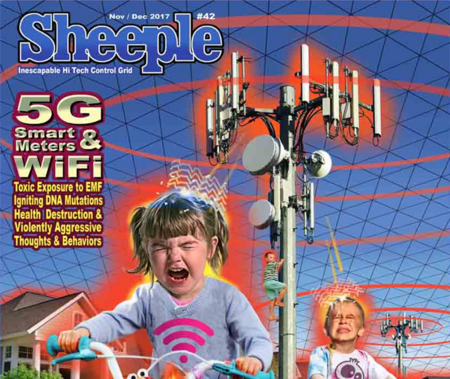
David Dice Illustration Portfolio.
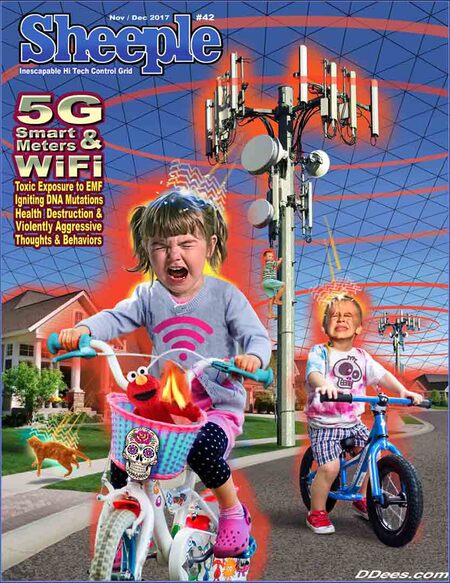
Composition. At the center of the work’s composition are a «5G» communication tower and children on bicycles. Our focus is precisely on them, partly due to their color separation from the background.Color and Light. As I mentioned before, the color highlights the crying children in red, creating the sensation that the communication tower is igniting or melting them. This accentuates the calm blue color in the background, providing an additional contrast.Symbolism. The communication tower symbolizes modern technology and wireless networks. The red grid depicts a conceptual field of invisible radiation spreading into the surrounding space. The children symbolize a vulnerable audience, and the presence of the character Elmo creates a contrast between childhood culture and the image’s anxious subject matter.
MAIN MESSAGE OF THE WORK:
The fear of modern technology’s influence on human health.
Sheeple No. 55. Coronavirus
An illustration by David Dice.