What Sets IKEA Apart?
This explainer explores IKEA’s brand language: how the company built a unique system for communicating with people in the age of globalisation and visual culture of the late 20th and early 21st centuries.
The narrative centres on three key brand languages through which IKEA shapes its own cultural code — one that is universal and understandable to people around the world.
This cultural code centres on Ingvar Kamprad, IKEA’s founder, whose personal experience and way of thinking laid the foundations of the brand. These shaped the way IKEA communicates with people and makes the complex simple.

Imagine you are a designer who sells matches and dreams of opening a furniture store. This is how IKEA’s founder, Ingvar Kamprad, began.
In 1943, he was 17… And he faced a particular challenge: dyslexia. Letters became jumbled, and reading did not come easily to Ingvar.
Verbal Language
Dyslexia prompted him to find a new way to communicate — and so a naming system for every product was born.
Chairs were given men’s names: MARTIN, LARS and SVENBERTIL. Sofas, dining tables and chairs were given women’s names: EKTORP, AGNETA and BRITT.
Bathroom accessories are named after Swedish lakes: DAMMÄNG, NYSJÖN, HAMNSKÄR, RUTER and VATTENSJÖN.
Rugs are named after Danish towns and regions: LOHALS, TOFTLUND, MORUM and VINDUM.
I stands for Ingvar, the founder’s first name; K for Kamprad, his surname; E for Elmtaryd, the farm where he grew up; A for Agunnaryd, the parish in his home village in Småland.
Ingvar didn’t forget his homeland when it came to the brand’s visual identity, either.
Visual Language
You can recognise IKEA from afar, even before you step inside: a yellow-and-blue façade in the colours of the Swedish flag. The modern logo was introduced in 1984, following a series of changes that began in 1943.
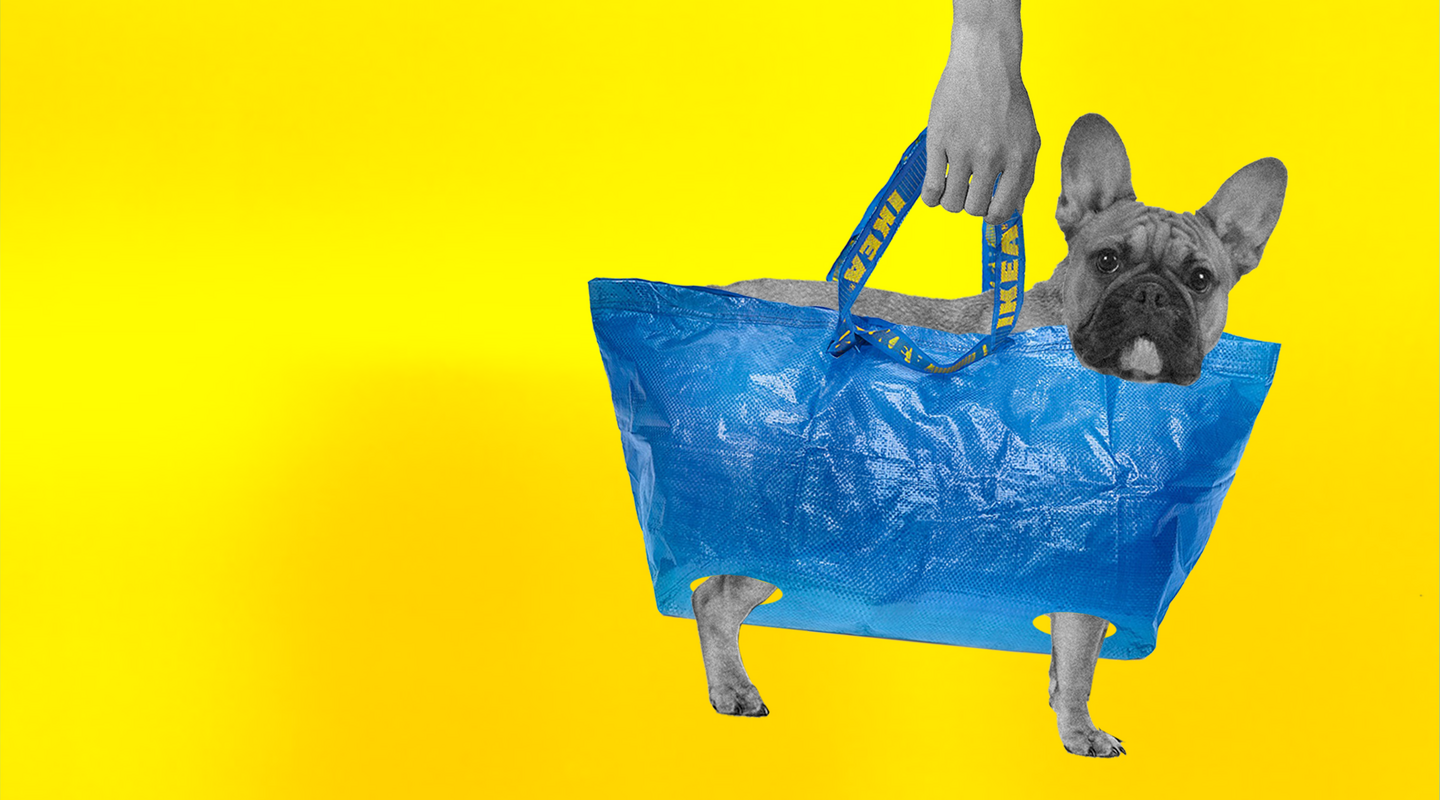
This is how IKEA welcomes you. And this one word captures the brand’s entire philosophy:
The character walks through IKEA, thinking: «Statistically speaking, I probably came in for a BILLY bookcase. But I’m leaving with…»