Fifty years ago, these recordings made music history, and then they vanished so reliably that no one dared hope to hear them again. In 2024, several tapes with unknown contents were almost sent to the shredder—until David Bowie, Lou Reed, and the first sketches of the future Fame suddenly began playing on them. How did these lost tapes end up in a box marked «for disposal, ” and why can’t they just be released now?
In the summer of 2024, Max Chester brought several old film reels into the studio. His plans were quite mundane: to erase whatever was on them and reuse the film. Analog multi-track film is expensive, and if it has been sitting for decades and it’s unknown what is recorded on it, checking the contents seems pointless unless purely out of curiosity. Furthermore, the boxes had no markings—no songs, no artists—other than one characteristic label: «for disposal.»
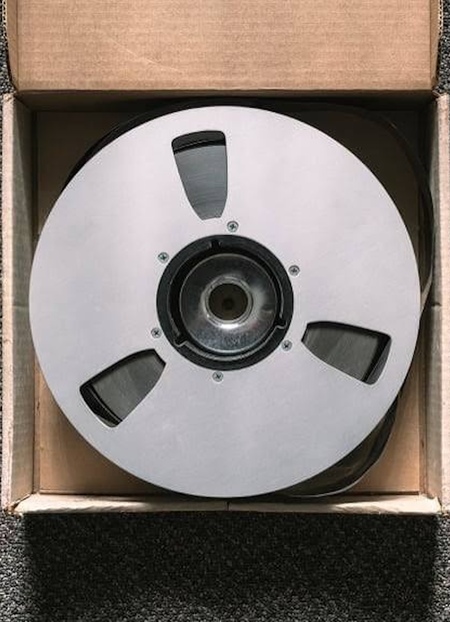
But before listening to the tapes, they had to sit in a special oven overnight. Over time, the binder in old magnetic tape deteriorates: the layer becomes sticky, can peel off, and literally stick to the tape recorder heads. Low-temperature heating allows the material to stabilize for a while and remove the sound. The next day, engineer Brendan McGheen loaded the first reel onto the machine.
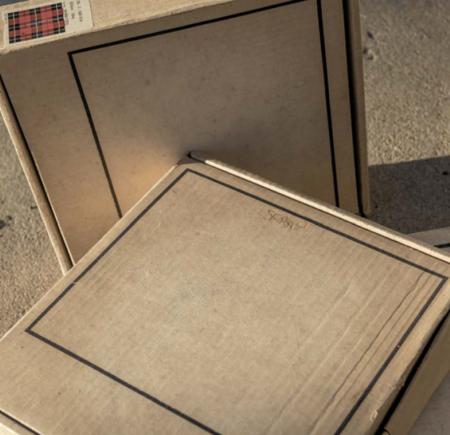
There really was something there. The first reel featured old funk and disco jams, but nothing so remarkable that would have made Chester stop working. The content of the second was similar at first: a group was playing fast R&B, the guitar was laying down a familiar riff, and then Luther Vandross’s voice came through. Chester recognized the song «Foot Stompin’» by The Flares—an old track Vandross had once performed in Philadelphia. Then, the musicians launched into David Bowie’s «Can You Hear Me.» For Chester, the old tape instantly transformed into musical archaeology. He knew Vandross had participated in the recording of the album Young Americans, and he knew that Bowie had worked at the Sigma Sound studio in Philadelphia in 1974. If this reel truly contained original multi-track recordings from those sessions, then he was facing a piece of history that could vanish before anyone even understood its value. And he nearly erased this tape with his own hands.
Forty Boxes from an Abandoned House
Ochestyr has been searching for music almost his entire life. As a teenager, he traded in rare vinyl records to hip-hop producers who were looking for material for samples. Later, he moved into reissues, collecting studio recordings, and tracking down forgotten musicians. In the music scene, such people are called «diggers”—they can search for years for a single rare take or a record that almost no one remembers existing.
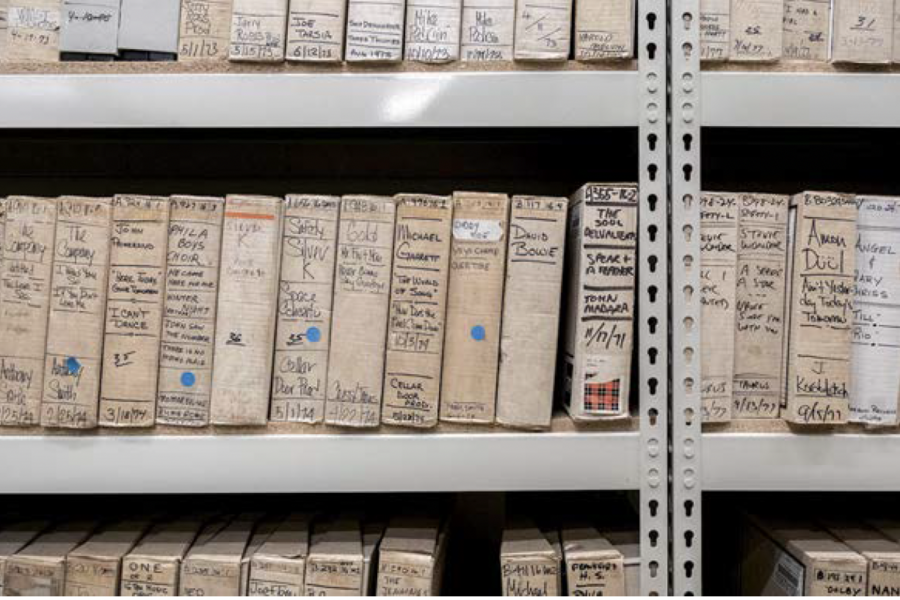
In early summer of 2022, an acquaintance collector told Ochester about a large batch of studio tapes put up for sale in a house in the Philadelphia suburbs. The house was empty, and about forty cardboard boxes were stacked in one room. The boxes bore the names of famous Philadelphia soul artists: The Intruders, Billy Paul, The Ebonys, and other musicians who recorded in the 1970s. Ochester paid several thousand dollars for the entire collection and transported it to his warehouse in three trips. There, he discovered a separate box containing unlabeled two-inch multi-track tapes. They were lying in boxes similar to those used at Sigma Sound Studios. One of the boxes was marked only «for disposal.» Ochester decided these were unnecessary scraps from studio work.
For nearly two years, the tapes sat unused. Eventually, Ochester took several reels with him to Elm Street Studios, where he planned to record one of his musicians. The old tapes could be reused—he just needed to check if anything valuable was on them. After his first discovery, he called Aaron Lewinson—a DJ, collector, and producer who, in the late 1990s, worked at Rykodisc and had access to Bowie’s catalog master tapes. He was intimately familiar with even the alternative versions and unreleased duplicates. Consequently, Lewinson was skeptical at first. He likely assumed they were backup copies of already known recordings. Finding an original studio recording of Bowie, one no one had ever heard before, after fifty years seemed nearly impossible.

How Young Americans Was Born
In 1974, Bowie was searching for a new sound. The Ziggy Stardust era had ended, glam rock had grown stale, and American music—particularly Philadelphia soul—was increasingly capturing his attention. Bowie went to Sigma Sound Studios, one of the city’s premier studios, to record new material with local musicians. These sessions ultimately formed the foundation of *Young Americans*—an album on which he reinvented himself almost completely. One of the people who worked with Bowie was 23-year-old Luther Vandross. At the time, he was not yet a star; he would only become a popular soul singer several years later. During the *Young Americans* sessions, Vandross assisted with vocal arrangements and quickly became an integral part of the process. He even showed Bowie his own song, «Funky Music (Is a Part of Me).» Bowie liked the musical foundation, took it as a starting point, wrote new lyrics—and created «Fascination.»On the discovered tapes, this still doesn’t look like history. Here, Bowie and his musicians are simply trying out variations, changing arrangements, and searching for the right sound. The songs haven’t yet become the ones listeners know today. Therefore, one of the recordings sparked significant interest. Bowie performs Bruce Springsteen’s «It’s Hard to Be a Saint in the City.» This fact alone isn’t new: Bowie had recorded the song before. But here, Carlos Alomar plays a guitar riff under his vocals that is very similar to the one later foundational to «Fame.» For Levinson, this became proof that the tapes truly contain unknown material. He knew all the published versions of the song and had never heard Bowie singing it over such a riff.
Fame will come later, in New York, when Bowie worked with John Lennon and Alomar. But now you can hear an earlier stage of its birth—before the famous recording. Three versions of Win have been discovered on other tapes, the working version of Fascination, and Bowie’s conversations with producer Tony Visconti. The recordings were not mixed; these aren’t polished archival releases, but rather musical drafts. And that is precisely where their value lies. They allow us to hear not the finished Bowie, but the musician in the process of creating.

Bowie Returns to the Studio
When the tapes were shown to engineers working at Sigma in the 1970s, their initial reaction wasn’t like that of an ordinary fan. Instead of reverent silence filling the room, they heard, «This is Carlos, ” „This is Semborn, ” „The bass isn’t quite hitting right here.“ A „Take two“ command rings out over one version of *Young Americans*. One of the engineers asks whose voice it is. The others laugh—it’s his own. He recorded that phrase fifty years ago and is only hearing it again now. Gradually, the engineers began to recognize more: the musicians, the instrument placement, the sound of the room. An unexpected portal into his own life opened before them. One of them, Dirk Develin, even called the recordings priceless. He also offered an unsettling theory about why the recordings might have ended up without credits. According to Develin, a Sigma employee had a habit of taking studio materials home. He wasn’t selling them; he was just storing them. Develin himself doesn’t know exactly how the tapes ended up in the house where Chester found them decades later, so he doesn’t assert that the tapes belonged to that person. But this theory certainly explains why Bowie’s material might have disappeared from the official archives.What to Do with the Found Bowie?
For Ochester, the discovery quickly turned from a musical sensation into a legal problem. He physically possesses the tapes, but that does not mean he owns the songs recorded on them or the rights to release them. He can sell the reels to a private collector, but then they will disappear from public access again. He cannot release them independently without the consent of the copyright holders. Ochester even declined an offer from bootleggers to pay for the recordings.
He wanted them to be heard, not hidden away in yet another private collection. He attempted to reach Toni Visconti and Carlos Alomar, and through acquaintances, people connected to the Bowie archive. But the conversations led nowhere. Ochester’s supposition that Bowie’s estate had intervened remains just that—a supposition. Ochester would like to make a documentary about the find and Bowie’s Philadelphia sessions, and most importantly, find a way to return the tapes to a place where they can be handled professionally and eventually heard by fans.
And in this, perhaps, lies the main paradox of the entire history. Fifty years ago, these recordings were part of the birth of Young Americans. Then, they vanished so completely that even specialists considered such a find virtually impossible. They later ended up in a box marked «for disposal» and almost became raw material for the next studio session. But fortunately, Chester decided to examine the contents first.